#strait-of-hormuz
24 entries with this tag
Six Months Into the Iran War He Sold as a Weeks-Long "Little Excursion," Trump Declared Victory by Posting an AI Meme of Himself Reading "Mission Accomplished 2026" — Reviving the Most Notorious Premature Victory Boast in Modern American History, the One Bush Staged Aboard the USS Abraham Lincoln — the Very Carrier Now Stranded at Sea Past 260 Days Because This War Won't End; and Around the Same Time, He Approved Sending More Troops
Six months into a war he had promised would be a weeks-long "little excursion," Trump declared he had won it — by posting an AI-generated meme of himself standing between George W. Bush and Iran's slain supreme leader, with one placard reading "Mission Not Accomplished 2001–2021" and another "Mission Accomplished 2026." The imagery deliberately invokes the single most infamous premature victory declaration in modern American history: Bush's 2003 "Mission Accomplished" banner, staged aboard the USS Abraham Lincoln, after which the Iraq war ground on for eight more years. Trump apparently intended the comparison to flatter himself; it does the opposite. The war with Iran is not over. There is no final agreement. The Strait of Hormuz is not reliably reopened. His own defense secretary's "decisive military victory" and his serial victory claims — 58 ships sunk in March, a "deal" in June — have all been overtaken by a conflict that keeps going. And in the clearest tell of all, at roughly the same moment he declared the war won, Trump approved the deployment of more troops to the Middle East. You do not reinforce a war you have finished. The victory lap and the reinforcements cannot both be true, and the reinforcements are the ones with soldiers attached. There is even a grim symmetry Trump seems not to have noticed: the carrier that hosted Bush's false victory in 2003, the USS Abraham Lincoln, is the same ship this archive has documented stranded at sea past 260 days, its sailors rationed to corn dogs, because Trump's war has no end.
The War Trump Promised Wouldn't Hurt Americans at the Pump Has Pushed Gas to Roughly $4.10 a Gallon — Up From $2.98 in February, Likely the Most Expensive August on Record — as His Own Strait of Hormuz Standoff Chokes Off the World's Oil Chokepoint, With Ship Traffic Collapsing From Around 130 Vessels a Day to Nearly Zero and His Officials' Promise That the Price Spike Would "Subside" Now Six Months Old
When Trump launched his war on Iran in February 2026 and the resulting standoff shut down the Strait of Hormuz — the waterway through which a fifth of the world's oil passes — his administration assured Americans the price spike would be brief and would soon subside. Six months later it has done the opposite. By late August 2026, the national average for regular gasoline had climbed to roughly $4.10 a gallon, up from $2.98 on February 28, and AAA indicated it was on track to be the most expensive August on record. The cause is not a mystery or a foreign plot: it is the direct consequence of Trump's own war and his refusal to end it. Traffic through the Strait of Hormuz, which normally sees around 130 ships a day, had collapsed to a handful — five vessels one recent Saturday, none registered the following Sunday — while Brent crude pushed near $89 a barrel. Trump's response has been to escalate the rhetoric that keeps the strait closed, threatening to "bomb the shit out of" Oman, the country mediating a reopening. Every dollar added to a gallon of gas is a tax on every American who drives to work, and it traces back to a war launched on a threat the intelligence never found and kept going long after his own generals concluded it could not be won. The president who ran on lowering prices has delivered, through a war of choice, the highest summer gas prices in the country's history.
As the Iran Ceasefire Expired, Trump Threatened to "Bomb the Shit Out Of" Oman — the Neutral Country That Has Quietly Hosted the U.S.-Iran Back-Channel for Years and Is Best Positioned to Broker an End to His Own Faltering War — and Declared the Strait of Hormuz Should Become U.S. Territory
On August 17, 2026, as a 60-day U.S.-Iran ceasefire agreement expired, President Trump threatened — according to Fox News reporter Trey Yingst — to "bomb the shit out of" Oman if it "gets in the way." Oman is not an adversary. It is the discreet, trusted neutral that has hosted the back-channel for U.S.-Iran diplomacy for years — the intermediary both Washington and Tehran rely on precisely because it talks to everyone and threatens no one — and it controls one side of the Strait of Hormuz, the world's most important oil chokepoint. Threatening to bomb the single government best positioned to help end Trump's own faltering, unwinnable Iran war is the opposite of strategy: it is aimed at the peacemaker, not the enemy, at the very moment his own Chairman of the Joint Chiefs has been privately hunting for an off-ramp. Trump paired the threat with a separate declaration that the Strait of Hormuz should become U.S. territory — a casual assertion of annexation over an international waterway split between two other sovereign nations, echoing his musings about seizing Greenland, the Panama Canal, and Canada. It all landed as Iran's army chief announced bounties on American military personnel and the ceasefire lapsed, deepening a war the United States has no military path to win.
The USS Abraham Lincoln Has Been Stuck at Sea a Record 260+ Days — Its 6,000 Sailors Rationed to Corn Dogs and Tuna-and-Noodles, With Moldy Showers and a Mental-Health Crisis — Because Iran Destroyed the Navy's Main 5th Fleet Supply Base in Bahrain on Day One of the War, a Strategic Defeat Journalist David Rohde Says Hegseth Hid While Calling the Reporting "Completely Misrepresented"
The aircraft carrier USS Abraham Lincoln has been deployed at sea for more than 260 days — the longest modern carrier deployment on record, roughly nine months — supporting Trump's war on Iran. Its crew of about 6,000 has endured food shortages so severe that meals were reportedly reduced for stretches to tuna mixed with noodles or corn dogs, along with moldy showers, broken facilities, and 12-to-16-hour shifts without days off; families and journalists describe a mental-health crisis so acute that some sailors reportedly tried to jump overboard (the Navy denies the latter). The root cause is not bad luck. On the first day of the war, Iranian missiles and drones destroyed much of the U.S. Navy base in Bahrain — the 5th Fleet's decades-old sustainment hub for carrier operations. With Bahrain gone and the waters inside the Strait of Hormuz effectively closed, the Navy fell back on the tiny, remote island of Diego Garcia, which Iran then also struck. The carrier's resupply collapsed. As journalist David Rohde and other reporters have laid out, Defense Secretary Pete Hegseth concealed the strategic significance of losing that base — the fact that Iran had knocked out America's main regional logistics hub — because it is direct evidence the war is going badly. Confronted with the reporting on the Lincoln's conditions, Hegseth called it "completely misrepresented" and attacked the press, as Sen. Chuck Schumer called for his firing and Sen. Ruben Gallego, a combat veteran, demanded an immediate bipartisan investigation.
Trump's Own Chairman of the Joint Chiefs Privately Concluded the Iran War He Started Has No Military Path to Victory and Is "Looking for an Off-Ramp" — Airpower Won't Make Iran Fold, the Only "Win" Would Take a Ground Invasion Costing Thousands of American Lives He Refuses to Order, and the U.S. Is Running Out of the Munitions to Keep Bombing
By August 2026 — nearly six months into the war Trump launched against Iran on a threat the intelligence never found — the man Trump put in charge of the entire U.S. military had privately concluded there was no way to win it. CNN reported that Chairman of the Joint Chiefs Gen. Dan Caine has told senior Trump advisers the United States needs an "off-ramp," because the available options to escalate could backfire into wider retaliation and airpower alone is unlikely to force Tehran to accept Trump's terms. The trap is of Trump's own making. He wants Iran to capitulate but refuses to order the only thing that could militarily force it — a ground invasion that officials and analysts estimate could cost thousands of American lives (retired Gen. Barry McCaffrey noted even 150,000 troops might not secure the Strait of Hormuz). So the U.S. bombs, and pauses, and bombs again, achieving no decisive result while its own stockpiles run dry: commanders are worried about depleted air-defense interceptors, precision munitions, and offensive missiles, much of it expended in the assault on Iran. It is what one four-star assessment called the "ultimate stalemate" — a war with no military solution inside the president's constraints, roughly 70% of Americans opposed, U.S. troops still dying, and the nation's top general quietly hunting for the exit his commander-in-chief won't take.
The Iran Ceasefire Trump Signed and Paraded as a Historic Triumph Collapsed Within Weeks Into Nine Straight Nights of U.S. Airstrikes — Iran Firing Missiles at American Bases in Kuwait and Bahrain, Its New Supreme Leader Calling Trump's Signature "Worthless," and the U.S. Death Toll From a War That Never Had a Reason Still Climbing
The ceasefire and memorandum of understanding Trump signed with Iran last month — and touted as a signature achievement — has collapsed. After an Iranian drone struck a ship in the Strait of Hormuz in early July, Trump declared the ceasefire "over," and the United States launched what became nine consecutive nights of airstrikes across Iran, hitting military command centers, air defenses, coastal surveillance, missile and drone sites, communications networks, and bridges. Iranian health officials reported at least 46 killed and more than 400 wounded since the fighting resumed. Iran retaliated by firing missiles and drones at U.S. bases in the Gulf — including the Ali Al Salem base in Kuwait, where it said it hit an ammunition depot and a Patriot radar — and at facilities in Bahrain and Jordan, injuring Kuwaiti military personnel. Iran announced it was suspending its commitments under the agreement, and its new supreme leader, Mojtaba Khamenei — who succeeded his father Ali Khamenei after the elder was killed in the war's opening U.S.-Israeli strikes — derided Trump's signature on the deal as "worthless" and warned of "unforgettable lessons." Since the war began in late February, at least 16 U.S. service members have been killed and more than 430 wounded. Pakistan and Qatar are scrambling to restart talks. It is the predictable unraveling of a war that, as documented here, was launched without a defensible cause — intelligence had found no imminent Iranian threat — and a "peace" that was announced for the cameras before it was ever secured on the ground.
The Full Text of Trump's 14-Point Iran Deal: Lift the Blockade, Waive Oil Sanctions, Unfreeze Assets, Pay $300 Billion — and Iran Keeps Its Missiles, Its Proxies, and Its Nuclear Program
A senior U.S. official read the 14-point "Islamabad Memorandum of Understanding" to reporters on a call Wednesday. The full text reveals: the U.S. will immediately lift its naval blockade, waive all Iranian oil sanctions, unfreeze all restricted Iranian assets, commit to ending all sanctions (UN, IAEA, and unilateral), and fund a $300 billion reconstruction plan — in exchange for Iran reiterating it "will never produce nuclear weapons" (a promise it already made under the JCPOA) and reopening the Strait of Hormuz (which was open before the war). Iran's missile program is not mentioned. Its proxy networks are not mentioned. Its enriched uranium stockpile is deferred to a "final agreement." Sen. Murphy: "Make no mistake: these are Iran's terms. They made one single concession — opening the Strait. And it's not even a concession because the Strait was open before the war." The Institute for the Study of War: Iran "emerged from the conflict in a stronger strategic position." Trump withdrew from Obama's JCPOA calling it the "worst deal ever." He then started a war, killed over 1,700 Iranian civilians, and signed a deal that gives Iran more than the JCPOA did — without addressing the missiles he said justified leaving the JCPOA in the first place.
Iran Says It's Not Charging "Tolls" on the Strait of Hormuz — Just "Service Fees" of $2 Million Per Ship. Trump Calls It "A Beautiful Thing"
Iran announced it will charge up to $2 million per vessel to transit the Strait of Hormuz — but insists these are "service fees," not "tolls." Foreign Ministry spokesman Baghaei: "We do not charge tolls," but "services will be provided" that "require charging fees." The IRGC-linked Persian Gulf Strait Authority (PGSA), established May 5, processes clearances requiring 40+ categories of vessel data, paid in yuan or bitcoin — no dollars accepted. Iran's parliament codified the system on March 30-31, before any ceasefire. The June 14 MOU declares Hormuz "toll free" — but only for 60 days, after which Iran says fees apply. Trump initially said "they better not be" charging, then called it "a beautiful thing" and proposed a "joint venture." Naval War College's James Holmes: "There is no provision in international law for a coastal state charging for passage through a natural waterway, whether you call it a toll or a fee." No post-1945 precedent exists for mandatory fees on a natural strait. Oman refuses to impose tolls on its side. The IRGC declared the strait "will never return to its former state." Experts warn: if Hormuz gets a toll booth, so could Malacca, Gibraltar, and Bab el-Mandeb.
"If We Need to Negotiate with Bombs, We'll Negotiate with Bombs": Hegseth Pledges Strikes on Key Facilities as U.S. Hits Iran for Second Straight Night
Defense Secretary Pete Hegseth, leaving CENTCOM headquarters in Tampa, told reporters: "If we need to negotiate with bombs, we'll negotiate with bombs. And we're very good at it." The U.S. launched strikes on Iran for a second consecutive night — 49 Tomahawk missiles hitting targets as close as 40 miles from Tehran. The strikes destroyed Iran's water reservoirs in Hormozgan Province, leaving 20,000 people without drinking water in 50°C heat. Weapons experts identified fragments as U.S. GBU-39 munitions. Iran retaliated with strikes on U.S. bases in Kuwait, Jordan, and Bahrain. Trump from the Situation Room — with Vance, Kushner, and Witkoff — told Fox News: "If Iran doesn't agree to a deal, we'll bomb the shit out of them tomorrow night." He threatened to target bridges and power plants. CPI hit 4.2% — a three-year high driven by war-fueled energy costs. Brent crude: $94/barrel. The April 8 ceasefire is functionally dead. The war Trump said would last four to five weeks is now at fifteen.
Iran Halts All Negotiations With the U.S. and Vows to "Completely Block" the Strait of Hormuz
Iran suspended all mediated exchanges with the U.S. and announced it will pursue a complete blockade of the Strait of Hormuz — plus activate the Bab al-Mandeb chokepoint — after accusing the U.S. of ceasefire violations through Israel's continued operations in Lebanon against Hezbollah. Oil surged 7.7% on the news. Trump's response: "I don't care" if negotiations are over, and the talks had "started to get very boring." The deal that was on the table — unrestricted Hormuz shipping, mine removal, blockade lifting, sanctions waivers — now appears dead. Three months into a war that had no defensible cause, the strait remains closed, oil is up 30%, and the president says he's bored.
Trump Calls Reporting "Virtual TREASON" After Intelligence Shows Iran Retained 70% of Its Missiles
U.S. intelligence assessments revealed Iran retained ~75% of its mobile launchers and ~70% of its missile stockpiles despite weeks of bombing — and restored access to 30 of 33 Hormuz missile sites. Trump called the reporting "virtual TREASON" and accused journalists of "aiding the enemy." The DOJ had already subpoenaed Wall Street Journal reporters for their Iran war coverage.
Hegseth Fires Navy Secretary Phelan — During a Naval Blockade of Iran
Defense Secretary Pete Hegseth fired Navy Secretary John Phelan "effective immediately" — while the U.S. Navy is enforcing an active blockade of the Strait of Hormuz. The reason: Phelan communicated directly with Trump, which Hegseth saw as bypassing him. Three weeks earlier, Hegseth also fired the Army Chief of Staff during the same war.
Iran Fires on 3 Ships, Seizes 2 in Hormuz — Won't Talk While U.S. Blockade Continues
Iran fired on three ships in the Strait of Hormuz and seized two of them, causing heavy damage to the MSC Francesca's bridge. Trump extended the ceasefire — but Iran says no more talks until the U.S. lifts its own blockade. The deadlock deepens: both sides are closing the strait, ships are being seized, and the diplomatic channel is dead.
Strait of Hormuz Closed — Again — After Being Opened, Blockaded, Reopened, and Re-Closed
Iran closed the Strait of Hormuz again on April 18 — one day after declaring it open — because the U.S. refuses to lift its own blockade. Iranian gunboats fired on an Indian tanker. A container ship was hit by a rocket. Nobody can keep track of whether the strait is open anymore, because it has been closed, tolled, ceasefire-opened, U.S.-blockaded, reopened, and re-closed in seven weeks.
Trump Now Blockades the Strait He Threatened to End a Civilization to Reopen
After peace talks collapsed, Trump ordered a full U.S. Navy blockade of the Strait of Hormuz — "any and all ships" in either direction. Iran had been letting tankers through for a $2M toll. Trump spent weeks threatening to end Iran's civilization over the strait's partial closure. Now the U.S. is closing it itself.
Vance After 21 Hours in Islamabad: "They Have Chosen Not to Accept Our Terms"
Vice President JD Vance — lead U.S. negotiator — announced the Iran talks are dead after a 21-hour marathon in Islamabad. Both delegations going home. No nuclear deal. No Lebanon ceasefire. No Strait of Hormuz reopened. Six weeks of war, 13 dead, $25 billion spent — to end at "they chose not to accept our terms."
Ceasefire Lasted Hours: Israel Killed 254 in Lebanon, Iran Suspends Hormuz Deal
Hours after the ceasefire was announced, Israel launched its largest Lebanon attack of the war — 254 killed, 1,165 wounded in central Beirut. Netanyahu said Lebanon "isn't covered." Iran accused Israel of violating the deal and is suspending Strait of Hormuz tanker traffic.
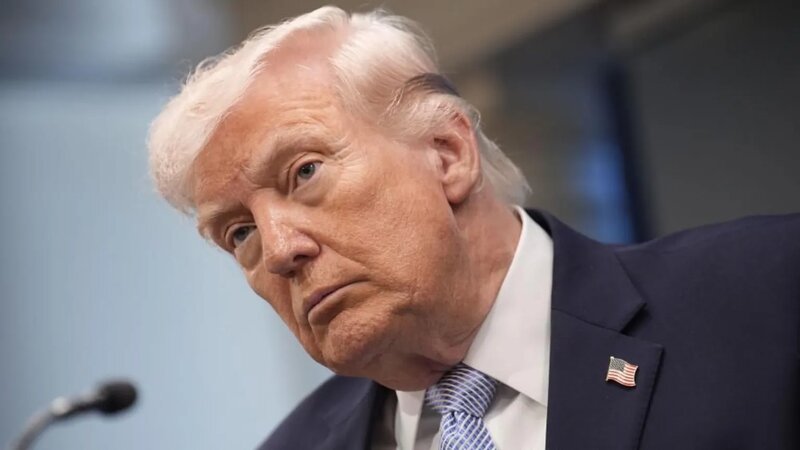
Iran Ceasefire: A "Temporary Win" That Cost Thousands of Lives, $1B+ in Equipment, and U.S. Credibility
After 6 weeks, $25B+, 13 U.S. dead, $1B+ in destroyed equipment, and threatening to end "a whole civilization" — Trump agreed to a 2-week ceasefire if Iran reopens the Strait. Iran declared "victory." The nuclear program is intact. The Strait gets a $2M-per-ship Iranian toll.
"A Whole Civilization Will Die Tonight": Trump Threatens to Destroy Iran as Deadline Passes
Trump posted: "A whole civilization will die tonight, never to be brought back again. I don't want that to happen, but it probably will." His fifth Strait of Hormuz deadline. The IEA called the crisis worse than 1973, 1979, and 2002 combined.
"Open the Fuckin' Strait, You Crazy Bastards — Praise Be to Allah": Trump's Easter Rant and Missed Deadlines
On Easter morning, Trump threatened to bomb Iran's power plants and bridges: "Open the Fuckin' Strait, you crazy bastards, or you'll be living in Hell. Praise be to Allah." It was his fourth missed Hormuz deadline. Tehran accused him of planning war crimes.
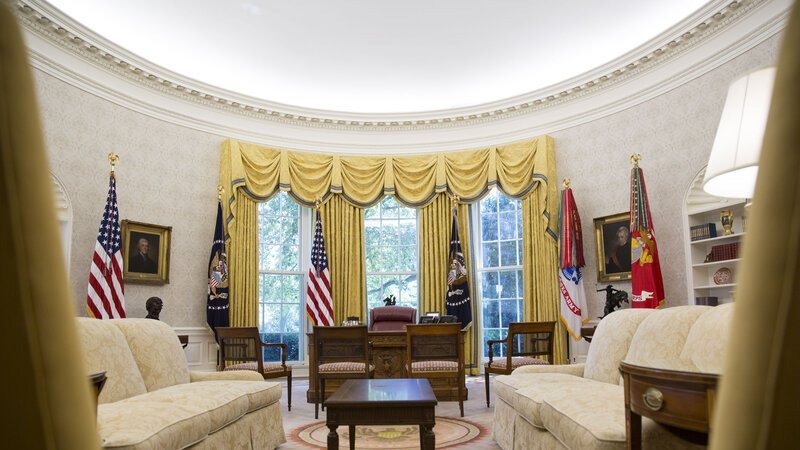
Trump Claims Iran War "Nearing Completion" — Then Promises 2-3 More Weeks of "Extremely Hard" Strikes
In a prime-time address on Day 33, Trump said the war is "nearing completion" and Iran's military is destroyed. In the same speech, he promised 2-3 more weeks of "extremely hard" hits. Iran denies requesting a ceasefire. Reuters says 2/3 of Iran's missiles are still intact.
Trump Willing to End Iran War Without Reopening the Strait of Hormuz
WSJ: Trump told aides he'll end the war even if the Strait of Hormuz stays closed — leaving the world's most critical oil chokepoint blocked. He wants allies to clean up the mess. Leavitt confirmed reopening Hormuz is "not a core objective."
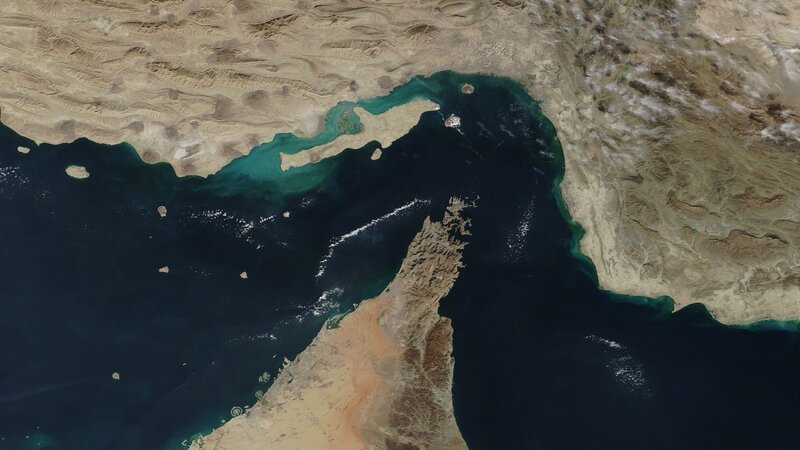
Iran Military Mocks Trump with "You're Fired" as 15-Point Peace Plan Rejected
Iran's military spokesperson told Trump "You are fired" and mocked him for "negotiating with yourself." Iran rejected the 15-point peace plan as "maximalist" and issued its own 5 conditions. The 82nd Airborne was ordered to deploy as Trump declared the war "won."
Launched Iran War During Peace Talks; Allies Refused to Help
Despite a "breakthrough" in Iran nuclear talks, Trump and Israel launched airstrikes killing thousands. Iran closed the Strait of Hormuz. When Trump demanded NATO help, allies refused. Germany: "This is not our war."