#supreme-court
26 entries with this tag
Months After Gutting the Voting Rights Act So Elected Officials Could Redraw Districts However They Please, the Supreme Court Handed Them the Other Half of the Power Over Elections — Clearing the Trump Administration to Let States Screen Voter Rolls With SAVE, a Federal Database So Flawed That More Than One in Five Texans It Flagged as Noncitizens Turned Out to Be Citizens — Over the Three Liberal Justices' Dissent That Disenfranchising "Even a Few Lawful Voters" Outweighs the Government's "Nonexistent" Harm
On September 25, 2026, the Supreme Court reversed a lower court and cleared the way for the Trump administration to let states use SAVE — the Department of Homeland Security's Systematic Alien Verification for Entitlements database — to check the citizenship of registered voters before the November midterms. The order, on the emergency docket, drew a public dissent from the three liberal justices. The Court limited the ruling to "individualized" citizenship checks and noted that federal law still bars mass purges close to Election Day, reserving that larger question for a case next term. But the tool it revived is notoriously inaccurate, and it fails in one direction: it disproportionately flags naturalized citizens as ineligible. When Texas ran its voter rolls through SAVE, it identified 2,724 "potential noncitizens" — and then confirmed that at least 578 of them, more than one in five, were in fact U.S. citizens. Justice Ketanji Brown Jackson, joined by Sotomayor and Kagan, dissented that "the harm caused by burdening or disenfranchising even a few lawful voters outweighs the nonexistent harm that the Government experiences" — noting there is no meaningful noncitizen-voting problem for the database to solve. Seen alongside the Court's April decision gutting the Voting Rights Act to free legislators to gerrymander at will, this ruling completes a pattern: having let elected officials decide how voters are grouped, the Court is now letting the political branches decide, through a faulty database, who counts as a voter at all.
After a Yearlong Campaign to Restrict Mail Voting and Repeated Emergency Trips to a Friendly Supreme Court, Trump Was Finally Told No: the Court Left Judge Talwani's Block in Place, Refusing to Let His USPS Mail-Ballot Rule Take Effect for the 2026 Midterms — Finding the Administration Unlikely to Win and, Per Kavanaugh, That Imposing the Rushed Rule Now Would Be "Arbitrary and Capricious"; Only Thomas and Alito Publicly Dissented
On September 14, 2026, the Supreme Court refused to let Trump's mail-voting restrictions take effect for the 2026 midterm elections — leaving in place the preliminary injunction issued by U.S. District Judge Indira Talwani and denying the administration's emergency bid to lift it. The practical result: voters will not face the new hurdles this fall. The Court's majority said the administration was unlikely to succeed on the merits of its challenge. Justice Brett Kavanaugh, concurring, allowed that there is "at least a fair prospect" the USPS rule falls within the Postal Service's statutory authority, but concluded that applying it in the 2026 elections "would be arbitrary and capricious in violation of the Administrative Procedure Act because state and local election officials do not have sufficient time to reasonably implement the rule before the elections" — precisely the rushed, unworkable timeline that a whistleblower, the states, and Judge Talwani had all warned about. Only Justices Clarence Thomas and Samuel Alito publicly dissented; no other justice disclosed a vote to let the rule proceed. This is a defeat for Trump, and a notable one: the same Court that in August lifted an earlier injunction in his favor declined, weeks later, to clear his signature voter-suppression scheme in time for the election it was built for. The rule would have required states to upload voter lists to USPS and meet new ballot-envelope and barcode requirements, letting the Postal Service withhold ballots from voters not on a federal database. For this election, it is dead.
A Federal Judge Blocked Trump's Mail-Ballot Scheme Outright — Ruling the Postal Service Rule Likely Unconstitutional Because Only States and Congress Can Set Election Rules, and Finding That Its Rushed Timeline Would Make Voter Disenfranchisement "Practically Inevitable" Before the Midterms — a Real Defeat, Even as His Administration Had Already Raced to the Supreme Court the Day Before to Override Her
On September 4, 2026, U.S. District Judge Indira Talwani issued a preliminary injunction blocking the U.S. Postal Service from implementing the mail-ballot rule at the heart of Trump's executive order to restrict voting by mail — a durable block that replaces the temporary one she had issued on August 27. Her findings were sharp: the rule is likely unlawful and unconstitutional because it usurps the states' authority to run their own elections (a power the Constitution gives to states and Congress, not the president), and its rushed timeline would make voter disenfranchisement "practically inevitable" before the November midterms, leaving states an "impossible" schedule to comply. The rule she blocked would have forced state and local election officials to submit their ballot envelopes for USPS "design review," add unique tracking barcodes, and upload voters' names, addresses, and barcode data to a new federal portal — and barred the Postal Service from sending ballots to eligible voters until it approved all of that, regardless of looming deadlines. This is a genuine defeat for Trump, and a detailed judicial repudiation of the scheme. But it may be fragile: the administration had already gone to the Supreme Court the day before asking the justices to override her, and it is expected to appeal. The ruling is documented here because of what it establishes on the record — that a court, examining the actual mechanics, found Trump's mail-voting plan both likely illegal and a near-certain engine of disenfranchisement.
Two Days After a Whistleblower Warned That the Postal Service's Rushed Ballot System Could Reject Votes in Bulk — and After Already Winning One Round at the Supreme Court in August — Trump's Administration Raced Back to the Same Court a Second Time, Asking the Justices to Lift a Fresh Federal Order Blocking the USPS Rule So It Can Switch the System On Before the November Midterms
On September 3, 2026, the Trump administration returned to the Supreme Court for the second time in its fight to restrict mail-in voting before the midterms — asking the justices, on an emergency basis, to pause an order by a federal judge in Boston that blocks the U.S. Postal Service from implementing parts of its new mail-ballot rule. The sequence is relentless. Trump's March executive order directs the Postal Service to deliver mail ballots only to people on federally compiled citizenship lists; two courts blocked it as unconstitutional; in August the Supreme Court, 6-3, lifted one of those injunctions; USPS then issued a final rule on August 26; and on August 27 a federal court temporarily blocked the agency from implementing parts of it, with that restraining order set to expire September 10 and a ruling on a longer-term injunction expected within days. Rather than wait for that ruling, the administration went straight back to the Supreme Court to try to clear the block now. The timing is the tell: just two days earlier, a federal whistleblower warned Congress that this very USPS system was rushed, untested, and designed with a "zero-percent failure policy" that could reject entire batches of ballots. The administration is, in effect, asking the Supreme Court to let it switch on a machine it was just warned could disenfranchise millions — racing the calendar toward November, and using the emergency docket to keep the fight on procedure so the courts never have to answer the actual question: whether a president has any authority to run elections at all. He does not.
A Federal Whistleblower Warned Congress That the Postal Service Is Secretly Rushing an Untested System to Enforce Trump's Mail-Ballot Order — Built in Under Three Months for a Job That Normally Takes a Year, and Designed With a "Zero-Percent Failure Policy" That Would Reject an Entire Batch of Ballots if Even One Is Flagged — Which Could Disenfranchise Millions of Voters Before the Midterms, in Apparent Defiance of the Courts
On September 1, 2026, Sen. Richard Blumenthal (D-Conn.), ranking member of the Permanent Subcommittee on Investigations, released a whistleblower report from a federal official warning that the U.S. Postal Service is secretly building a rushed, untested system to implement Trump's mail-in-ballot executive order — and that it could keep millions of voters from getting their ballots this November. The system, a "Federal Ballot Mail Portal" to verify that states' mail ballots comply with the new rule, was reportedly not started "in earnest" until June 2026, giving USPS under three months to build something that would normally take nine to twelve. Most alarming is its design: the whistleblower describes a "zero-percent failure policy" under which an entire batch of ballots could be rejected if even a single ballot in it is deemed invalid — meaning, as one account put it, tossing out 9,999 valid ballots to stop one questionable one. The whistleblower says USPS leadership "discarded all best practices" to hit a September 1 deadline, "raising questions about whether catastrophic failure would be a feature rather than a bug," and alleges that development continued despite court injunctions and a Supreme Court ruling that had blocked the order. These are allegations from an insider, released by a Democratic senator, and USPS is pressing ahead while the DOJ appeals. But if accurate, they describe a plan to disenfranchise voters at scale, in secret, by machine — the operational engine behind a mail-voting order this archive has tracked from executive decree to courtroom.
The Full Supreme Court, 5-4, Let Trump Keep Building His White House Ballroom Indefinitely — but Ducked the Actual Question of Whether He Can Demolish the People's House Without Congress, Ruling Only That the Preservation Group Suing Him Probably Lacks Standing; in a Striking Split, Chief Justice Roberts Joined the Three Liberals in Dissent, Writing That the Construction Is "Likely Unlawful"
On August 31, 2026, the full Supreme Court — going beyond Chief Justice Roberts's individual interim stay ten days earlier — ruled 5-4 that Trump may continue building his White House ballroom on the site of the demolished East Wing, indefinitely, while litigation continues. But the Court did not decide the question the case actually raises: whether a president can tear down and rebuild part of the White House without congressional approval. Instead, the unsigned majority ducked the merits on a technicality, holding that the National Trust for Historic Preservation likely lacks legal standing to sue at all. The lineup was unusual and revealing. The five justices in the majority were all conservatives, including Trump's three appointees. Chief Justice John Roberts — who had granted the temporary stay on August 21 — crossed over to join the Court's three liberals in dissent, writing that construction has now "proceeded for the better part of a year" and is "likely unlawful." That is the Chief Justice of the United States saying, on the record, that the president is probably breaking the law, and that five of his colleagues just cleared the way for him to finish doing it. The ballroom will be built. Whether he had the power to build it is a question the Court arranged never to have to answer.
Rebuffed by the Supreme Court in June, Trump Revived His Unprecedented Campaign to Fire Federal Reserve Governor Lisa Cook — Reusing the Same Cherry-Picked Mortgage-Paperwork Allegations to Try to Remove, "For Cause," the First Governor Any President Has Ever Sought to Purge in the Fed's 111-Year History, in a Naked Bid to Bend Interest Rates to His Will; Cook Called the Charges Baseless and Turned Them Back on Trump's Own Cabinet
For the first time in the Federal Reserve's 111-year history, a president is trying to fire a sitting governor — and having failed once, Trump is trying again. In 2025 he purported to remove Governor Lisa Cook "for cause," citing a criminal referral from his own housing-finance director, Bill Pulte, that accused her of listing two homes — one in Michigan, one in Georgia — as her primary residence on mortgage paperwork. Cook sued; lower courts blocked the removal; and in late June 2026 the Supreme Court let her keep her seat while the case proceeds (even as it expanded Trump's removal power over other independent agencies). In August 2026, Trump revived the effort with the same allegations. Cook's lawyers answered in a five-page letter to Attorney General Pam Bondi and the White House calling the charges "unfounded and untrue," arguing that "an inadvertent error is not fraud," accusing Pulte of "cherry-picking" mortgage documents to manufacture a referral, and pointedly turning the same kind of paperwork scrutiny back on Trump and members of his own Cabinet. Strip away the mortgage pretext and the real target is the Fed's independence: Trump wants lower interest rates, a governor who will vote for them, and the power to remove any governor who won't. Firing Cook would hand the president direct leverage over the central bank that sets the price of money for the entire economy — the precise outcome a century of law was built to prevent.
The Supreme Court Cleared One of the Two Legal Roadblocks to Trump's Mail-Ballot Executive Order — a Decree That Would Let the Postal Service Refuse to Deliver Mail Ballots From States That Don't Hand Over Their Voter Rolls, Months Before the Midterms — Over a Dissent Warning It "Needlessly Injects Chaos" Into the Election; Justice Jackson Called It a "Kafkaesque Nightmare"
On August 24, 2026, the Supreme Court lifted one of two injunctions that had frozen Trump's executive order restricting mail-in voting — an order that, among other things, would have the U.S. Postal Service decline to deliver mail ballots from any state that refuses to hand the federal government a list of every voter receiving one, impose new federal design and tracking standards on mail ballots, and put the Department of Homeland Security in the business of screening state voter rolls. The unsigned order fell along ideological lines. Justice Ketanji Brown Jackson dissented, warning the ruling "needlessly injects chaos and uncertainty into the upcoming midterm elections" and calling the situation a "Kafkaesque nightmare"; Justices Sotomayor and Kagan also dissented. Crucially, the order is not yet in effect: a second nationwide injunction — won by the League of Women Voters and other groups on August 11 — still stands, and legal experts expect the trial court to quickly block the Postal Service's newly finalized rule too. But the direction is unmistakable. The Constitution's Elections Clause gives states, not the president, the power to run federal elections, and two federal courts found Trump's order unconstitutional on exactly that ground. The Court didn't bless the order — it explicitly said implementing measures could still be unlawful — but it pulled away one of the barriers holding back a presidential attempt to dictate how Americans vote, mere months before they do.
A Week After Two Courts Ruled He Was Demolishing the People's House Without the Authority to Do It, Trump Got What He Wanted From the Supreme Court: Chief Justice Roberts Issued a Stay Letting Construction of His $400 Million East Wing Ballroom Keep Going — Overriding, For Now, the Judges Who Said a President Cannot Tear Down and Rebuild the White House Without Congress
On August 21, 2026, Chief Justice John Roberts granted a temporary stay allowing Trump to continue building his 90,000-square-foot, $400-million-plus ballroom on the site of the demolished White House East Wing — putting on hold, for now, the lower-court rulings that had ordered the aboveground work stopped. The legal challenge, brought by the National Trust for Historic Preservation, argues that the president had no authority to unilaterally demolish part of the White House and erect a massive new structure without congressional approval. A federal district court agreed, finding Trump exceeded his authority, and a divided appeals court affirmed it earlier in August. Rather than go to Congress — the branch the Constitution actually charges with funding and authorizing such things — the administration ran to the Supreme Court's shadow docket, and Roberts, handling the emergency application, blocked the lower courts' order while the justices decide what to do next. The stay is provisional and procedural, not a ruling that the demolition was lawful. But its practical effect is immediate and hard to reverse: the bulldozers and cranes keep working while the courts deliberate, and every day of construction makes the finding that he never had the authority harder to give any teeth. This is the next beat in a saga the archive has tracked from the first judge's order ("the President is not the owner") through the DOJ's shadow-docket gambit — a president reshaping the nation's most symbolic public building on his own say-so, and the courts, so far, letting him.
It's Over: On August 17 the Supreme Court Refused Trump's Last Appeal, Making the Jury's Verdict That He Sexually Abused E. Jean Carroll Final and Unchallengeable in Any Court — a Sitting President Now Legally Established, With No Further Appeal Possible, as a Sexual Abuser
On August 17, 2026, the Supreme Court rejected Donald Trump's final bid to escape the E. Jean Carroll case in which a federal jury found him liable for sexually abusing her in 1996 and defaming her about it. The Court had already denied his appeal of that verdict in late June; he petitioned for a rehearing; on August 17 the justices denied the rehearing too. The denial — procedurally routine, since the Court almost never grants rehearings — carries a consequence that is anything but routine: the unanimous jury verdict that Trump sexually abused Carroll, and the roughly $5 million (with interest, about $5.6 million) judgment against him, are now final and cannot be challenged in any court, ever. After years of appeals, a sitting President of the United States stands legally adjudicated, with no further recourse, as a sexual abuser. Importantly, this is the smaller of the two Carroll cases; the separate $83.3 million defamation judgment — over statements Trump made as president in 2019, where his lawyers and the Justice Department are pressing a sweeping presidential-immunity claim — remains pending before the Supreme Court, with a decision on whether to hear it likely in the fall. But the underlying finding at the heart of both cases — that Trump did what Carroll said he did — is now permanent.
A Federal Appeals Court Ordered Trump to Stop Building His Ballroom Until Congress Approves It — So Instead of Asking Congress, His DOJ Ran to the Supreme Court's Shadow Docket to Override the Order, Arguing the Demolition and Construction Can't Wait Because of a "Recent Missile Threat on Air Force One"
On August 7, 2026, a majority of the U.S. Court of Appeals for the D.C. Circuit ordered construction of Trump's roughly $900 million White House ballroom halted unless the administration obtains congressional approval — reaffirming the principle a district judge had already stated in voiding the project earlier: "The President Is Not the Owner." The White House does not belong to the president; he cannot unilaterally demolish and rebuild it, or spend the public's money on it, without Congress. Rather than go to Congress, the administration went to the Supreme Court. On the shadow docket, the Justice Department asked the justices to stay the injunction and let construction continue — and the justification it offered was a "recent missile threat on Air Force One," arguing that the ballroom's hardened, bomb- and missile-resistant construction is too urgent to pause. Chief Justice John Roberts set a deadline for the challengers to respond. The move is the now-familiar pattern: told by a court to stop, the administration neither complies nor persuades Congress but sprints to the Supreme Court to have the check overridden — dressing a vanity building project, whose cost quadrupled to nearly $900 million and whose funds were partly diverted without Congress, in the language of an emergency national-security threat.
The Administration Spent the Summer Trying to Strip Legal Status From 350,000 Haitians and Send Them Back to a Country Ruled by Gangs — Losing in Court After Court but Never Stopping, Until the Whiplash of Last-Minute Reprieves Was Already Separating Families and Costing People Their Jobs
About 350,000 Haitians who have lived and worked legally in the United States under Temporary Protected Status spent the summer of 2026 in engineered limbo. TPS exists precisely because a country is too dangerous to return people to, and Haiti — where armed gangs control most of the capital, there is no elected government, and the humanitarian situation is catastrophic — is the textbook case. The Trump administration moved to terminate the designation anyway. In June the Supreme Court cleared the way for terminations to proceed; but lower courts kept intervening, granting a February stay and then a series of last-minute reprieves that pushed the cutoff from February to July 10, to July 24, to July 27, as a D.C. Circuit panel rejected the administration's bid to end protections on 48 hours' notice. The Department of Homeland Security and the federal courts remain openly at odds. The practical result is not an orderly policy but chaos: families bracing for separation with days' notice, and employers — confused by work permits that are technically auto-extended but bear expired dates — already letting Haitian workers go, even though rejecting valid extended documents is itself unlawful. Whether or not the courts ultimately let the termination stand, the administration has already inflicted the harm: a third of a million people made to live week to week on whether they will be deported to a collapsed state, their jobs and families unraveling in the uncertainty the government manufactured.
Trump and the Justice Department Asked the Supreme Court to Erase the $83.3 Million He Owes E. Jean Carroll for Defaming Her — Arguing That Calling His Sexual-Abuse Accuser a Liar Was an "Official Act" of the Presidency He Can't Be Sued For, and Putting Government Lawyers on His Personal Defense
On July 28, 2026, Trump and the U.S. Department of Justice separately asked the Supreme Court to throw out the $83.3 million a jury ordered him to pay writer E. Jean Carroll for defaming her — when, in 2019, as president, he denied her account that he sexually assaulted her in a Bergdorf Goodman dressing room in the mid-1990s and called her a liar. Their argument: presidential immunity. Because the Supreme Court's 2024 ruling held that "most of a President's public communications" are official acts, Trump's lawyers claim his 2019 statements branding Carroll a liar were official presidential acts for which he cannot face personal civil liability. A federal appeals court had already rejected this, affirming the award as "reasonable in light of the extraordinary and egregious facts" and finding Trump had waived any immunity claim by raising it too late. Two things make it a scandal, not just an appeal. First, the Justice Department — taxpayer-funded government lawyers — joined to defend the president's personal liability for defaming the woman a separate jury found he sexually abused. Second, the theory itself: that a president is immune from being sued for defaming his own sexual-assault victim because insulting her from the White House podium was part of the job. Trump is asking the Court to rule that the presidency is a shield not just for governing, but for smearing the people who accuse him of assault.
After 23 States and Two Federal Courts Blocked It as Unconstitutional, Trump Asked the Supreme Court to Let His Mail-Voting Order Take Effect Before the Midterms — an Order That Would Bar the Postal Service From Mailing Ballots to Anyone Not on State-Submitted Lists, Put DHS in Charge of Screening Voter Rolls, and Prioritize Prosecuting Election Officials
On July 27, 2026, the Trump administration asked the Supreme Court — via an emergency "shadow docket" application filed by Solicitor General D. John Sauer — to lift lower-court blocks and let a sweeping executive order restricting mail voting take effect in time for the November midterms. The March executive order would: require states to submit lists of eligible mail voters to the U.S. Postal Service, which would be barred from sending a ballot to anyone not on those lists; give the Postal Service and the Department of Homeland Security new roles screening state voter rolls for supposed noncitizens; mandate individualized barcodes on ballot envelopes; and "prioritize" federal prosecution of state election officials who send ballots to ineligible voters. Twenty-three Democratic-led states sued, noting the Constitution leaves the running of elections to the states, not the White House. U.S. District Judge Indira Talwani blocked it as a separation-of-powers violation, and the Boston-based 1st U.S. Circuit Court of Appeals upheld that block over the weekend, finding the order would "sow confusion" and "threaten disenfranchisement of many eligible voters." Sauer argued the injunction was "extraordinary" and that the order "merely sets forth general policy guidance." Voting-rights groups called it "plainly unconstitutional... yet another attempt by the president to unlawfully take control of elections from the states, deter eligible voters from casting ballots, and sow chaos as the November midterms approach." It is the same campaign documented here through the FEMA counterterrorism-funding blackmail, the purge of the Election Assistance Commission, and the primetime "China stole 220 million voter files" speech — now escalated to the Supreme Court, asking the justices to green-light federal control over an election the president has spent months insisting will be stolen.
Trump Fired Every Remaining Member of the Bipartisan Election Assistance Commission — Gutting the Agency That Certifies Voting Machines Four Months Before the Midterms — Then Gave a Primetime Address Claiming China Stole "220 Million Voter Files," a Claim His Own Government's Intelligence Flatly Contradicts
On July 16, 2026, Trump delivered a 25-minute primetime address from the White House East Room claiming he was "declassifying intelligence" that revealed "shocking vulnerabilities in our election infrastructure" — including the assertion that "The People's Republic of China carried out what is believed to be the largest compromise of election data in history, resulting in China's illicit acquisition of 220 million U.S. voter files." His own government's intelligence contradicts him: a federal report from March 2021 concluded "We have no indications that any foreign actor attempted to alter any technical aspect of the voting process in the 2020 US elections." FactCheck.org and others found the documents the White House posted did not support the sweeping claims. The speech came exactly one week after Trump fired the three remaining members of the Election Assistance Commission — Democrats Thomas Hicks and Benjamin Hovland (dismissed by email) and Republican Christy McCormick (asked to resign by phone) — leaving the bipartisan federal agency that certifies voting-machine standards and helps states run elections without a quorum, unable to act, and unlikely to regain one before the November midterms. The White House cited a recent 6-3 Supreme Court decision on the president's power to fire independent-agency members as its justification. Trump also repeated debunked 2020 conspiracy theories and baselessly claimed fraud cost a Republican the Los Angeles mayoral primary. A Reuters analysis found his noncitizen-voting claims unsupported — just 129 prosecutions under the relevant law since 1996, most involving confusion or paperwork errors, not organized fraud. It all lands atop the administration's broader campaign to seize control of election administration: the FEMA counterterrorism-funding blackmail, the SAVE voter-roll purges, and DOJ criminal threats to state officials.
Trump Loses Mail Ballot Case at Supreme Court 5-4 — His Own Appointee Barrett Writes the Majority Opinion — Then SCOTUS Denies His Carroll Appeal, Meaning He Must Pay $5 Million for Sexual Abuse
The Supreme Court ruled 5-4 in Watson v. Republican National Committee that states may continue counting mail ballots that arrive after Election Day, provided they were postmarked on time — rejecting the RNC's argument that 19th-century federal election-day statutes require ballots to be received by Election Day. Justice Amy Coney Barrett, Trump's own appointee, wrote the majority opinion, joined by Chief Justice Roberts and the three liberal justices. Barrett wrote: "The electorate's choice is made when voting is complete, not when ballots are received." She added: "At bottom, plaintiffs' theory is that because we are governed by 19th-century election-day laws, we are also governed by 19th-century voting practices." The ruling reversed the Fifth Circuit and protects laws in more than half the states and D.C. that permit late-arriving mail ballots. Alito dissented, warning of "lamentable consequences." Trump called it a "tremendous loss" and renewed his demand for the SAVE America Act — the voter ID bill the Senate has already rejected twice (four Republicans joined Democrats both times), that Trump held a bipartisan housing bill hostage over, that he canceled his own DNI nominee's hearing over, and that Senate Majority Leader Thune says "doesn't have the votes." The same day, the Court denied Trump's appeal in the E. Jean Carroll sexual abuse case without comment, meaning the $5 million verdict — for a jury finding that Trump sexually abused Carroll — stands. Nearly one in three Americans voted by mail in 2024. The noncitizen voting "crisis" the SAVE Act claims to address: Heritage Foundation's own database documents 68 cases out of over one billion ballots cast in 40 years.
White House Secretly Pressured the Board Meant to Protect Civil Servants — Sherk Told MSPB Head to Follow "the Company Line," Board Then Broke with Decades of Precedent, and 50,000 Workers Lost Protections
A New York Times investigation by Michael Schmidt reveals that the Trump White House secretly pressured the Merit Systems Protection Board — the independent agency created after Nixonian abuses to protect federal employees from political firings — into adopting the administration's theory that the president can fire any civil servant at will. White House aide James Sherk, author of the Schedule F memo and a man who has said "every federal employee should serve at the pleasure of the president," met with acting MSPB head Henry Kerner while Kerner was being considered for a permanent position. Sherk told Kerner he was expected to follow the Office of Legal Counsel's opinions on unitary executive theory — described by experts as "little different from calling a federal judge and telling him how to rule." The MSPB then broke with decades of precedent and ruled that it could weigh in on constitutional questions in a way that effectively endorsed the president's power to fire employees without cause. This followed Trump firing Democratic MSPB member Cathy Harris in February 2025 — converting the bipartisan board into one controlled by his appointees — and the Supreme Court blocking her reinstatement via shadow docket. On March 9, 2026, the Schedule Policy/Career rule took effect, stripping civil service protections from up to 50,000 federal workers, making them at-will employees who cannot appeal firings to the MSPB, cannot access statutory whistleblower protections, and cannot challenge their reclassification. An initial executive order reclassified about 8,000 positions. When DOJ prosecutor Maureen Comey (daughter of James Comey) was fired via an Article II letter, a federal judge ruled she could bypass the compromised MSPB and sue directly in federal court — finding the constitutional basis for her firing placed her case "outside the universe" Congress intended the MSPB to resolve. The D.C. Circuit dissent warned: "Under my colleagues' reasoning, it appears that no independent agencies may lawfully exist in this country."
On the Same Day Trump Held a Housing Bill Hostage for a Voter-ID Law, a Judge Permanently Struck Down His Voter-ID Executive Order — Ruling He Has No Power Over Elections At All
On June 24, 2026 — the same day Trump canceled the signing of a bipartisan housing bill to pressure Congress into passing his SAVE America Act voter-ID law — U.S. District Judge Denise Casper in Boston permanently struck down most of his elections executive order, including its requirement that Americans show documentary proof of citizenship to register to vote. In a 59-page ruling converting her year-old preliminary injunction into a permanent one, Casper held that the Constitution "does not grant the President any specific powers over elections," that authority belongs to the states and Congress, and that the order violated separation of powers. She also found the Justice Department "failed to demonstrate the alleged fraud" used to justify the order, and that the policy "would have disenfranchised thousands." The case was brought by 19 states. It is the latest in a string of defeats: three separate federal judges have now blocked the 2025 order. The ruling lays bare the futility loop Trump is in — courts say he can't do it by executive order, so he's trying to do it by legislation (the SAVE Act), which can't get 60 votes in the Senate, which is why he's now holding popular bills hostage to force it through. Noncitizen voting is already a felony and is vanishingly rare; the federal registration form already requires attesting to citizenship under penalty of prison or deportation.
Vance Crashes Supreme Court Dinner Uninvited — Chief Justice Roberts Ignores Him Completely
JD Vance showed up uninvited to a private dinner hosted by Chief Justice Roberts for his former law clerks, tagging along as a plus-one with his wife Usha. Roberts didn't give Vance special seating, didn't mention him in his remarks, and treated the Vice President of the United States as a forgettable guest. This from the man who called Roberts "profoundly wrong" for believing in checks on executive power — while Trump calls the justices "lap dogs" and "disloyal" and is trying to intimidate the court ahead of major rulings.
Judge Throws Out Charges Against Abrego Garcia: DOJ Prosecution Was "Vindictive" Retaliation for Challenging His Wrongful Deportation
A federal judge dismissed human smuggling charges against Kilmar Abrego Garcia, ruling the prosecution was vindictive retaliation for his legal fight to return from wrongful deportation. The charges stemmed from a 2022 traffic stop that was closed without action — then reopened by Deputy AG Todd Blanche immediately after the Supreme Court ordered his return. The judge quoted Robert Jackson's warning about "picking the person first and the crime second." The DOJ called him "an activist judge."
"I'll Remember Them": Trump Pressures Companies Not to Claim $175 Billion in Tariff Refunds the Supreme Court Says They're Owed
After the Supreme Court struck down Trump's IEEPA tariffs as unconstitutional (6–3), companies are owed up to $175 billion in refunds. Trump is now publicly pressuring them not to claim the money: calling companies that don't seek refunds "brilliant" and warning "I'll remember them." The president is using implicit threats to discourage businesses from exercising a legal right affirmed by the Supreme Court.
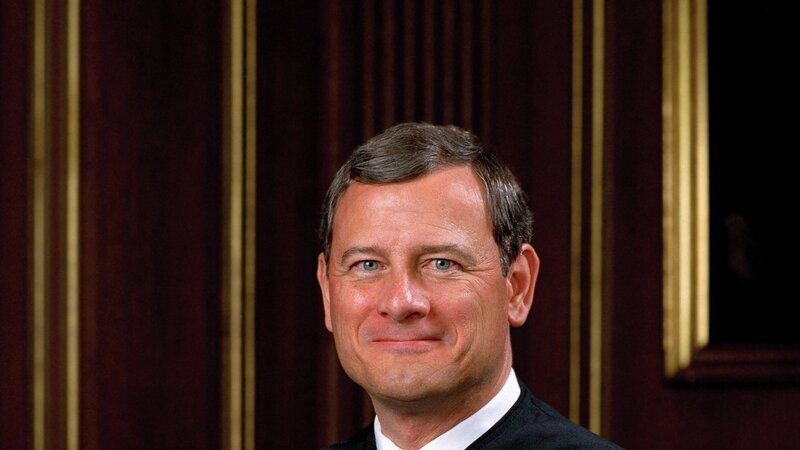
Trump Rages at Supreme Court in 1 AM Meltdown: Justices Should Watch Fox News
At 1 AM, Trump posted that the Supreme Court should have "studied" Mark Levin's Fox News show to understand the 14th Amendment. This after his own appointees were skeptical at oral arguments, Roberts told him "It's the same Constitution," and he left the hearing early.
SCOTUS Skeptical of Birthright Order — Roberts: "It's the Same Constitution." Trump Left Halfway Through.
At oral arguments, both liberal and conservative justices challenged Trump's birthright citizenship order. Roberts: "It's the same Constitution." Jackson: "Are we bringing pregnant women in for depositions?" Trump attended — the first president ever — but left halfway through.
Supreme Court Strikes Down IEEPA Tariffs 6-3
The Supreme Court ruled 6-3 that Trump lacked authority to impose tariffs under IEEPA, with Chief Justice Roberts writing he lacked "peacetime authority" to tax. Over $130 billion had already been collected.
Tariff Trade War Economic Damage
Trump's tariffs constituted the largest U.S. tax increase as a percentage of GDP since 1993, costing average households $1,500/year. The U.S. lost the equivalent of 2,800 factories. The Supreme Court ruled his tariff authority was unauthorized.
Wrongful Deportation of Kilmar Abrego Garcia
A Maryland man with explicit court-ordered protection from deportation was mistakenly deported to El Salvador's CECOT prison. The Supreme Court ruled 9-0 the government must facilitate his return. Trump defied the ruling for months.