#national-security
13 entries with this tag
Under Kash Patel, the Agency Responsible for Counterintelligence Suffered One: Hackers Claiming to Have Breached the FBI Said They Stole Data on Thousands of Its Employees — Home Addresses, Dates of Birth, Social Security Numbers, Emergency Contacts, and, in Some Cases, the Sensitive Intelligence, Counterespionage, and Surveillance Assignments They Hold, Including Cases Touching China, Russia, Iran, and Hezbollah
In late September and early October 2026, the hacking group ShinyHunters claimed it had breached the FBI and stolen data on thousands of its employees — in the group's telling, on "every FBI employee." Journalists were shown a spreadsheet of roughly 5,000 alleged FBI personnel records containing names, home addresses, phone numbers, dates of birth, Social Security numbers, and emergency contacts — and, for some, their field-office assignments and the sensitive intelligence, counterespionage, and surveillance work they do, including cases involving China, Russia, Iran, and Hezbollah. Security experts called it a counterintelligence disaster: exposing where agents live and what adversaries they work against is precisely the information a hostile service would kill for. The FBI confirmed a cybersecurity incident; a suspected member of the group was detained in Jordan and is reportedly cooperating. And it does not stand alone. This is the FBI that, earlier in 2026, had its DCSNet wiretap-surveillance network penetrated — a breach security researchers tied to the Chinese state group Salt Typhoon and the bureau labeled a "major incident" — and whose own director, Kash Patel, had his personal email hacked by an Iran-linked group. The agency charged with protecting the nation's secrets keeps failing to protect its own, under a director who, as this archive has documented, purged its experienced ranks, lowered its hiring standards, and churned through its leadership. You cannot run a counterintelligence service as a loyalty project and expect it to keep the counterintelligence.
His Own Ambassador to China Revealed on Fox News That Trump, Around Xi Jinping's State Visit, Offered to Sell U.S. Weapons to China — the Adversary the Entire American Defense Posture Is Built to Counter, and to Which Arms Sales Are Illegal Under a Ban in Place Since 1989 — a Casual "Would He Like to Buy Some" Pitch That the State Department Immediately Denied and That Analysts Called "Insane" and "Unsettling" to the Allies at "the Pointy Edge of China's Spear"
On September 28, 2026, the U.S. ambassador to China, David Perdue, told Fox News that President Trump had offered to sell American weapons to Chinese leader Xi Jinping. In Perdue's telling — offered admiringly, as evidence of Trump's dealmaking — the president "continues to say, 'Hey, we sell arms to other people around the world.' He actually asked President Xi, would he like to buy some, at one point." The remark came around Xi's state visit that week, reportedly amid Chinese complaints about U.S. arms sales to Taiwan. There are two problems, and both are large. First, selling arms to China is illegal: the United States has maintained an arms embargo on Beijing since the 1989 Tiananmen Square massacre, and after Perdue's comments the State Department flatly denied any such move, stating that "U.S. law prohibits arms sales to China and there is no offer or plan to sell arms to China." Second, and worse, is the strategic incoherence: China is the single adversary the entire American military posture, and its network of Indo-Pacific alliances, exists to deter. A president casually offering to arm it — in apparent counterpoint to the weapons the U.S. sells to Taiwan, which China threatens — is exactly the signal that alarms the allies depending on Washington. Whether the offer was a joke, a negotiating gambit, or serious, it was made, and disclosed by his own ambassador as a point of pride. One China scholar said it "will be unsettling to American partners at the pointy edge of China's spear"; a human-rights advocate put it more bluntly: "If the Ambassador is telling the truth, then this is insane."
Trump's Most Loyal Aide — Natalie Harp, the "Human Printer" Who Sits Just Outside the Oval Office and Handles His Truth Social Account — Worked More Than a Year Inside the White House With No Security Clearance, Repeatedly Refusing the Standard Vetting Every West Wing Staffer Undergoes, Until Trump Personally Intervened to Get Her One; a Former CIA Official Called It "Mind-Boggling"
Natalie Harp — one of Donald Trump's closest and most devoted aides, known as his "human printer" for the stream of flattering news clippings and poll numbers she hands him, who sits just outside the Oval Office and has access to his Truth Social account — worked inside the White House for more than a year without a security clearance, according to reporting broken by MS NOW on August 19, 2026. The clearance is a routine step every West Wing staffer completes; Harp repeatedly declined to fill out the paperwork after Trump returned to office in January 2025, and her reason for refusing was never made clear. The problem is her access: national security officials noted that her physical proximity to Trump — in both the West Wing and the residence — gives her exposure to more sensitive information than almost any other senior official, and she had it for a year while un-vetted. Concern grew inside the White House counsel's office and among security officials until Trump himself intervened, after which Harp finally submitted the forms, underwent a federal background investigation, and received the clearance in recent months. A former CIA official called the situation "mind-boggling." Press Secretary Karoline Leavitt responded that Harp "has a security clearance like everyone else" and called her a dedicated team member. The episode fits a documented pattern of the administration treating the national-security vetting system — the safeguard that exists to keep the un-vetted away from classified information — as optional for loyalists: FBI Director Kash Patel similarly granted deputy Dan Bongino a waiver around a key clearance while giving him access to the President's Daily Brief.
The Secret Service Told Trump Not to Fly His $400M Qatari Air Force One Out of a War Zone — It Was "Rushed" Into Service, Lacks the Command-and-Control "Flying Situation Room," Missile Defenses, and Mid-Air Refueling, So He Left Turkey on the Old Plane and Ordered Iran Strikes From It
One week after Trump took his triumphant maiden flight on the new Qatari-gifted Air Force One, the Secret Service advised him not to fly it out of a war zone. Departing the NATO summit in Ankara, Turkey on July 8, 2026 — with the Iran ceasefire collapsing and Trump calling himself Iran's "No. 1 target" — the president left on the original Kennedy-era Air Force One and sent the Qatari jet ahead, empty, to a U.S. base in England. Four U.S. officials told CNN the switch was driven by security concerns tied to the escalating Iran conflict; the New York Times reported the Secret Service urged the swap. The reason: the $400 million gifted Boeing 747-8, hurried into service in roughly 18 months instead of the usual years, lacks the original plane's command-and-control systems — the "flying situation room" that lets a president receive classified briefings, communicate securely, and order military strikes — as well as missile-defense systems, mid-air refueling, and hardening against electromagnetic-pulse attack. It mattered immediately: it was aboard the old plane, mid-flight, that Trump authorized fresh strikes on Iran. "This plane was built for aesthetics, not mission," a former national security official said. The military and Secret Service viewed the Qatari jet as having been "rushed." The Air Force insisted the jet is "safe, secure" but conceded that "several highly complex engineering modifications required for the final aircraft were intentionally excluded from the Bridge aircraft." Trump offered a cascade of conflicting explanations — the troops wanted to "tour the Aircraft," "for old time's sake," "there wasn't a security concern" — before telling reporters who'd been ordered to lower their window shades on takeoff that it was "because you're probably on a dangerous flight." His communications director said they deploy "every tool at our disposal — including distraction and misdirection." The vanity jet that was diverted nuclear-missile money to build, accepted over the Emoluments Clause, and paraded as a triumph could not be trusted to carry the commander in chief during the one crisis it was theoretically there for.
Trump Sabotages His Own DNI Nominee's Hearing, Holds National Security Hostage for a Voter ID Bill That Can't Pass — FISA Lapses for the First Time Ever
Trump blindsided Senate Republicans with an overnight Truth Social post from the G7 in France, ordering the cancellation of Jay Clayton's confirmation hearing as Director of National Intelligence — hours before it was scheduled to begin. His demands: (1) the Senate must first confirm Jamie McDonald, his pick to replace Clayton as U.S. Attorney for the Southern District of New York, and (2) Congress must attach his SAVE America Act voter ID bill to any FISA renewal. The result: FISA Section 702 — which provides 60% of the president's daily intelligence briefing — has lapsed for the first time since 2008; Bill Pulte, a housing official with zero national security experience who is under GAO investigation for weaponizing mortgage fraud allegations against Trump's critics, remains as acting DNI; and the qualified, bipartisan-backed nominee sits idle. Sen. Cotton initially said he'd proceed with the hearing anyway, then reversed. GOP Sen. Cramer: "Frankly, I was disappointed again." Thune acknowledged the SAVE Act "doesn't have the votes." Schumer: "Trump is holding our national security hostage." Homeland Security Secretary Mullin warned the threat level is "the highest it's ever been" — during the FIFA World Cup and Freedom 250 celebrations — while the president insists a surveillance program he calls essential cannot be renewed unless Congress passes a voting bill the Senate cannot pass.
FBI Director Patel's Personal Email Hacked by Iran — Was Warned Before Taking Office
Iran-linked hackers published 300+ emails and photos from FBI Director Kash Patel's personal Gmail. He had been warned in late 2024 about the breach before becoming FBI Director. The hackers sat on the materials for over a year before releasing them in retaliation for DOJ seizing their websites.
Days Before Trump Launched His War on Iran, Kash Patel Gutted the FBI Unit That Tracks Iranian Threats and Espionage — Firing About a Dozen Counterintelligence Staffers From CI-12, Not for Any Failure on the Job, but Because They Had Once Been Assigned to the Mar-a-Lago Classified-Documents Investigation of Trump — Draining Decades of Iran Expertise at the Exact Moment the Country Was About to Need It Most
In early March 2026, FBI Director Kash Patel ordered the firing of about a dozen counterintelligence staffers from CI-12, a unit in the FBI's Washington Field Office whose work focused on media leaks, global espionage, and threats involving the Iranian regime. According to CNN and other reporting, they were not removed for poor performance. They were removed because they had, in some capacity, previously been assigned to the Justice Department's investigation — conducted under the Biden-era special counsel Jack Smith — into Trump's retention of classified documents at Mar-a-Lago; Patel reportedly lashed out after learning Smith had sought his own phone records. The timing made the purge far worse than a routine act of political revenge: it came just days before the United States launched a major bombing campaign against Iran. Patel gutted the FBI's Iran counterintelligence expertise at the precise moment a war with Iran was about to make that expertise critical — hollowing out the team responsible for tracking Iranian espionage and retaliation inside the United States right as both became acutely likely. Members of Congress demanded Patel testify; the FBI disputed that the firings damaged its Iran work. But the sequence is the indictment: the director punished agents for having investigated Trump, and in doing so, left the country blinder to Iran on the eve of fighting it.
The "Spy Sheikh" Paid $500M for 49% of Trump's Crypto Firm, Then Got 500,000 AI Chips
Per the WSJ: Sheikh Tahnoon — UAE national security adviser, nicknamed the "Spy Sheikh" — paid $500 million for a secret 49% stake in World Liberty Financial, signed by Eric Trump four days before the inauguration. Months later, the U.S. approved 500,000 advanced AI chips per year to the UAE — a deal Biden had blocked. A fifth go to Tahnoon's own AI firm.
Hegseth Shared War Plans with Wife and Brother on Signal
Beyond the first Signal leak, Defense Secretary Hegseth shared classified F/A-18 strike schedules in a second Signal chat that included his wife, his brother, and his personal lawyer. The IG found it matched SECRET/NOFORN documents.
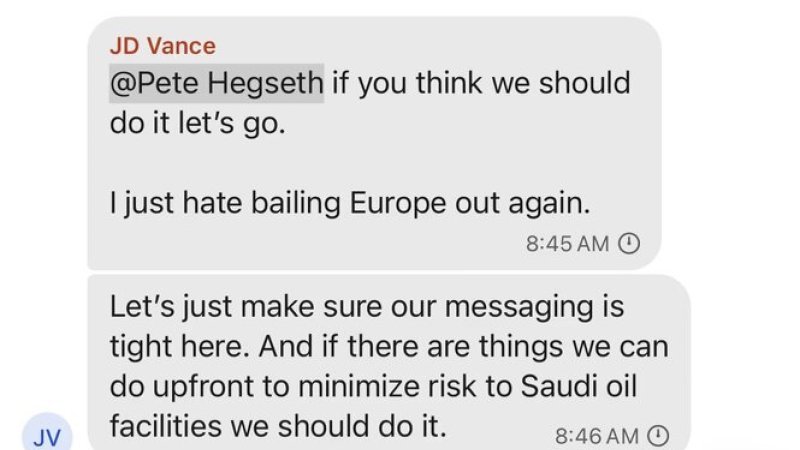
Classified War Plans Leaked via Signal Group Chat
Senior officials discussed classified military strike plans against Yemen's Houthis on Signal — and accidentally added The Atlantic's editor-in-chief to the group chat, leaking operational details hours before the strikes.
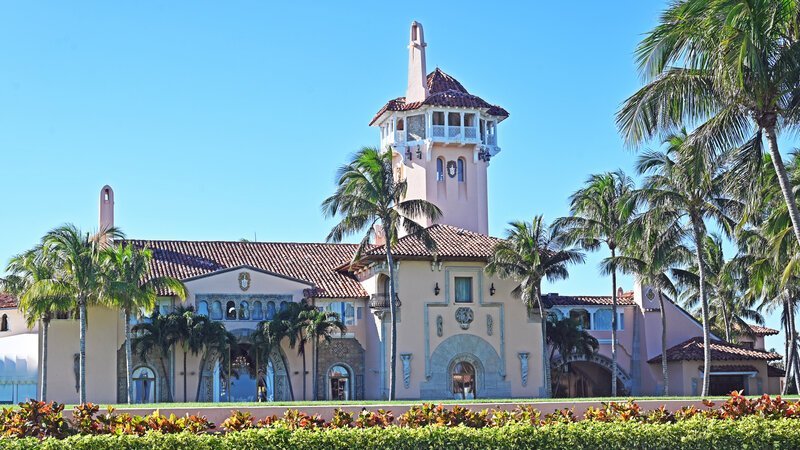
Hoarding Classified Documents at Mar-a-Lago
After leaving office, Trump took hundreds of classified documents — including top secret and compartmented intelligence — to his Florida resort and repeatedly obstructed government efforts to retrieve them.
Helsinki: Sided with Putin Over U.S. Intelligence
Standing next to Vladimir Putin, Trump publicly sided with Russia's denial of election interference over the unanimous assessment of U.S. intelligence agencies — days after 12 Russian intelligence officers were indicted for hacking.
Shared Classified Israeli Intelligence with Russian Officials
The day after firing FBI Director Comey, Trump hosted Russian officials in the Oval Office — closed to U.S. press — and revealed highly classified Israeli intelligence about ISIS, compromising sources and methods.