#midterms
14 entries with this tag
Trump Spent the Year Insisting the 2026 Midterms Were a Referendum on Himself — and the Voters Answered by Flipping Both the House and the Senate to the Democrats, Who Won at Least 259 House Seats and a Senate Majority, Even Taking a Texas Senate Seat for the First Time in Over Three Decades; Having Said on Election Night He Was "Absolutely Willing to Accept Those Results," Trump Spent the Weekend Calling the Outcome a "Giant Step Back in History" and Asking "How Could the Polls Be So Wrong?"
In the November 3, 2026 midterm elections, the voters delivered the clearest possible verdict on the administration this archive documents: Democrats flipped both chambers of Congress, winning control of the House (projected at least 259 seats) and the Senate (projected at least 54), and even captured a Texas Senate seat for the first time in over three decades. The defeat was especially pointed because Trump had spent the year framing the midterms as a referendum on himself — nationalizing the races, campaigning relentlessly, and telling candidates to run on his record — even as many of them tried to keep their distance. On election night, to his credit, Trump told the New York Times he was "absolutely willing to accept those results." That posture did not last the week. By Sunday he was posting on Truth Social that America had taken a "giant step back in History with the results of the last Election," demanding to know "How could the Polls be so wrong???" and insisting the outcome was not a hit on him. The whiplash is the story: a president who spent months priming the ground to dispute an unfavorable result — refusing to rule out the Insurrection Act, saying he would honor the results only "if they're honest," attacking mail voting and voter rolls — lost decisively, briefly accepted it, then reverted to disparaging the voters' judgment rather than absorbing it. The sweep is the accountability this archive exists to document; the reaction is the same refusal to be accountable that produced the archive in the first place.
Three Days After the Midterm Rout, Trump Pushed Out Chief of Staff Susie Wiles — Reportedly Blaming Her for the Party's Losses in Front of Others — and Handed the Most Powerful Staff Job in the White House to Stephen Miller, the Hardline Architect of the Administration's Most Extreme Policies; Rather Than Course-Correct After a Historic Rebuke, Trump Scapegoated His Aide and Doubled Down on His Most Divisive Adviser
On November 6, 2026 — three days after voters flipped both chambers of Congress against him — Trump announced that Susie Wiles was out as White House chief of staff and would be replaced, effective November 9, by Stephen Miller, until then the deputy chief of staff for policy and the homeland-security adviser, and the figure most associated with the administration's hardest-line immigration and executive-power policies. Accounts of the exit differ: Axios reported Wiles submitted her resignation; others, citing CNN, said she resigned after watching Trump lose confidence in her; the Washington Post flatly described Trump as having removed her. The New York Times reported that Trump had blamed Wiles for the party's midterm losses in front of other people. Whichever framing is right, the through-line is the same, and it is a failure of character and of judgment rolled into one. Handed a historic repudiation at the ballot box, a leader capable of self-correction asks what he got wrong. Trump instead faulted his chief of staff — the latest in a series of women pushed out of top roles in his administration — and elevated, to the single most powerful position in the building, the adviser most responsible for the very agenda the voters had just rejected. It was the opposite of a course correction. It was a doubling-down, with a scapegoat.
At Trump's Explicit Direction — "I'm the One That Said, 'Do It'" — the Justice Department Preemptively Sued to Block Certification of Alaska's U.S. Senate Race if the Republican Incumbent Dan Sullivan Lost, on a Theory About a Same-Named Spoiler Candidate; a Federal Judge Tossed the "Highly Unusual" Suit, and Even Republican Senator Lisa Murkowski Said the Department "Should Never Have Filed" It
In late October 2026, the Trump Justice Department filed an extraordinary lawsuit: it asked a federal court to block the certification of Alaska's U.S. Senate election — but only if the Republican incumbent, Sen. Dan Sullivan, lost. The government's theory rested on the presence of a second candidate on the ballot, Daniel J. Sullivan, which it claimed was a deliberate effort to confuse voters who meant to vote for the senator. Trump made no secret of who was behind it: asked about the suit, he told reporters, "Well, I'm the one that said, 'do it.'" The filing was remarkable for what it asked a court to do — pre-authorize the nullification of an election result contingent on the wrong candidate winning. A federal judge dismissed the "highly unusual" suit around November 1, declining to block certification. The bipartisan nature of the rebuke was striking: Alaska's own Republican senator, Lisa Murkowski, said the department "should never have filed this lawsuit," and Attorney General Todd Blanche publicly retreated, insisting the DOJ did not seek to stop any ballot from being counted or any certification from occurring — a claim hard to square with the lawsuit's plain demand. It was the election-denial impulse this archive has tracked all year, translated for the first time into an actual federal filing: a request to let the government refuse to certify an election it did not like the look of.
Three Weeks Before the Midterms, Trump's Justice Department Handed California a Password-Protected Thumb Drive of More Than 20,000 Voters and Demanded Officials Verify Their Citizenship Within 48 Hours — Then Sued the State for Not Doing the Impossible, Even as the DOJ's Own Lawsuit Conceded That Investigating That Many People Before Election Day Was Too Much Even for the Federal Government
In mid-October 2026, with the midterm elections roughly three weeks away, the Trump Justice Department escalated a fight over California's voter rolls into something close to a manufactured crisis. On October 13, Acting Deputy Attorney General R. Trent McCotter sent letters to California Secretary of State Shirley Weber and Los Angeles County Registrar Dean Logan, handing Logan a password-protected thumb drive listing more than 20,000 voters compiled from federal agency data and demanding that officials verify every one of their citizenship within 48 hours — and "segregate" those voters' vote-by-mail ballots until it was done. When California did not perform that impossible audit on command, the DOJ sued the state on October 15. The tell was buried in the DOJ's own filing, which acknowledged that investigating that many people before Election Day would be too much even for the federal government — an admission that the 48-hour demand it was suing over was never achievable. Weber called it "an emergency of the DOJ's creation." The pattern is familiar and alarming: similar federally generated "noncitizen voter" lists have proven inaccurate before in Nevada, Pennsylvania, and New Jersey. Using the Justice Department to cast last-minute doubt on a blue state's rolls — on a timetable the DOJ itself admits is impossible — is not election integrity. It is election interference dressed as it.
A Federal Judge Ordered the Trump Administration to Immediately Stop the Taxpayer-Funded TV Ads Starring the President — Ruling That DHS Had Likely Broken the Law by Diverting $20 Million Congress Appropriated for Immigration Enforcement Into Spots Touting Trump's Record Less Than a Month Before the Midterms — and the Administration Kept Airing Them Anyway, Drawing a Contempt Hearing
On October 11, 2026, U.S. District Judge Jennifer Rochon issued a temporary restraining order forcing the Trump administration to immediately halt the taxpayer-funded television ads featuring President Trump — the DHS-run campaign this archive has already documented. The ruling was blunt about why: DHS had taken $20 million that Congress appropriated for immigration enforcement and spent it on ads that, in the judge's words, "misappropriated government funds," touting the president's record less than a month before the midterm elections. The suit was brought by a coalition including Common Cause and SEIU Local 32BJ, represented by the legal group Democracy Forward; the Democratic National Committee filed its own parallel suit the same day. Rochon ordered DHS to stop producing and distributing the ads, to cancel television slots already reserved, and barred new or expanded ad agreements for the 14-day life of the order, finding the government had no good legal defense. Then the administration kept some of the ads running after the order, blaming "email delays," and the court set a hearing to decide whether it had violated the injunction. Using public money appropriated for one purpose to run campaign-style ads for the president is a straightforward abuse; being ordered to stop and continuing anyway is contempt of a court's authority on top of it.
Trump Loses Mail Ballot Case at Supreme Court 5-4 — His Own Appointee Barrett Writes the Majority Opinion — Then SCOTUS Denies His Carroll Appeal, Meaning He Must Pay $5 Million for Sexual Abuse
The Supreme Court ruled 5-4 in Watson v. Republican National Committee that states may continue counting mail ballots that arrive after Election Day, provided they were postmarked on time — rejecting the RNC's argument that 19th-century federal election-day statutes require ballots to be received by Election Day. Justice Amy Coney Barrett, Trump's own appointee, wrote the majority opinion, joined by Chief Justice Roberts and the three liberal justices. Barrett wrote: "The electorate's choice is made when voting is complete, not when ballots are received." She added: "At bottom, plaintiffs' theory is that because we are governed by 19th-century election-day laws, we are also governed by 19th-century voting practices." The ruling reversed the Fifth Circuit and protects laws in more than half the states and D.C. that permit late-arriving mail ballots. Alito dissented, warning of "lamentable consequences." Trump called it a "tremendous loss" and renewed his demand for the SAVE America Act — the voter ID bill the Senate has already rejected twice (four Republicans joined Democrats both times), that Trump held a bipartisan housing bill hostage over, that he canceled his own DNI nominee's hearing over, and that Senate Majority Leader Thune says "doesn't have the votes." The same day, the Court denied Trump's appeal in the E. Jean Carroll sexual abuse case without comment, meaning the $5 million verdict — for a jury finding that Trump sexually abused Carroll — stands. Nearly one in three Americans voted by mail in 2024. The noncitizen voting "crisis" the SAVE Act claims to address: Heritage Foundation's own database documents 68 cases out of over one billion ballots cast in 40 years.
Trump Cancels His Own Signing of a Wildly Popular Bipartisan Housing Bill — Hours After the Set Was Built — to Hold It Hostage for a Voter-ID Bill That Can't Pass
On June 24, 2026, hours before a scheduled noon signing ceremony in the Capitol's Statuary Hall, Trump abruptly canceled his signing of the 21st Century ROAD to Housing Act — the most comprehensive housing legislation in decades — and held it hostage to his stalled SAVE America Act voter-ID bill. The housing bill had passed with crushing, veto-proof bipartisan margins: 85-5 in the Senate and 358-32 in the House. It increases housing supply, lowers costs, and caps how many single-family homes private equity can buy — exactly the affordability message both parties wanted to run on in the midterms. Trump posted that the signing was "hereby cancelled until such time as we pass the desperately needed SAVE AMERICA ACT, which I consider to be a National Emergency," dismissing the housing measure as "The Elizabeth 'Pocahontas' Warren centric housing bill, which is of minor importance." A full set with podium and flags had already been assembled; House GOP leaders were literally on stage touting the bill when his post landed, and staff scrambled to pry the presidential seal off the podium while Democrats moved in to use the stage as a backdrop. This is the same SAVE Act demand for which Trump days earlier sabotaged his own DNI nominee's hearing and let FISA Section 702 lapse. The SAVE Act lacks the 60 Senate votes to pass; Thune has refused to kill the filibuster for it. Republicans called it a "shocker" and said Trump was "digging a hole." Because of the veto-proof margins, the housing bill will likely become law anyway — making the cancellation a self-inflicted political wound for nothing.
Trump Posts "MY REAL POLL NUMBERS ARE THE HIGHEST THEY HAVE EVER BEEN" on the Same Day His Approval Hit a Record Low — Worse Than His Post-January 6th Numbers
On the morning of June 24, 2026, Trump posted to Truth Social: "MY REAL POLL NUMBERS ARE THE HIGHEST THEY HAVE EVER BEEN. THANK YOU!!! President DJT." He cited no poll. The actual polling, released the same week, showed the opposite: a Reuters/Ipsos survey put his approval at 34% (64% disapprove); Economist/YouGov had him at 39% (58% disapprove); American Research Group found a new low of 30%; and Marist found just one-third approve of his handling of the economy, his worst ever in that poll. The RealClearPolitics average for May 29–June 23 was 40.4% approve / 57.7% disapprove — lower than the 41.1% he averaged during his final ten days in office at the end of his first term, in the aftermath of the January 6th Capitol riot. The only favorable number was a single outlier Daily Mail poll at 47%. The decline tracks almost perfectly with economic anxiety over tariff-driven price increases, five months before the November midterms. It is at least the second time Trump has declared "highest ever" poll numbers without evidence — he made the same claim in November 2025.
Trump Plots to "Expunge" Both Impeachments from the Record — Constitutional Scholars: "You Cannot Un-Ring a Bell"
The Wall Street Journal reports Trump and allies are pushing a House resolution to expunge both impeachments — for abusing power to pressure Ukraine and for inciting the January 6 insurrection. Trump: "It should be done because I did nothing wrong. It was a rigged deal." Speaker Johnson: "I think it makes a lot of sense." Constitutional scholars say the Constitution contains no mechanism to undo an impeachment. Georgetown's Jonathan Turley: "It is not like a constitutional DUI. Once you are impeached, you are impeached." Hofstra's James Sample: "You cannot un-ring a bell." Rep. Darrell Issa introduced a resolution in April; Rep. Anna Paulina Luna announced another. GOP lawmakers privately say it won't be considered until after the midterms — because rehashing Trump's conduct would hurt them. Schiff: "There is no expunging the stain." Raskin: "There is a very easy way to not get impeached: stop committing impeachable offenses."
"I Don't Think About Americans' Financial Situation. I Don't Think About Anybody."
Asked whether Americans' finances motivate him to make an Iran deal, Trump said: "Not even a little bit. I don't think about Americans' financial situation. I don't think about anybody." He said this as inflation hit a 3-year high of 3.8%, gas reached $4.52/gallon, the war topped $29 billion, and his own party was scrambling to suspend the gas tax before the midterms.
"RIGGED": Trump Cries Fraud After Virginia Voters Approve Redistricting That Could Cost GOP 4 Seats
Virginia voters approved a redistricting referendum 51.5%–48.6% that could flip four House seats to Democrats. Trump immediately declared it "RIGGED" on Truth Social, claiming a "massive Mail In Ballot Drop" — with zero evidence. CNN: the count pattern had a "straightforward explanation" — big counties take longer to count than small ones.
TIME: Hegseth Was "Taken Aback" by Iran's Response — Wiles Ordered Aides to Stop Sugarcoating
TIME reveals Hegseth was stunned by Iran's retaliation: "Whoa, we're really in this now." Wiles warned Trump the war threatens Republican midterms. She ordered aides to be "more forthright with the boss" — an admission they'd been telling him what he wanted to hear.
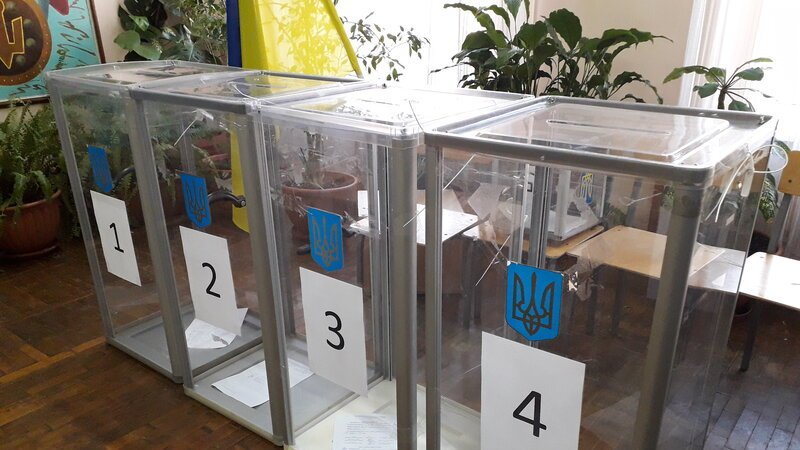
Trump Seizes Federal Control Over Mail-In Ballots — Experts Say He Lacks the Authority
Trump signed an executive order directing DHS to create national voter eligibility lists and the Postal Service to only send ballots to "verified" voters. Experts: "The Constitution doesn't give DHS any power over elections." ACLU immediately pledged to sue.

CPAC Crowd Cheers for Trump Impeachment — Twice — Stunning the Host
At the most pro-Trump event in conservative politics, CPAC chairman Matt Schlapp asked "How many of you would like to see impeachment hearings?" The crowd cheered. He asked again. They cheered again. "NOOO! That was the wrong answer."