#congress
18 entries with this tag
At His Half-Empty Dallas Convention, Trump Promised to Send Every Adult American Citizen a $5,000 "Dividend" — but Only If Republicans Win Both the House and the Senate in November: a Trillion-Dollar-Plus Offer With No Funding Plan, Framed as an Explicit "Elect My Party and I'll Pay You," From the Same President Whose Earlier $2,000 "Tariff Dividend" Checks Were Promised and Never Arrived
On September 9, 2026, in his keynote at the Republican midterm convention in Dallas, Trump promised to pay every adult U.S. citizen a $5,000 "dividend" — on the express condition that Republicans win both the House and the Senate in November. His words: "If the Republicans win the House of Representatives and the United States Senate, both of them ... I will issue a dividend to every adult citizen in the United States of America for $5,000." He branded it the "Trump dividend" and added a caveat that the money must be spent domestically, "not in other nations such as Canada, Germany or China." The offer drew immediate accusations that it amounts to a bribe: a president dangling a cash payment to the entire electorate, contingent on his party winning the election. Two facts make it worse. First, it is almost certainly undeliverable as described — economists put the cost at over $1.2 trillion, there is no funding mechanism, and any such payout would require congressional approval that even Republicans have been reluctant to give. Second, Trump has done this before and not delivered: his 2025 promise of $2,000 "tariff dividend" checks by mid-2026 never materialized, with prediction markets ultimately giving it about a 3% chance. The $5,000 version is more than twice as large, funded by nothing more specific than "our tremendous economic success" — a success contradicted by the record gas prices, trade war, and inflation documented across this archive. It is a promise engineered to move votes, unlikely to be kept, offered to a half-empty arena the party's own candidates avoided.
A Federal Appeals Court Ordered Trump to Stop Building His Ballroom Until Congress Approves It — So Instead of Asking Congress, His DOJ Ran to the Supreme Court's Shadow Docket to Override the Order, Arguing the Demolition and Construction Can't Wait Because of a "Recent Missile Threat on Air Force One"
On August 7, 2026, a majority of the U.S. Court of Appeals for the D.C. Circuit ordered construction of Trump's roughly $900 million White House ballroom halted unless the administration obtains congressional approval — reaffirming the principle a district judge had already stated in voiding the project earlier: "The President Is Not the Owner." The White House does not belong to the president; he cannot unilaterally demolish and rebuild it, or spend the public's money on it, without Congress. Rather than go to Congress, the administration went to the Supreme Court. On the shadow docket, the Justice Department asked the justices to stay the injunction and let construction continue — and the justification it offered was a "recent missile threat on Air Force One," arguing that the ballroom's hardened, bomb- and missile-resistant construction is too urgent to pause. Chief Justice John Roberts set a deadline for the challengers to respond. The move is the now-familiar pattern: told by a court to stop, the administration neither complies nor persuades Congress but sprints to the Supreme Court to have the check overridden — dressing a vanity building project, whose cost quadrupled to nearly $900 million and whose funds were partly diverted without Congress, in the language of an emergency national-security threat.
The Ballroom Trump Promised Would Cost $200 Million and Be Paid For by Him and Private Donors Has Ballooned to Roughly $900 Million in White House Construction — Now Primarily Billed to Taxpayers, With About $500 Million Reportedly Diverted Without Congress's Approval, After the Historic East Wing Was Demolished to Build It
When Trump announced his White House ballroom in July 2025, the White House said it would cost about $200 million — and that Trump himself and unnamed private donors would pay for it. A Washington Post investigation published August 12, 2026 found the reality: the administration is now set to spend at least $900 million — roughly $927 million — on White House construction, and it is primarily taxpayers, not Trump or donors, footing the bill. The figure covers the roughly 90,000-square-foot ballroom (built where the historic East Wing was demolished), a new South Lawn helipad, and the paving-over of the Rose Garden. The cost has more than quadrupled from the promised $200 million, climbing to $600 million by June 2026 and past $900 million by August. Reporting indicates roughly $500 million in taxpayer funds was diverted to the projects without congressional approval — Congress holds the constitutional power of the purse, and appropriating public money to a president's vanity construction without its sign-off is exactly the kind of end-run that power exists to prevent. Trump defends the ballroom as a secure, modernized venue with bomb shelters and hardened communications. But the through-line is simple: a president promised to build a monument to himself on his own dime, tore down a piece of the People's House to do it, and then sent the public a nine-figure bill it never agreed to pay.
Trump's Own Justice Department Issued a Memo Declaring He Can Hide His Conversations With Private, Outside Advisers — Billionaires, Fixers, Private Lawyers, Even State Officials — Under "Executive Privilege," Stretching a Doctrine the Supreme Court Already Ruled Isn't Absolute, to Wall Off His Shadow Advisers From Congress Right Before the Midterms
On August 11, 2026, the Justice Department's Office of Legal Counsel published a 21-page opinion, signed by Assistant Attorney General T. Elliot Gaiser, declaring that executive privilege can shield the president's communications with "private advisers" — a category the memo defines to include essentially anyone Trump consults outside the executive branch, "whether they be members of the public, state officials, or employees of other branches of the federal government." It is the first time the Justice Department has explicitly extended executive privilege beyond the president and his immediate White House staff to private citizens. Historically the privilege reached only official advisers, and the Supreme Court held in United States v. Nixon (1974) that it is not absolute and yields in criminal cases. The immediate beneficiary is Boris Epshteyn — the outside Trump adviser and "fixer" whom the American Bar Association subpoenaed, and who coordinated the campaign of pressure that produced nearly $1 billion in pledged free legal work from law firms, and who helped steer the lawyers in Trump's sham IRS-immunity litigation. The memo would let all of that stay hidden. OLC opinions are not binding on courts, but they govern how the executive branch behaves, and this one is transparently timed: issued months before the midterms, it is pre-emptive armor to defeat the wave of congressional investigations the White House expects if Democrats retake the House. It converts a narrow, court-limited doctrine into a blanket secrecy cloak for government-by-crony — a way to keep the public from ever learning which unelected billionaires and operatives are shaping official decisions, and what they said.
For the Second Time, the House Formally Voted to Order Trump to End His War in Iran — 214-208, With Four Republicans Crossing the Aisle — Because Congress Never Authorized the War, Troops Are Dying in It, and He Ignored the Last Resolution Telling Him to Stop
On July 23, 2026, the House of Representatives passed a war powers resolution, 214-208, directing President Trump to "remove the use of United States Armed Forces from hostilities against the Islamic Republic of Iran." It was sponsored by Rep. Pramila Jayapal (D-WA), and four Republicans — Thomas Massie (KY), Brian Fitzpatrick (PA), Warren Davidson (OH), and Tom Barrett (MI) — crossed the aisle to support it. It was the House's fifth vote on a measure to rein in Trump's Iran military actions, and only the second time it has successfully adopted one. The vote came days after four U.S. service members were killed in the Middle East and weeks after the ceasefire and memorandum of understanding Trump paraded as a triumph collapsed — he declared the MOU "over" and, on July 10, formally notified Congress that fighting had resumed. Congress never authorized this war; there is no AUMF for Iran, and under the Constitution the power to take the country to war belongs to the legislature. Jayapal called it "a big victory for the vast majority of the American people who want President Trump to end this illegal war," saying the House was "reasserting our authority over war." The Senate was set to vote the same day on a companion resolution from Sen. Chris Van Hollen (D-MD). But the resolution is a concurrent measure that does not go to the president for signature and cannot, by itself, force him to withdraw — the same kind Congress passed in June, which Trump simply ignored as he restarted the war. The vote is a genuine bipartisan rebuke and a real constitutional assertion. It is also a portrait of a broken check: the branch the Constitution entrusts with the power of war telling the president to stop, twice, while he wages on.
For the First Time in History, Both Chambers of Congress Passed a War Powers Resolution to Stop a President's War — Trump's Own Party Helped Do It
On June 23, 2026, the Senate voted 50-48 to direct President Trump to remove U.S. forces from hostilities against Iran — the first time in the 53-year history of the War Powers Act that a resolution to halt a president's war has passed both chambers of Congress. The House had passed the same concurrent resolution on June 3 by 215-208. Because it is a concurrent resolution, it does not require Trump's signature. Four Republican senators — Susan Collins, Lisa Murkowski, Bill Cassidy, and Rand Paul — broke ranks to join the Democrats; the measure cleared the chamber partly because Mitch McConnell and Dave McCormick, who had blocked earlier attempts, did not vote. It was the tenth time the Senate had tried to stop the war. Sen. Tim Kaine, who led the effort, said: "The most solemn power for Congress is Congress has the power to declare war, not the president." Kaine pressed the vote even with talks underway in Switzerland and pointed to the administration's request for $80 billion in emergency spending to rebuild munitions depleted since the war began on Feb. 28. Trump called the House version "a meaningless vote" and branded the Republicans who crossed him "GRANDSTANDERS." The rebuke is historic precisely because it required Congress to formally tell a president to stop a war that his own intelligence community said was never necessary.
Judge Orders Trump's Name Stripped From Kennedy Center Within Two Weeks — "Only Congress Can Rename It"
A federal judge ruled that Trump illegally put his name on the Kennedy Center and ordered all signage removed within two weeks. The 94-page ruling found that Congress named the center after JFK and only Congress can change it — the board cannot unilaterally rename a national memorial. The judge also blocked the planned two-year closure, finding trustees learned about it "by social media post" with "no meaningful opportunity" to consider it. Trump: the judge "should be ashamed of himself."
House GOP Cancels Iran War Vote Because They Were Going to Lose It — Then Sends Congress Home for Memorial Day
House Republicans pulled the Iran war powers vote after it became clear they didn't have the votes to defeat it — Democrats had unified with enough GOP defectors to pass it. Instead of allowing a vote on a three-month-old undeclared war, Speaker Johnson sent Congress home for Memorial Day. Combat veteran Rep. Pat Ryan erupted on the Capitol steps: "These chicken hawk motherfuckers" won't give "an up or down vote on continuing this war while Americans are paying $5 a gallon."
"Unacceptable" and "Obscene": Vindman Condemns Trump and Hegseth's Cavalier Attitude Toward U.S. Deaths in Iran
Rep. Eugene Vindman called Trump and Hegseth's attitude toward American casualties in Iran "unacceptable" and "obscene." At least 15 U.S. troops dead, 520+ wounded. Hegseth boasted of "death and destruction from the sky all day long" and said "We are punching them while they're down." Trump joked it was "more fun" to sink warships than capture them. The Pentagon has been accused of hiding casualty numbers.
Pentagon Preparing Weeks of Ground Operations in Iran — Week 5 of a War Trump Is "Bored" With
The Washington Post reported the Pentagon is preparing for weeks of ground operations in Iran using Special Operations and conventional infantry. Marines and 82nd Airborne already deploying. Trump hasn't approved the plans — and is reportedly "bored" with the war.

"Meltdown": House GOP Rejects Senate DHS Deal, Prolonging 42-Day Shutdown
Day 42 of the DHS shutdown: House Republicans rejected the bipartisan Senate deal and passed an 8-week punt that can't pass the Senate. 61,000 TSA workers have missed $1B+ in pay. 510 have quit. Johnson called the Senate deal "a joke."
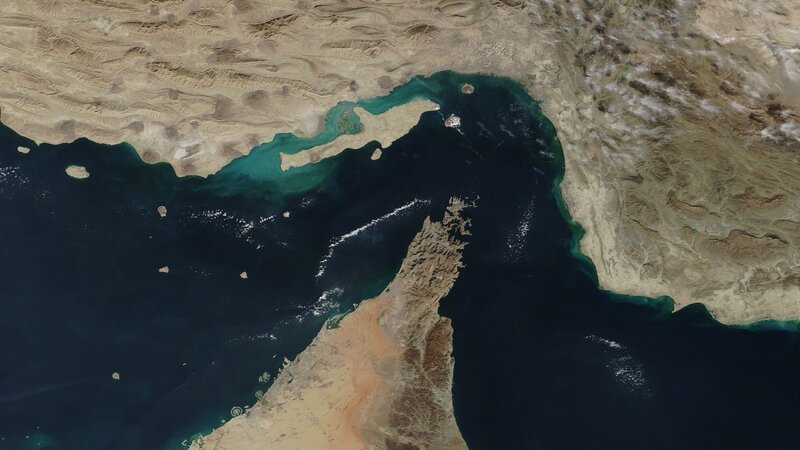
Iran Military Mocks Trump with "You're Fired" as 15-Point Peace Plan Rejected
Iran's military spokesperson told Trump "You are fired" and mocked him for "negotiating with yourself." Iran rejected the 15-point peace plan as "maximalist" and issued its own 5 conditions. The 82nd Airborne was ordered to deploy as Trump declared the war "won."
Iran War Costs Exceed All DOGE Savings in Two Weeks
At $11 billion per week, the Iran war cost $11.6B in its first days — exceeding the entire $9.4B in DOGE spending cuts passed by Congress. The Pentagon requested $200B in supplemental war funding. GOP lacked votes to fund it.
Bondi's DOJ Withheld Epstein Files Containing Allegations About Trump and a 13-Year-Old
NPR found the DOJ removed and withheld Epstein files specifically containing allegations that Trump sexually abused a 13-year-old. Only the files mentioning Trump were excluded. The DOJ claimed they were "duplicates."
Supreme Court Strikes Down IEEPA Tariffs 6-3
The Supreme Court ruled 6-3 that Trump lacked authority to impose tariffs under IEEPA, with Chief Justice Roberts writing he lacked "peacetime authority" to tax. Over $130 billion had already been collected.
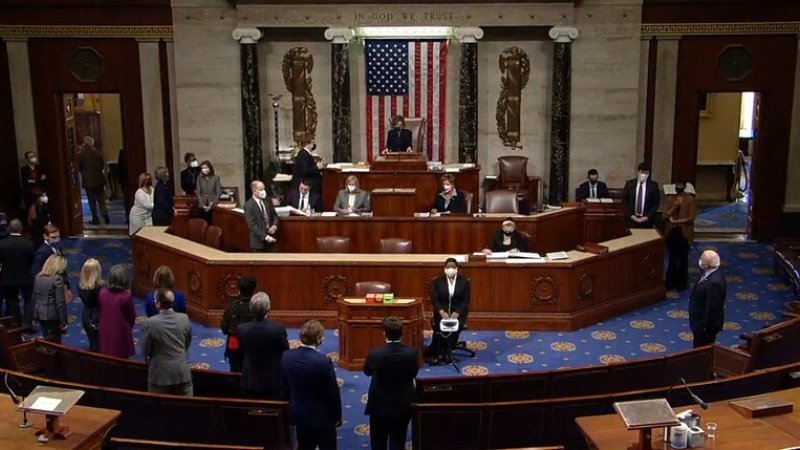
Only President Impeached Twice
The House impeached Trump a second time for "incitement of insurrection" — the most bipartisan impeachment vote in history. Seven Republican senators voted to convict, with even McConnell calling Trump "practically and morally responsible."
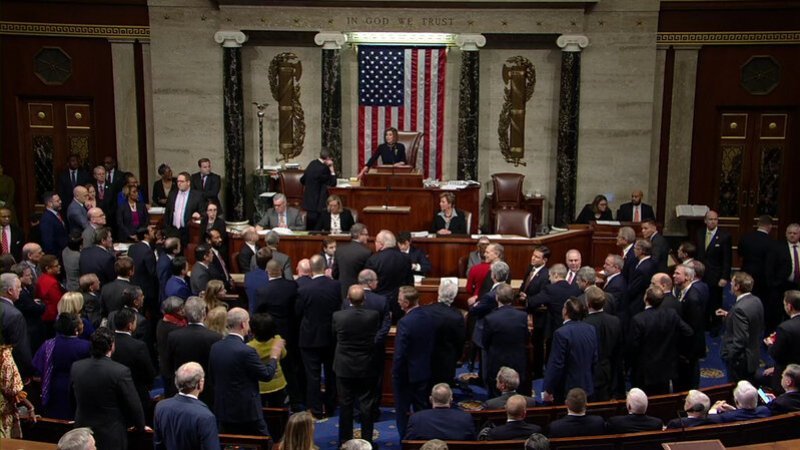
First Impeachment: Ukraine Extortion
Trump withheld $400 million in congressionally approved military aid to Ukraine to pressure President Zelensky into announcing investigations into political rival Joe Biden. The GAO concluded Trump broke federal law.
Longest Government Shutdown in U.S. History
Trump shut down the federal government for 35 days — the longest in U.S. history — over border wall funding. 800,000 workers went unpaid. He reopened it without getting a single dollar for the wall.