#weaponization
18 entries with this tag
Four Days After Losing Both Chambers of Congress, Trump Publicly Ordered the Justice Department to Investigate Democrats — Recasting Their Plans to Conduct Oversight and Pursue Impeachment as a "Criminal Act" by "EXTORTIONISTS" Who Should Be "Imprisoned" — an Attempt to Criminalize the Constitutionally Protected Powers of the Congress the Voters Had Just Handed to the Other Party
On November 7, 2026 — four days after Democrats flipped both the House and the Senate — Trump posted on Truth Social directing the Justice Department to investigate Democrats, accusing them of threatening administration officials, including the attorney general, with impeachment, and calling it a "criminal act." He labeled the Democrats "EXTORTIONISTS" and said they should be "imprisoned." He offered no evidence, claiming without support that Democratic leaders were sending "threatening" letters and messages to Republicans. What Trump described as extortion is, in fact, the ordinary constitutional machinery of a legislative branch: oversight of the executive, and the impeachment power the Constitution expressly vests in the House. The incoming Democratic majorities had pledged to scrutinize the administration — exactly what an opposition Congress is supposed to do. Trump's response was to demand the criminal prosecution and imprisonment of the people about to exercise that authority. Attorney General Todd Blanche reportedly did not rule out prosecuting Democrats over the oversight threats. Stripped of the capital letters, the order is among the most direct assaults on the separation of powers this archive has recorded: a president, rebuked at the polls, moving to turn the Justice Department against the coequal branch the voters had just empowered to check him.
At Trump's Explicit Direction — "I'm the One That Said, 'Do It'" — the Justice Department Preemptively Sued to Block Certification of Alaska's U.S. Senate Race if the Republican Incumbent Dan Sullivan Lost, on a Theory About a Same-Named Spoiler Candidate; a Federal Judge Tossed the "Highly Unusual" Suit, and Even Republican Senator Lisa Murkowski Said the Department "Should Never Have Filed" It
In late October 2026, the Trump Justice Department filed an extraordinary lawsuit: it asked a federal court to block the certification of Alaska's U.S. Senate election — but only if the Republican incumbent, Sen. Dan Sullivan, lost. The government's theory rested on the presence of a second candidate on the ballot, Daniel J. Sullivan, which it claimed was a deliberate effort to confuse voters who meant to vote for the senator. Trump made no secret of who was behind it: asked about the suit, he told reporters, "Well, I'm the one that said, 'do it.'" The filing was remarkable for what it asked a court to do — pre-authorize the nullification of an election result contingent on the wrong candidate winning. A federal judge dismissed the "highly unusual" suit around November 1, declining to block certification. The bipartisan nature of the rebuke was striking: Alaska's own Republican senator, Lisa Murkowski, said the department "should never have filed this lawsuit," and Attorney General Todd Blanche publicly retreated, insisting the DOJ did not seek to stop any ballot from being counted or any certification from occurring — a claim hard to square with the lawsuit's plain demand. It was the election-denial impulse this archive has tracked all year, translated for the first time into an actual federal filing: a request to let the government refuse to certify an election it did not like the look of.
After Watching Its Earlier Indictments of James Comey Collapse, Trump's Justice Department Charged the Former FBI Director Yet Again — This Time With Two Espionage Act Counts Over an Alleged 2016 Leak of National-Defense Information to a Reporter — but Filed It as a Bare "Criminal Information" on the Very Last Day Before the Ten-Year Clock Ran Out, Without a Grand Jury, a Maneuver Legal Experts Say Likely Cannot Stop the Statute of Limitations and That Comey Can Simply Refuse to Consent To
On October 26, 2026, newly unsealed court documents revealed that the Trump Justice Department had charged former FBI Director James Comey for a third time — now with two counts under the Espionage Act: willfully communicating national-defense information to a person not entitled to receive it, and conspiring to do so. The theory is that Comey, "through one or more co-conspirators," directed someone to disclose national-defense information to a reporter at a national news publication (reported to be the New York Times), with the alleged conduct dated to October 5, 2016. The problem is the calendar and the procedure. The Espionage Act carries a ten-year statute of limitations, which expired on October 5, 2026 — and the DOJ filed not a grand-jury indictment but a bare "criminal information" on that exact last day, apparently because it could not get a grand jury to indict in time. Legal experts, including former prosecutor Elie Honig, say an information filed without a grand jury or the defendant's consent likely cannot toll the ten-year clock, and Comey cannot be tried on an information alone unless he waives indictment — which he has no reason to do. His lawyers moved to dismiss, arguing the statute "explicitly demands" an indictment that the government never secured and that the charge is time-barred. Comey's response was a shrug: "Nothing's changed with me." He is still innocent, he said. This is the third swing at the man Trump fired in 2017, after the earlier cases — including the one built around a photo of seashells — fell apart, and it has the hallmarks of the previous ones: a prosecution driven by the president's grudge rather than a case the government can actually win.
A Federal Judge Ruled That Trump's Justice Department Unlawfully Fired Maurene Comey — the Veteran Prosecutor Who Handled the Jeffrey Epstein and Ghislaine Maxwell Cases, and the Daughter of James Comey — Ordering Her Reinstated With Back Pay After the DOJ Admitted in Court the Firing Was Not for Cause or Performance; the Ruling Came the Same Week the DOJ Charged Her Father for a Third Time
On October 26, 2026, U.S. District Judge Jesse Furman ruled that the Justice Department had unlawfully fired Maurene Comey — a career federal prosecutor in the Southern District of New York known for handling the Jeffrey Epstein and Ghislaine Maxwell prosecutions, and the daughter of former FBI Director James Comey, a longtime target of President Trump. Furman ordered her reinstated, retroactive to the date of her dismissal, with back pay and restored pension benefits, and directed that her personnel file be changed to reflect a resignation rather than a firing. The ruling rested mainly on the Civil Service Reform Act, with the judge also finding separation-of-powers, Administrative Procedure Act, and due-process violations. The most damning fact came from the government's own filings: the DOJ acknowledged in court that the firing was not for cause and not based on performance — it simply asserted the attorney general had sweeping Article II authority to remove her at will. Furman rejected that claim. A May 2026 filing reportedly identified Attorney General Pam Bondi as the official who directed the firing, though the judge said the decision-maker question remained partly disputed, and he did not rule on whether political retaliation was the motive. The timing told its own story: the reinstatement of the daughter, for a firing the government conceded had no legitimate cause, landed the very same week the Justice Department charged her father, James Comey, for the third time.
Three Weeks Before the Midterms, Trump's Justice Department Handed California a Password-Protected Thumb Drive of More Than 20,000 Voters and Demanded Officials Verify Their Citizenship Within 48 Hours — Then Sued the State for Not Doing the Impossible, Even as the DOJ's Own Lawsuit Conceded That Investigating That Many People Before Election Day Was Too Much Even for the Federal Government
In mid-October 2026, with the midterm elections roughly three weeks away, the Trump Justice Department escalated a fight over California's voter rolls into something close to a manufactured crisis. On October 13, Acting Deputy Attorney General R. Trent McCotter sent letters to California Secretary of State Shirley Weber and Los Angeles County Registrar Dean Logan, handing Logan a password-protected thumb drive listing more than 20,000 voters compiled from federal agency data and demanding that officials verify every one of their citizenship within 48 hours — and "segregate" those voters' vote-by-mail ballots until it was done. When California did not perform that impossible audit on command, the DOJ sued the state on October 15. The tell was buried in the DOJ's own filing, which acknowledged that investigating that many people before Election Day would be too much even for the federal government — an admission that the 48-hour demand it was suing over was never achievable. Weber called it "an emergency of the DOJ's creation." The pattern is familiar and alarming: similar federally generated "noncitizen voter" lists have proven inaccurate before in Nevada, Pennsylvania, and New Jersey. Using the Justice Department to cast last-minute doubt on a blue state's rolls — on a timetable the DOJ itself admits is impossible — is not election integrity. It is election interference dressed as it.
The Trump Justice Department Is Relitigating Watergate — Opening a Review of Whether the Prosecutors Who Brought Down Richard Nixon Committed "Misconduct," and Recasting the Most Thoroughly Proven Presidential Crime in American History as a "Deep State" Plot Against an Innocent Man — in a Transparent Bid to Delegitimize Accountability Itself and Lay Groundwork to Excuse Trump; a Member of the Committee That Voted to Impeach Nixon Called It "Beyond Stupid"
In early October 2026, it was reported that the Trump Justice Department has opened a preliminary review of whether the Watergate special prosecutors — the ones who held Richard Nixon accountable in the 1970s — committed misconduct. The review follows a presentation by Geoff Shepard, a former Nixon aide and longtime Watergate revisionist who argues the prosecutors violated defendants' rights and that Nixon was treated unfairly. The purpose is not subtle. It is the latest move to recast Nixon as a victim of the "deep state," and to yoke his case to Trump's: Vice President JD Vance has said that "how the deep state took down Richard Nixon, it's not all that different from what the same groups of people, the same institutions tried to do to Donald Trump." In other words, if Watergate can be reframed as a frame-up, then so, by extension, can every investigation of Trump. Elizabeth Holtzman — who as a member of the House Judiciary Committee voted to impeach Nixon — called the effort "just beyond stupid and beyond absurd," because to believe Nixon was railroaded, "you'd have to say that everybody was duped — that the Republicans were duped, that the Supreme Court was duped, that everybody was duped except this guy and Trump." Watergate is not a contested historical question. It is the best-documented presidential crime in American history, ended by Nixon's own tape-recorded voice. Using the Justice Department to pretend otherwise is not scholarship. It is the weaponization of law enforcement against the historical record, in the service of the current president.
Trump's FBI Removed Two of Its Senior Counterterrorism Leaders — the Head of Counterterrorism at the Washington Field Office and His Deputy — Not for Failing to Stop a Threat, but for Declining to Keep Investigating Allegedly Harassing Phone Calls to Katie Miller, the Podcaster Wife of Top White House Adviser Stephen Miller, After Agents Judged the Calls Did Not Warrant It
In September 2026, the FBI under Kash Patel ousted two of its senior counterterrorism officials — Michael Burgwald, the special agent in charge of counterterrorism at the Washington Field Office, and his deputy, Courtland Rae — after their team determined that allegedly harassing phone calls received by Katie Miller did not warrant further investigation. Katie Miller is a conservative podcaster and the wife of Stephen Miller, one of the most powerful advisers in the Trump White House. The agents' professional assessment — that the calls were not the kind of threat that merited a continued federal investigation — reportedly angered FBI leadership, and the two men were removed from their posts. (Burgwald already had a strained relationship with Patel; a senior executive overseeing the D.C. office confirmed the ousting but denied the order came from Patel personally.) Strip the names out and the principle is alarming: FBI leaders were punished not for a failure of security but for exercising independent judgment in a matter touching a politically connected family. It is the inverse of how a professional law-enforcement agency is supposed to work. The message to every agent is that the correct amount of investigation is however much the connected complainant wants — and that declining, on the merits, is a career-ending mistake when the complainant is close to power.
Trump Blamed "Vandals" for the Peeling, Botched $14.7 Million Renovation of the Lincoln Memorial Reflecting Pool and Had His D.C. Prosecutor Charge Real People Over It — Including a Former Olympian — Before Every Charge Was Dropped; Now, Per the New York Times, the Contractor's Own Reports Admit the Truth: Its Faulty Work, Not Sabotage, Caused the Damage
The Trump administration fast-tracked a roughly $14.7 million renovation of the Lincoln Memorial Reflecting Pool ahead of the Fourth of July. The new blue liner promptly peeled, bubbled, and broke loose. Trump's explanation was not that the rushed job had failed — it was that "vandals" had sabotaged the pool. He pushed to prosecute them, and his U.S. Attorney in Washington, Jeanine Pirro, actually charged several people, including former Olympian David Hearn. Every one of those charges was eventually dropped. Now, according to government documents reviewed by The New York Times, the contractor itself — Atlantic Industrial Coatings — has admitted in its own reports (dated August 14 and September 2) that the damage was caused by its work, not by any vandal: "human oversight" meant workers failed to spray enough primer for the liner's layers to bond, the two chemicals mixed for the liner were incompatible, and heat then loosened the bottom layer. In other words, the crime Trump blamed for his project's failure never happened, and he knew enough to concede "some contractor error" back in August even as the prosecutions proceeded. This is the full sequence of the abuse in one small monument: a botched job, a fabricated culprit, and innocent people — one of them an Olympian — charged with a federal crime to protect the president from the embarrassment of his own contractor's mistakes.
Asked on Live Television Whether He Would Pledge That the Justice Department Would Be Independent of the White House, the Newly Confirmed Attorney General — Trump's Former Personal Lawyer — Said "No, I'm Not Going to Pledge That," Confirming Out Loud, Days After His 50-49 Confirmation, Exactly What His Critics Warned
Just over a week after the Senate confirmed him 50-49, Attorney General Todd Blanche — Trump's former personal criminal-defense lawyer — went on NBC's "Meet the Press" and was asked the simplest question about his new job: would he pledge that the Justice Department would be independent of the White House? His answer: "No, I'm not going to pledge that." He said he would take President Trump's views into account in directing federal law enforcement, while insisting he would act with integrity and "prosecute without fear or any sort of favor," and that Trump would never cross a "legal line." He also publicly backed U.S. Attorney Jeanine Pirro after Trump criticized her for dropping a prosecution, and defended the DOJ opinion extending executive privilege to Trump's private advisers. The post-Watergate norm — that the Justice Department does not take direction from the president on who to investigate and charge — is the single most important guardrail against a law-enforcement apparatus turned into a political weapon. Two Republican senators, Collins and Murkowski, voted against Blanche precisely because they feared he would erase it. Days later, on national television, he confirmed they were right: he would not even pledge the independence the office is supposed to embody. He is not hiding the answer. He is stating it.
The Check Broke: Todd Blanche — Trump's Personal Criminal-Defense Lawyer, Referred for Bar Discipline Over a Sham IRS Deal, Who Defied a Court Order to Bury the Epstein Files and Says Trump Has a "Right" to Order Prosecutions of His Enemies — Was Confirmed as Attorney General 50-49, With Bill Cassidy Casting the Decisive Vote
In the early hours of Saturday, August 8, 2026, the Senate confirmed Todd Blanche as attorney general of the United States by a vote of 50-49 — the narrowest possible margin. Blanche is Trump's former personal criminal-defense lawyer. He was referred by a federal judge for bar discipline over the collusive IRS "settlement" that laundered Trump tax immunity and tried to create a $1.8 billion fund for the January 6 rioters. His Justice Department defied a court order and the transparency law Trump signed to keep the Epstein files sealed. And in his first press conference as acting AG he asserted that the president has a "right" and "duty" to order the department to investigate his enemies — a doctrine the DOJ is now executing against Comey, Letitia James, and others. Two Republicans, Susan Collins and Lisa Murkowski, voted no, joining every Democrat; Murkowski said the country needs an attorney general "who will check the worst impulses of this administration." It was not enough. Sen. Bill Cassidy of Louisiana — who voted to convict Trump in the 2021 impeachment and had been the last uncertain Republican — announced Friday he would back Blanche, becoming the decisive vote. With Sen. Mitch McConnell absent (recovering after a June fall), Cassidy's support made it 50-49, sparing even a Vance tiebreak. The nomination was in genuine peril for weeks; in the end it held by one vote. The man most of the corruption catalogued in this archive runs through is now, with the full permanent authority of the office and no "acting" qualifier, the chief law-enforcement officer of the United States.
Trump Campaigned on Ending the "Weaponization" of the Justice Department — Then Turned It Into an Instrument for Prosecuting His Enemies: His Acting AG Says Trump Has a "Right" and "Duty" to Order Investigations, a Trump-Loyalist "Grand Conspiracy" Grand Jury in Florida Is Hunting His Foes, and 100+ Career Prosecutors Have Quit
A Democratic member of Congress, appearing on NBC's "Hallie Jackson NOW" on July 31, 2026, said Trump is "hellbent" on controlling the Justice Department and is "personally directing" the cases the department is bringing against his political opponents. The charge is not speculation; it is the documented operating principle of the DOJ under acting Attorney General Todd Blanche. In his first press conference as acting AG, Blanche said Trump has both a "right" and a "duty" to order the department to investigate his enemies — and when asked how he would square that with Trump's own executive order claiming to end the "weaponization" of government, he said he would not. Under Blanche, the DOJ has: re-indicted former FBI Director James Comey (after Trump publicly forced out the prosecutor who found insufficient evidence, installed his own former personal lawyer, and got an indictment within days — later dismissed, then refiled over a social-media post of seashells spelling "86 47"); pursued New York Attorney General Letitia James, Fed Chair Jerome Powell, former CIA Director John Brennan, members of Congress, and a probe into California Gov. Gavin Newsom and his wife; and stood up a "grand conspiracy" grand jury in the Trump-friendly Southern District of Florida — led by 2020-election-denier Joe diGenova — to hunt Obama- and Biden-era officials as an anti-Trump cabal. More than 100 career prosecutors have resigned, many citing political interference. A Marquette poll found 55% of Americans believe the DOJ has filed unjustified cases against Trump's opponents. The thing Trump said he would stop, he built.
Trump Bragged from the Oval Office That He Dropped Crypto Investigations — "You're Lucky I'm President!" — While His Financial Disclosure Shows He Made $1.4 Billion from Crypto, His Memecoin Lost Investors $3.8 Billion, He Pardoned the Binance Founder Who Pleaded Guilty to Money Laundering, and His SEC Chair Dropped Cases Against Companies That Donated to His Inauguration
President Trump told cryptocurrency figures from the Oval Office: "Every time I see a crypto guy where they dropped an investigation, I said, 'You're lucky I'm president!'" His 2025 financial disclosure, filed days earlier, shows he made $1.4 billion from crypto — $636 million from the $TRUMP memecoin and nearly $800 million from World Liberty Financial, a venture he co-founded with his sons. Meanwhile, nearly one million investors who bought the $TRUMP memecoin lost a combined $3.81 billion as the token crashed 97% from its peak. Trump profited whether the price went up or down — he collected returns whenever anyone traded the tokens, which he promoted on Truth Social. His SEC chair Paul Atkins — who holds $6 million in personal crypto assets — dropped or dismissed at least a dozen crypto enforcement cases, including meritorious litigation against Binance, Coinbase, and Kraken. Crypto-related enforcement fell 60%. Trump pardoned Changpeng Zhao, the Binance founder who pleaded guilty to money laundering in 2023. Binance then deployed engineers to build World Liberty Financial's stablecoin and holds 86% of all USD1 tokens. Companies whose cases were dropped — Coinbase, Kraken, Ripple, Robinhood, Crypto.com — had each donated at least $1 million to Trump's inauguration. At the 2025 memecoin gala dinner, 19 of the top 25 holders were likely foreign nationals. Justin Sun, a Chinese billionaire facing SEC fraud charges that were paused by the Trump administration, held the top spot. Freight Technologies bought $20 million in tokens explicitly to "advocate for fair trade." Rep. Greg Casar: "The Trump family has made over $5 BILLION in corrupt crypto deals. Now Trump is openly bragging that his government won't investigate cryptocurrency-related crimes. Corruption, plain and simple." Senator Gillibrand proposed banning elected officials from issuing memecoins. The president of the United States stood in the Oval Office and boasted about dropping investigations into the industry that made him a billionaire.
Trump's DOJ Opens Criminal Investigation Into E. Jean Carroll — The Woman a Jury Found He Sexually Assaulted
The DOJ launched a criminal investigation into E. Jean Carroll — the woman two juries found Trump liable for sexually assaulting and defaming, awarding her $88.3 million total. The perjury theory: Carroll said in a 2022 deposition that no one else was funding her lawsuit, but LinkedIn billionaire Reid Hoffman later helped cover some legal costs through a nonprofit. An appeals court already reviewed this and found Carroll "plausibly represented" she had "forgotten about the limited outside funding counsel obtained." Trump's DOJ is now criminally investigating his own sexual assault victim over a deposition answer an appeals court already dismissed.
Judge Throws Out Charges Against Abrego Garcia: DOJ Prosecution Was "Vindictive" Retaliation for Challenging His Wrongful Deportation
A federal judge dismissed human smuggling charges against Kilmar Abrego Garcia, ruling the prosecution was vindictive retaliation for his legal fight to return from wrongful deportation. The charges stemmed from a 2022 traffic stop that was closed without action — then reopened by Deputy AG Todd Blanche immediately after the Supreme Court ordered his return. The judge quoted Robert Jackson's warning about "picking the person first and the crime second." The DOJ called him "an activist judge."
Trump Drops His IRS Lawsuit, Creates $1.776B "Anti-Weaponization Fund" to Reimburse Jan. 6 Rioters With Taxpayer Money
Trump's DOJ officially established the $1.776 billion "Anti-Weaponization Fund" — taxpayer money to reimburse MAGA allies including Jan. 6 rioters. In exchange, Trump dropped his $10 billion IRS lawsuit over the Mar-a-Lago raid. The president settled a lawsuit with himself to create a slush fund he controls. A House Democrat: "the largest single act of grand larceny in American history."
DOJ Whistleblower Reveals Prosecutors Were Ordered to Rush a "Legally Deficient" SPLC Indictment — Zero Convictions Across the Entire Retribution Agenda
A DOJ whistleblower revealed that senior leadership ordered prosecutors to fast-track a "legally deficient" indictment of the Southern Poverty Law Center despite their objections. This is the latest in Trump's retribution campaign — Comey, Letitia James, Bolton, the SPLC, law firms, former intel chiefs, sitting senators — and not a single target has been convicted.
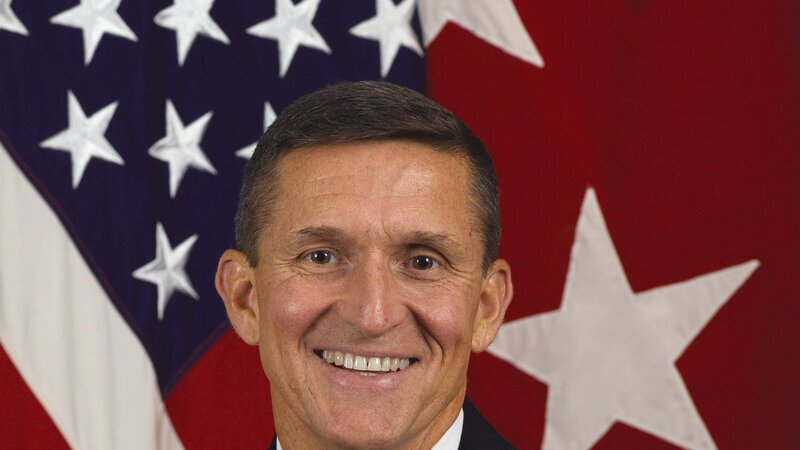
DOJ Pays Flynn $1.2M of Taxpayer Money for "Malicious Prosecution" — He Pleaded Guilty. Twice.
Trump's DOJ settled Michael Flynn's lawsuit for $1.2M, calling his prosecution a "historic injustice." Flynn pleaded guilty twice to lying to the FBI about Russian contacts. The Biden DOJ had asked a judge to dismiss Flynn's complaint. Trump's DOJ reversed course and paid him.
Days Before Trump Launched His War on Iran, Kash Patel Gutted the FBI Unit That Tracks Iranian Threats and Espionage — Firing About a Dozen Counterintelligence Staffers From CI-12, Not for Any Failure on the Job, but Because They Had Once Been Assigned to the Mar-a-Lago Classified-Documents Investigation of Trump — Draining Decades of Iran Expertise at the Exact Moment the Country Was About to Need It Most
In early March 2026, FBI Director Kash Patel ordered the firing of about a dozen counterintelligence staffers from CI-12, a unit in the FBI's Washington Field Office whose work focused on media leaks, global espionage, and threats involving the Iranian regime. According to CNN and other reporting, they were not removed for poor performance. They were removed because they had, in some capacity, previously been assigned to the Justice Department's investigation — conducted under the Biden-era special counsel Jack Smith — into Trump's retention of classified documents at Mar-a-Lago; Patel reportedly lashed out after learning Smith had sought his own phone records. The timing made the purge far worse than a routine act of political revenge: it came just days before the United States launched a major bombing campaign against Iran. Patel gutted the FBI's Iran counterintelligence expertise at the precise moment a war with Iran was about to make that expertise critical — hollowing out the team responsible for tracking Iranian espionage and retaliation inside the United States right as both became acutely likely. Members of Congress demanded Patel testify; the FBI disputed that the firings damaged its Iran work. But the sequence is the indictment: the director punished agents for having investigated Trump, and in doing so, left the country blinder to Iran on the eve of fighting it.