#incompetence
26 entries with this tag
The President Ran a Truth Social "Poll" to Rename "Artificial Intelligence" — Which He Called "Inaccurate, and Very Ineloquent" — Proposing the Grander-Sounding "Superior," "Supreme," or "Extreme" Intelligence, in a Post So Muddled It Argued AI Was Inaccurate "Relative to AI" and Offered Two Options Abbreviated the Same Way; the Same Day, He Announced He's Forming an "AI Force"
On September 19, 2026, Trump used Truth Social to run a "poll" asking his followers to help him rename artificial intelligence, which he declared "inaccurate, and very ineloquent." His proposed replacements: "Superior Intelligence (SI) or, Extreme Intelligence (EI) or, Supreme Intelligence (SI)." The post is a small monument to muddle. It argues that "Artificial Intelligence" is an inaccurate description "relative to AI, or Artificial Intelligence" — a sentence that compares the term to itself — and it offers three choices, two of which ("Superior" and "Supreme") carry the identical abbreviation, SI. More than 27,000 people voted. The same day, Trump announced in a second post that he is forming an "AI Force" and will name an AI czar. The episode fits a now-familiar pattern of renaming things he has no power to rename — the Gulf of America, "Lake America," New Mexico as "New America" — but this one adds a particular tell. His stated goal was a "more accurate" name, yet "artificial" is precisely the accurate word: the intelligence in question is machine-made, not natural. His alternatives — Superior, Supreme, Extreme — are not more accurate; they are grander, swapping a plain descriptor for superlatives. A president who is simultaneously standing up an "AI Force" and naming a czar to govern the technology cannot, in the same breath, articulate why it is called what it is called.
For His "State of the Force" Address, Defense Secretary Hegseth Had the Pentagon Ask Commanders to Send Only Fit, Top-Performing, "Impeccably Groomed" Troops — Screening His Own Audience by Appearance So the Cameras Would Show a Flawless Military Behind Him, With the Chosen Few Offered a Workout With Him — While the Force He Actually Runs Is Mired in an Unwinnable War, a Recruiting Crisis, and Leadership He Purged
According to emails reviewed by The Wall Street Journal, the Pentagon asked military commanders to hand-pick the service members allowed to attend Defense Secretary Pete Hegseth's September 30 "State of the Force" address — and the criteria were about appearance as much as anything. One email to Army commanders said potential attendees had to pass the Army fitness test and meet its waist-to-height ratio while maintaining "impeccable grooming and uniform standards (no exception)." The Pentagon also wanted troops "consistently rated as top performers" with "a clear record of integrity, discipline and selfless service," and selected attendees were offered the chance to work out with Hegseth. In other words, the Secretary of Defense curated his own audience by how the troops would look on camera behind him. Physical standards are a real part of military readiness, and a defense secretary is entitled to care about them. But screening who may sit in the room for a speech — by grooming, waistline, and photogenic performance record — is not readiness; it is set-dressing. It is the instinct of a former television host staging a backdrop, applied to a military that is, at this moment, bogged down in a nearly seven-month war its own generals call unwinnable, short thousands of troops it cannot recruit, and missing senior leaders Hegseth himself pushed out. He is arranging the extras while the production burns.
Called Before the Senate Judiciary Committee, FBI Director Kash Patel Defended Dropping Bestiality as an Automatic Disqualifier for Agents by Claiming It Was Meant to Protect Trafficking Victims "Forced" Into Such Acts — an Explanation That Drew Bipartisan Disbelief, Turned an FBI Oversight Hearing Into an Extended Exchange About Bestiality, and That a Republican Senator Couldn't Follow: "Why Would You Even Get Into Bestiality?"
At a Senate Judiciary Committee oversight hearing on September 15, 2026, FBI Director Kash Patel was pressed on the bureau's spring guidance that removed bestiality and prostitution as automatic disqualifiers for job applicants — a change this archive documented as part of a broader loosening of FBI hiring standards amid a self-inflicted staffing crisis. Patel's defense was that the change existed to protect victims: "We did not want to punish victims of bestiality, victims who were trafficked," he said, arguing the FBI should not automatically bar someone from consideration "if you are a victim of these awful heinous acts," and claiming some former trafficking victims had been disqualified because they were forced into bestiality. The explanation satisfied almost no one. Senators of both parties zeroed in on the strange framing of "victims of bestiality," and Republican Sen. John Kennedy asked the obvious question — why the FBI would "even get into bestiality" at all. Patel conceded that skepticism had been his own initial reaction when subordinates proposed the policy. There is a narrow, legitimate point buried in his answer: a person coerced by traffickers into a sexual act is a victim, not a criminal, and should not be treated as one. But that narrow point does not explain a policy that broadly removed bestiality, prostitution, and theft as automatic disqualifiers for everyone "depending on circumstances." A sympathetic-sounding rationale was retrofitted onto a recruitment-driven rollback of the FBI's integrity standards — and defended so clumsily that it turned a hearing about the nation's premier law-enforcement agency into a spectacle about bestiality.
The Unprecedented Off-Year "Convention" Trump Forced His Party to Stage Finally Happened — and Flopped in Public View: He Took the Stage to Hundreds of Empty Seats and Insisted "This Place Is Packed," Battleground Candidates the GOP Needs Stayed Away, the Program Ran on Hours of Praise for Him, and He Dangled a Vague $5,000 "Dividend" — All While Keeping Up the Social-Media Sprees That Defined His Week
On September 9-10, 2026, the first-ever midterm "convention" — the off-year Trump rally in Dallas that he personally demanded and that his party priced like a fundraiser, documented earlier in this archive — actually took place, and it played out as a self-inflicted embarrassment. Trump keynoted the opening night to an American Airlines Center with hundreds of empty seats, and told the crowd anyway that "this place is packed." A number of Republican lawmakers and candidates skipped it entirely — including some running in the battleground races the party must win to keep the House — a vote of no-confidence from the very people the event was supposed to help. The program leaned on hours of speeches praising Trump before he appeared, and his keynote featured a vague promise to send American adults $5,000 "dividends" if Republicans win control of Congress, an assurance long on number and short on mechanism. All of it unfolded against the backdrop of the erratic Truth Social sprees that have defined his week — renaming New Mexico "New America," a stock-trading brag, a threat to halt global trade. The convention was pitched as a show of strength before November. What it displayed instead was a party that spent a fortune to build a stage for a leader too unpopular for its own candidates to stand on with him — and a leader who looked at a half-empty arena and told everyone it was full.
Reacting to a Strong Jobs Report by Demanding the Opposite of What It Called For, Trump Threatened to Halt U.S. Trade With Every Country It Runs a Deficit Against — Most of Its Major Partners — Unless the Federal Reserve Cuts Interest Rates: an Act of Economic Hostage-Taking Economists Likened to the Protectionism That Deepened the Great Depression, and That One Analyst Said Could Make the Depression "Look Like a Walk in the Park"
On September 4, 2026 — hours after a stronger-than-expected jobs report showed employers added about 162,000 jobs in August, nearly triple what economists forecast, with unemployment holding at 4.1% — Trump posted an ultimatum on Truth Social: "LOWER THE RATE OR I'LL STOP TRADING WITH COUNTRIES WITH WHICH WE HAVE A DEFICIT." He was threatening to halt U.S. trade with every nation the country runs a goods deficit against — which is most of its major trading partners, from China to the European Union to Mexico — unless the Federal Reserve cuts interest rates, and he doubled down when challenged. The threat is reckless on every axis. It reacts to good economic news by demanding an emergency measure (rate cuts) that a strong economy does not call for. It attempts to extort an independent central bank into serving the president's political timetable — the same assault on Fed independence documented elsewhere in this archive. And the act itself, a broad trade cutoff, is what economists have spent a century warning against: more than 1,100 of them, including Nobel laureates, have signed a letter against his tariff approach that quotes directly from the 1930 warning against the Smoot-Hawley protectionism that helped turn a downturn into the Great Depression, while banks like Scotiabank model his measures pushing trade costs to "Great Depression levels." As one analyst put it, a full halt could make the Great Depression "look like a walk in the park." Whether Trump carries it out or not, a president threatening to detonate the global trading system to bully the Fed is the kind of statement that moves markets and reveals a method.
Six Months Into an Unwinnable War With Iran, the Army's Civilian Leader — Secretary Dan Driscoll — Abruptly Resigned After a Months-Long Turf War With Defense Secretary Hegseth, Who Had Already Fired the Army's Top General; His Exit Leaves the Army Without a Senate-Confirmed Civilian or Uniformed Leader in the Middle of the Fight, to Be Replaced, Hegseth Hopes, by a Pentagon Spokesman
On August 31, 2026, Army Secretary Dan Driscoll — the civilian leader of the U.S. Army since February 2025, an Army veteran and close friend of Vice President JD Vance — abruptly submitted his resignation, which Trump accepted, effective September 3. His departure caps months of friction with Defense Secretary Pete Hegseth over the direction of the Army and, above all, Hegseth's purge of its senior officers: in April, Hegseth fired the Army Chief of Staff, Gen. Randy George — with whom Driscoll worked closely — along with other generals, and pushed for tighter personal control over Pentagon messaging and policy. The timing is the alarming part. Driscoll is walking out six months into the war with Iran, a conflict that shows no sign of ending, with American troops deployed and the military stretched thin. Because Gen. George was already fired and now Driscoll is gone, the Army is left without a Senate-confirmed leader — civilian or uniformed — in the middle of a war. Hegseth's reported choice to replace Driscoll is Sean Parnell, the Pentagon's public-affairs chief and a political operative, whose path to Senate confirmation is uncertain. The picture is of a Defense Secretary who has spent his tenure purging commanders and consolidating control over messaging, and who has now driven out the Army's civilian head mid-war — trading experienced leadership for loyalty and communications, at the worst possible moment.
To Refill an FBI Hollowed Out by His Own Purges, Director Kash Patel Quietly Loosened the Bureau's Background Standards — So That Paying for Sex, Stealing From an Employer, and Even Bestiality or Animal Cruelty Are No Longer Automatic Disqualifiers for Would-Be Agents — All While Publicly Insisting, Against the Documented Rule Changes, That He Is "Not Reducing Our Standards" but "Making It Harder"
The FBI — the nation's premier law-enforcement agency, whose job is to investigate crime — has quietly loosened its hiring standards so that people who committed certain crimes and serious misconduct can now become agents. According to reporting, under changes made in June 2026, a range of conduct that was once an automatic disqualifier is no longer one: applicants who paid for a prostitute may still be eligible if it was more than 10 years ago and happened fewer than three times; stealing from an employer is survivable if it was more than three years ago; and bestiality or animal cruelty no longer disqualifies if it occurred before the applicant turned 18. The bureau has also moved to reduce vetting for some applicants and to fast-track existing support staff into the special-agent academy without the interview and writing assessment previously required. The reason is a staffing crisis — roughly 1,139 special agents left in 2025 alone — but that crisis is largely self-inflicted: Director Kash Patel, Trump's hand-picked FBI chief, helped drive agents out through a wave of purges, firings, and resignations targeting those tied to January 6 and Trump-related investigations. Having hollowed out the workforce, he is now lowering the bar to refill it — while flatly denying he is doing so, insisting "we're not reducing our standards — we're actually making it harder." The documented rule changes say otherwise.
Trump Told Voters to "Pretend, Please, That I'm on the Ballot," Demanding the Midterms Be a Referendum on Him and Staging a $45 Million Convention in His Own Honor — Even as the Vulnerable Republican Candidates Who Have to Actually Win Quietly Scrub His Name From Their Websites, One Swapping "Trump Conservative" for "Proven Conservative," Because Association With Him Has Become the Thing to Hide
Heading into the 2026 midterms, Trump has made himself the center of everything: more than 200 endorsements, near-total control of Republican strategy, an unprecedented $45 million convention built around him, and a direct message to voters — "Pretend, please, that I'm on the ballot." He wants the election to be a referendum on himself. The problem is that his own party's most vulnerable candidates are betting the opposite way. With his approval ratings dismal, his Iran war unpopular, and inflation and record gas prices weighing on voters, a growing number of Republicans in competitive races have quietly begun putting distance between themselves and the president — tweaking websites, softening language, and in some cases openly breaking with him. A Texas congressional candidate who once branded himself a "TRUMP CONSERVATIVE" now calls himself a "PROVEN CONSERVATIVE"; from California to Kentucky to Alaska, campaigns have trimmed the Trump references; in Michigan, a Republican congressman is campaigning on his vote against Trump's Iran war. The majority of GOP candidates still embrace him, and the party dismisses the trend as a "manufactured storyline." But the tell is unmistakable: a president insisting the midterms be about him, while the people who need to win are deciding that the safest thing to do with his name is take it down. He is demanding a referendum on himself that his own candidates are quietly trying to lose the connection to.
As U.S. Measles Cases Hit a 35-Year High and Unvaccinated Children Died, the Health Secretary Trump Installed Over His Lifetime of Anti-Vaccine Activism — Robert F. Kennedy Jr. — Used His Office to Spread Debunked Falsehoods That the Measles Vaccine "Kills People Every Year" and Causes "Blindness and Deafness," and Suggested Two Pennsylvania Measles Deaths Had Been "Fabricated"
The United States is living through its worst measles outbreak in 35 years — 2,777 confirmed cases as of August 20, 2026, already eclipsing 2025's record with months to go, more than 5,000 since January 2025, and over 90% of cases among the unvaccinated. People are dying: three deaths nationally this year, including two children, all unvaccinated, with two of the deaths in Pennsylvania — that state's first measles deaths in 35 years — one of them a newborn baby in Lancaster County. Public-health experts trace the collapse in vaccination directly to the vaccine skepticism of the man Trump installed to run the nation's health, Health and Human Services Secretary Robert F. Kennedy Jr., a lifelong anti-vaccine activist. And rather than use the outbreak to urge vaccination — the single measure that would stop it — Kennedy has used his official standing to spread demonstrably false claims: on Fox News he asserted that the "measles vaccine kills people every year," that it "causes blindness and deafness," and that it "causes the same symptoms as measles," all of which are contradicted by decades of overwhelming evidence that the MMR vaccine is safe and highly effective. He went further, suggesting the two Pennsylvania deaths "may even have been altogether fabricated" by Governor Josh Shapiro or his staff. The official whose core job is to protect Americans' health is instead undermining the vaccine that would save lives, during an outbreak killing children — a catastrophe Trump made possible by handing him the department.
The War Trump Promised Wouldn't Hurt Americans at the Pump Has Pushed Gas to Roughly $4.10 a Gallon — Up From $2.98 in February, Likely the Most Expensive August on Record — as His Own Strait of Hormuz Standoff Chokes Off the World's Oil Chokepoint, With Ship Traffic Collapsing From Around 130 Vessels a Day to Nearly Zero and His Officials' Promise That the Price Spike Would "Subside" Now Six Months Old
When Trump launched his war on Iran in February 2026 and the resulting standoff shut down the Strait of Hormuz — the waterway through which a fifth of the world's oil passes — his administration assured Americans the price spike would be brief and would soon subside. Six months later it has done the opposite. By late August 2026, the national average for regular gasoline had climbed to roughly $4.10 a gallon, up from $2.98 on February 28, and AAA indicated it was on track to be the most expensive August on record. The cause is not a mystery or a foreign plot: it is the direct consequence of Trump's own war and his refusal to end it. Traffic through the Strait of Hormuz, which normally sees around 130 ships a day, had collapsed to a handful — five vessels one recent Saturday, none registered the following Sunday — while Brent crude pushed near $89 a barrel. Trump's response has been to escalate the rhetoric that keeps the strait closed, threatening to "bomb the shit out of" Oman, the country mediating a reopening. Every dollar added to a gallon of gas is a tax on every American who drives to work, and it traces back to a war launched on a threat the intelligence never found and kept going long after his own generals concluded it could not be won. The president who ran on lowering prices has delivered, through a war of choice, the highest summer gas prices in the country's history.
Trump's Most Loyal Aide — Natalie Harp, the "Human Printer" Who Sits Just Outside the Oval Office and Handles His Truth Social Account — Worked More Than a Year Inside the White House With No Security Clearance, Repeatedly Refusing the Standard Vetting Every West Wing Staffer Undergoes, Until Trump Personally Intervened to Get Her One; a Former CIA Official Called It "Mind-Boggling"
Natalie Harp — one of Donald Trump's closest and most devoted aides, known as his "human printer" for the stream of flattering news clippings and poll numbers she hands him, who sits just outside the Oval Office and has access to his Truth Social account — worked inside the White House for more than a year without a security clearance, according to reporting broken by MS NOW on August 19, 2026. The clearance is a routine step every West Wing staffer completes; Harp repeatedly declined to fill out the paperwork after Trump returned to office in January 2025, and her reason for refusing was never made clear. The problem is her access: national security officials noted that her physical proximity to Trump — in both the West Wing and the residence — gives her exposure to more sensitive information than almost any other senior official, and she had it for a year while un-vetted. Concern grew inside the White House counsel's office and among security officials until Trump himself intervened, after which Harp finally submitted the forms, underwent a federal background investigation, and received the clearance in recent months. A former CIA official called the situation "mind-boggling." Press Secretary Karoline Leavitt responded that Harp "has a security clearance like everyone else" and called her a dedicated team member. The episode fits a documented pattern of the administration treating the national-security vetting system — the safeguard that exists to keep the un-vetted away from classified information — as optional for loyalists: FBI Director Kash Patel similarly granted deputy Dan Bongino a waiver around a key clearance while giving him access to the President's Daily Brief.
A $1 Billion U.S. Navy Destroyer Went Completely Dead in the Water for Four Days in the Contested South China Sea — Its Sailors Left Without Drinkable Water, Meals, Working Toilets, or Air Conditioning in 95-Degree Heat — the Second American Warship in a Single Month to Strand Its Crew in Such Conditions, Kept Quiet Until Reporters Found It
On July 24, 2026, the USS Benfold — a roughly $1 billion Arleigh Burke-class guided-missile destroyer sailing with the George Washington carrier strike group — suffered an "engineering casualty" involving its generators and lost all power in the South China Sea, one of the most contested and strategically vital bodies of water on Earth. For four days the nearly 10,000-ton warship was dead in the water: unable to maneuver on its own, and with its galley, toilets, air conditioning, and potable (drinkable) water all knocked out, while temperatures in the region ran 90 to 99 degrees Fahrenheit. A U.S. cruiser, the USS Robert Smalls, had to bring hot meals to the crew; the Benfold was then towed to Subic Bay in the Philippines, with power finally restored on July 30 — six days after the failure — and repairs completed by August 8. No sailors were injured, and the cause remains under investigation. The incident is not, by itself, proof of anything beyond a bad mechanical failure. But it is the second time in a single month that an American warship has left its crew without water, food, functioning toilets, and air conditioning — coming right after the USS Abraham Lincoln's supply-and-conditions crisis in the Gulf. Two such breakdowns in a month, in two different oceans, is not a run of bad luck; it is the shape of a fleet stretched thin and worn down. And the Navy did not announce it — the four-day paralysis of a billion-dollar destroyer in waters the U.S. patrols specifically to deter China only became public weeks later, when journalists reported it.
The USS Abraham Lincoln Has Been Stuck at Sea a Record 260+ Days — Its 6,000 Sailors Rationed to Corn Dogs and Tuna-and-Noodles, With Moldy Showers and a Mental-Health Crisis — Because Iran Destroyed the Navy's Main 5th Fleet Supply Base in Bahrain on Day One of the War, a Strategic Defeat Journalist David Rohde Says Hegseth Hid While Calling the Reporting "Completely Misrepresented"
The aircraft carrier USS Abraham Lincoln has been deployed at sea for more than 260 days — the longest modern carrier deployment on record, roughly nine months — supporting Trump's war on Iran. Its crew of about 6,000 has endured food shortages so severe that meals were reportedly reduced for stretches to tuna mixed with noodles or corn dogs, along with moldy showers, broken facilities, and 12-to-16-hour shifts without days off; families and journalists describe a mental-health crisis so acute that some sailors reportedly tried to jump overboard (the Navy denies the latter). The root cause is not bad luck. On the first day of the war, Iranian missiles and drones destroyed much of the U.S. Navy base in Bahrain — the 5th Fleet's decades-old sustainment hub for carrier operations. With Bahrain gone and the waters inside the Strait of Hormuz effectively closed, the Navy fell back on the tiny, remote island of Diego Garcia, which Iran then also struck. The carrier's resupply collapsed. As journalist David Rohde and other reporters have laid out, Defense Secretary Pete Hegseth concealed the strategic significance of losing that base — the fact that Iran had knocked out America's main regional logistics hub — because it is direct evidence the war is going badly. Confronted with the reporting on the Lincoln's conditions, Hegseth called it "completely misrepresented" and attacked the press, as Sen. Chuck Schumer called for his firing and Sen. Ruben Gallego, a combat veteran, demanded an immediate bipartisan investigation.
Heading Into Hurricane Season, the Trump Administration Cut More Than 4,300 FEMA Employees — 17% of the Agency Whose Entire Job Is Saving Lives in Disasters — and, the Government Accountability Office Found, Never Assessed Whether Gutting the Disaster-Response Workforce Would Leave FEMA Unable to Respond; It Also Scrapped the Agency's Strategic Plan and Never Wrote a New One
In a report published August 4, 2026 (GAO-26-108427), the Government Accountability Office found that FEMA — the federal agency responsible for responding to hurricanes, floods, and other disasters — shed about 17% of its workforce, more than 4,300 employees, in fiscal year 2025, a 55% jump in departures over the prior year, with roughly 2,500 more gone by May of this fiscal year. The finding that matters most is not the number but the negligence behind it: GAO found "no evidence that DHS and FEMA leadership assessed whether the nonrenewal of CORE employees' contracts in January 2026 would affect FEMA's ability to respond to disasters." The administration cut the people whose job is disaster response without ever checking what losing them would do to disaster response. It also rescinded FEMA's strategic plan in May 2025 and, more than a year later, has still not produced a replacement, leaving the agency with no strategic direction to guide who it keeps or hires. GAO's conclusion is blunt: FEMA "may not have a workforce capable of effectively responding to disasters now or in the future," and heading into the 2026 hurricane season it faces the same or greater capacity risks than it did in 2024, when Hurricanes Helene and Milton overwhelmed it. DHS agreed with GAO's recommendations — a tacit admission that the cuts were made without the planning that should have preceded them.
Trump Announced a 50% Tariff on Canada as Punishment for Wildfire Smoke Drifting Across the Border — Blaming Canada for "Invading" America With "Filthy, Polluted, and Unhealthy Air" — and the Plan Includes a 50% Tariff on the Canadian Firefighting Aircraft the U.S. Relies On to Fight Its Own Wildfires
On July 18, 2026, with more than 900 wildfires burning across Canada, President Trump announced that the United States would hit Canada with a 50% tariff — as punishment for the smoke drifting south. He accused Canada of failing to maintain its forests and declared that the U.S. was being "invaded by filthy, polluted, and unhealthy air," saying the "pollution cost" must be added to the tariffs Canada already pays. There are two problems with tariffing a country over smoke. The first is that smoke is not a traded good; it is the product of a hotter, drier climate the administration denies exists, and it crosses the border on the wind regardless of any tariff schedule. The second is worse: the administration's plan includes a 50% tariff on — and potential decertification of — the Canadian-made aircraft that the United States itself depends on to fight wildfires. The specialized water-bombers that Canada builds are contracted by U.S. states and federal agencies precisely because America does not have enough of its own. Making those planes too expensive to keep under contract would degrade U.S. wildfire response — meaning Trump's answer to Canadian wildfire smoke is a policy that would leave America less able to fight the fires, Canadian and American alike, that produce it. It is a tariff on the weather, backed by a tariff on the firefighters.
The Secret Service Told Trump Not to Fly His $400M Qatari Air Force One Out of a War Zone — It Was "Rushed" Into Service, Lacks the Command-and-Control "Flying Situation Room," Missile Defenses, and Mid-Air Refueling, So He Left Turkey on the Old Plane and Ordered Iran Strikes From It
One week after Trump took his triumphant maiden flight on the new Qatari-gifted Air Force One, the Secret Service advised him not to fly it out of a war zone. Departing the NATO summit in Ankara, Turkey on July 8, 2026 — with the Iran ceasefire collapsing and Trump calling himself Iran's "No. 1 target" — the president left on the original Kennedy-era Air Force One and sent the Qatari jet ahead, empty, to a U.S. base in England. Four U.S. officials told CNN the switch was driven by security concerns tied to the escalating Iran conflict; the New York Times reported the Secret Service urged the swap. The reason: the $400 million gifted Boeing 747-8, hurried into service in roughly 18 months instead of the usual years, lacks the original plane's command-and-control systems — the "flying situation room" that lets a president receive classified briefings, communicate securely, and order military strikes — as well as missile-defense systems, mid-air refueling, and hardening against electromagnetic-pulse attack. It mattered immediately: it was aboard the old plane, mid-flight, that Trump authorized fresh strikes on Iran. "This plane was built for aesthetics, not mission," a former national security official said. The military and Secret Service viewed the Qatari jet as having been "rushed." The Air Force insisted the jet is "safe, secure" but conceded that "several highly complex engineering modifications required for the final aircraft were intentionally excluded from the Bridge aircraft." Trump offered a cascade of conflicting explanations — the troops wanted to "tour the Aircraft," "for old time's sake," "there wasn't a security concern" — before telling reporters who'd been ordered to lower their window shades on takeoff that it was "because you're probably on a dangerous flight." His communications director said they deploy "every tool at our disposal — including distraction and misdirection." The vanity jet that was diverted nuclear-missile money to build, accepted over the Emoluments Clause, and paraded as a triumph could not be trusted to carry the commander in chief during the one crisis it was theoretically there for.
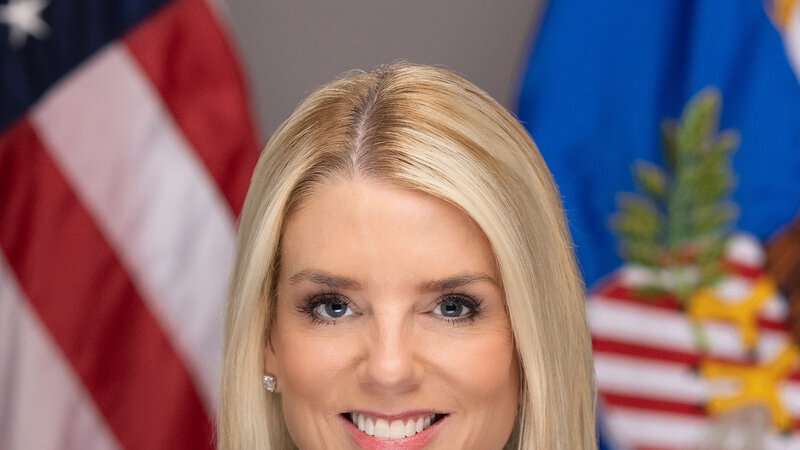
Trump Fires Attorney General Pam Bondi — Second Cabinet Secretary Ousted
Trump fired AG Pam Bondi after the birthright citizenship humiliation at SCOTUS, Epstein files mishandling, failed prosecutions of Letitia James (3 grand jury refusals), and accidentally releasing damning evidence against Trump. Second Cabinet secretary fired after Noem.
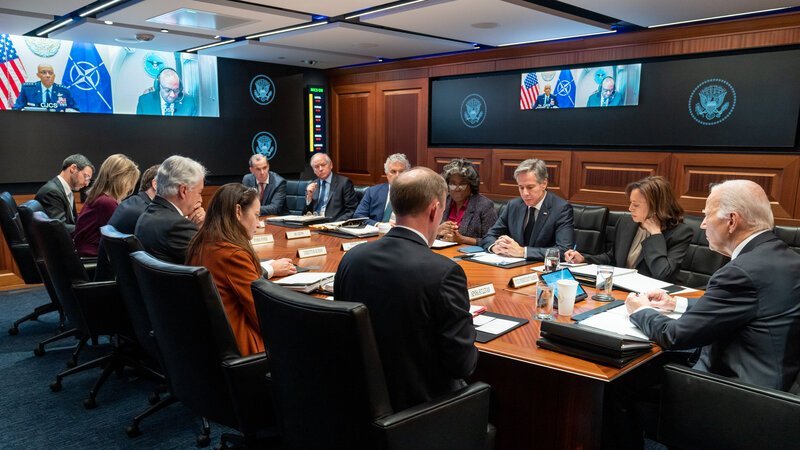
White House Officials: Trump "Bored" with Iran War — Wants to "Move On"
Four weeks into a war costing $25B+, with 13 U.S. troops and 1,900+ Iranians dead, a senior White House official said Trump is "getting a little bored with Iran" and "just wants to declare victory and move on." Aides are "just drinking the Kool-Aid."
Trump's Iran War Briefings Are 2-Minute Videos of "Stuff Blowing Up"
NBC News revealed Trump receives daily 2-minute video montages of successful strikes as his war briefing — a "highlight reel" of "stuff blowing up." He wasn't told when 5 Air Force planes were hit. His resigned NCTC chief says dissenting views were blocked.
DOGE Used ChatGPT to Cancel $100M in Federal Grants
DOGE staffers "in their 20s" used ChatGPT to scan humanities grants for DEI content — the AI flagged an HVAC replacement as DEI. Within 22 days, $100 million in grants were cancelled and 65% of NEH staff were terminated.
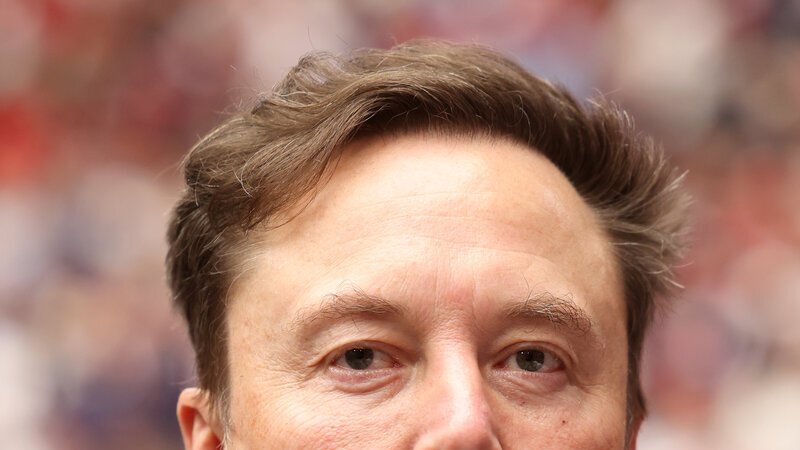
DOGE Mass Firings and Federal Worker Chaos
Trump empowered Elon Musk's "DOGE" to slash the federal workforce, firing ~25,000 workers in weeks — including nuclear bomb specialists and bird flu responders who had to be immediately rehired. Courts ordered mass reinstatements.
Record 92% Staff Turnover: 4 Chiefs of Staff, 4 NSAs
Trump's first-term senior staff turnover hit 92% — shattering all modern records. He burned through 4 chiefs of staff, 4 national security advisors, 2 secretaries of state, and 2 defense secretaries. Only 4 of 15 original cabinet picks lasted.
COVID PPE Chaos: States Forced to Bid Against Each Other and FEMA
Instead of coordinating PPE distribution, Trump told governors they were "not a shipping clerk." States then bid against each other — and against FEMA, which outbid and seized state orders. Prices inflated 3-15x.
Suggested Nuking Hurricanes
Trump reportedly asked officials multiple times "Why don't we nuke them?" about hurricanes, suggesting dropping nuclear bombs into the eye of a storm. NOAA literally has a FAQ page explaining why this won't work.
Longest Government Shutdown in U.S. History
Trump shut down the federal government for 35 days — the longest in U.S. history — over border wall funding. 800,000 workers went unpaid. He reopened it without getting a single dollar for the wall.
Stared Directly at a Solar Eclipse
During a solar eclipse viewed from the White House, Trump looked directly at the sun without protective eyewear, ignoring an aide who shouted "Don't look!" — despite NASA warnings that it can cause permanent eye damage.