#impeachment
8 entries with this tag
Days After Trump's Party Lost Both Chambers in the Midterms, Republican Rep. Thomas Massie Filed Eight Articles of Impeachment Against Defense Secretary Pete Hegseth — a 34-Page Resolution Centered on Waging War Against Iran Without Congressional Authorization — and Read All Eight Aloud on the House Floor for About an Hour and Twenty Minutes, Restarting the Clock That Forces a Vote With the GOP Majority Down to 218-214; Trump Vowed to "Stand By" Hegseth Even if He's Impeached
On November 9, 2026 — less than a week after Trump's Republicans lost both the House and Senate in the midterms — Rep. Thomas Massie, a Republican from Kentucky, introduced eight articles of impeachment against Defense Secretary Pete Hegseth, a 34-page resolution accusing him of high crimes and misdemeanors. The central charge is the one this archive has documented from its origins: that Hegseth helped wage war against Iran without congressional authorization and abused the powers of his office. Massie read all eight articles aloud on the House floor, speaking for roughly an hour and twenty minutes, and the filing — a re-introduction of articles he first offered in September — restarted a two-day clock that forces Republican leaders to schedule a vote. The timing and the math make it serious: with the GOP majority now down to a razor-thin 218-214, only a handful of Republican defections would be enough to impeach a sitting Defense Secretary. Hegseth dismissed the effort as "sham articles of impeachment" and defended his Pentagon record in a video; Trump said he would "stand by" Hegseth even if the House impeached him. Democratic leader Hakeem Jeffries backed the push, calling Hegseth "the architect of the reckless and costly failed war of choice in Iran." That the drive is led by a Republican — and newly viable because Trump's party just lost its cushion at the ballot box — makes it a convergence of two threads this archive has long tracked: the unauthorized war, and the collapse of the political protection that shielded those who ran it.
Four Days After Losing Both Chambers of Congress, Trump Publicly Ordered the Justice Department to Investigate Democrats — Recasting Their Plans to Conduct Oversight and Pursue Impeachment as a "Criminal Act" by "EXTORTIONISTS" Who Should Be "Imprisoned" — an Attempt to Criminalize the Constitutionally Protected Powers of the Congress the Voters Had Just Handed to the Other Party
On November 7, 2026 — four days after Democrats flipped both the House and the Senate — Trump posted on Truth Social directing the Justice Department to investigate Democrats, accusing them of threatening administration officials, including the attorney general, with impeachment, and calling it a "criminal act." He labeled the Democrats "EXTORTIONISTS" and said they should be "imprisoned." He offered no evidence, claiming without support that Democratic leaders were sending "threatening" letters and messages to Republicans. What Trump described as extortion is, in fact, the ordinary constitutional machinery of a legislative branch: oversight of the executive, and the impeachment power the Constitution expressly vests in the House. The incoming Democratic majorities had pledged to scrutinize the administration — exactly what an opposition Congress is supposed to do. Trump's response was to demand the criminal prosecution and imprisonment of the people about to exercise that authority. Attorney General Todd Blanche reportedly did not rule out prosecuting Democrats over the oversight threats. Stripped of the capital letters, the order is among the most direct assaults on the separation of powers this archive has recorded: a president, rebuked at the polls, moving to turn the Justice Department against the coequal branch the voters had just empowered to check him.
When a Republican Congressman Forced a Vote to Impeach Defense Secretary Hegseth for Unlawfully Waging War on Iran, the Republican Speaker Canceled Congress's Last Scheduled Day and Sent the Whole House Home Early for a Seven-Week Recess — Punting the Vote Past the Midterms to Spare Vulnerable Members From Having to Say, on the Record, Where They Stand on Hegseth
On September 15, 2026, Rep. Thomas Massie, a Republican from Kentucky, introduced articles of impeachment against Defense Secretary Pete Hegseth, accusing him of "high crimes and misdemeanors" for unlawfully waging war against Iran without congressional authorization. Massie filed the resolution as "privileged," a procedural move that would normally force the House to act on it within two legislative days. Speaker Mike Johnson's response was to make sure the House was not there to act: he canceled the chamber's last scheduled votes and sent members home a day early for a seven-week pre-midterm recess, taking a final vote Wednesday night on a Russia sanctions bill and then adjourning. The effect is that the Hegseth impeachment vote will not happen until at least November — after the election. Republican leaders insisted the timing had nothing to do with Hegseth, and Johnson called Massie's effort "ridiculous" while defending the secretary. But the reason was reported plainly: leaders wanted to protect vulnerable Republicans — many uneasy with Hegseth's leadership during the unpopular six-month Iran war — from a politically difficult vote. The tell is that impeachment was never likely to pass a Republican House; what leadership could not stomach was making its own members go on the record about Hegseth at all. So rather than hold the vote and defeat it, they canceled Congress and fled town.
Trump Plots to "Expunge" Both Impeachments from the Record — Constitutional Scholars: "You Cannot Un-Ring a Bell"
The Wall Street Journal reports Trump and allies are pushing a House resolution to expunge both impeachments — for abusing power to pressure Ukraine and for inciting the January 6 insurrection. Trump: "It should be done because I did nothing wrong. It was a rigged deal." Speaker Johnson: "I think it makes a lot of sense." Constitutional scholars say the Constitution contains no mechanism to undo an impeachment. Georgetown's Jonathan Turley: "It is not like a constitutional DUI. Once you are impeached, you are impeached." Hofstra's James Sample: "You cannot un-ring a bell." Rep. Darrell Issa introduced a resolution in April; Rep. Anna Paulina Luna announced another. GOP lawmakers privately say it won't be considered until after the midterms — because rehashing Trump's conduct would hurt them. Schiff: "There is no expunging the stain." Raskin: "There is a very easy way to not get impeached: stop committing impeachable offenses."

CPAC Crowd Cheers for Trump Impeachment — Twice — Stunning the Host
At the most pro-Trump event in conservative politics, CPAC chairman Matt Schlapp asked "How many of you would like to see impeachment hearings?" The crowd cheered. He asked again. They cheered again. "NOOO! That was the wrong answer."
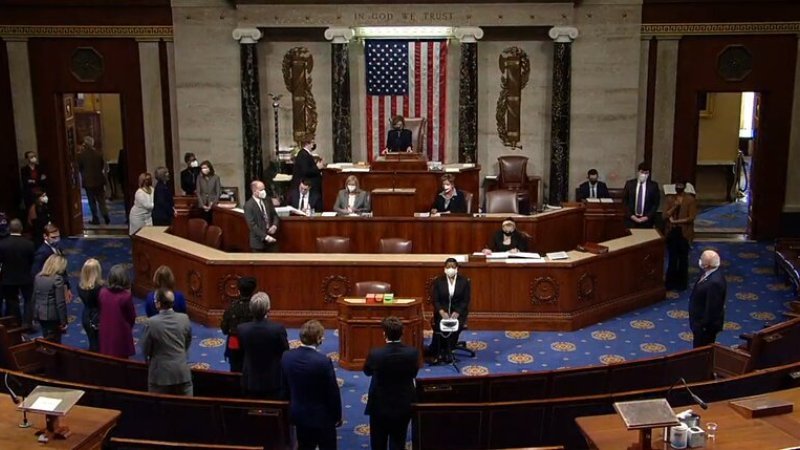
Only President Impeached Twice
The House impeached Trump a second time for "incitement of insurrection" — the most bipartisan impeachment vote in history. Seven Republican senators voted to convict, with even McConnell calling Trump "practically and morally responsible."

Incited the January 6th Insurrection
After months of election lies, Trump summoned supporters to Washington and directed them to march on the Capitol, resulting in a violent insurrection that left multiple people dead and injured over 140 police officers.
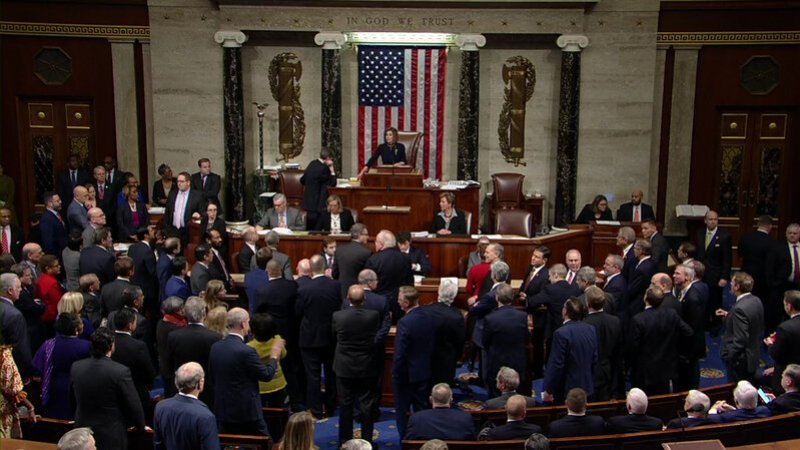
First Impeachment: Ukraine Extortion
Trump withheld $400 million in congressionally approved military aid to Ukraine to pressure President Zelensky into announcing investigations into political rival Joe Biden. The GAO concluded Trump broke federal law.