#fbi
13 entries with this tag
Under Kash Patel, the Agency Responsible for Counterintelligence Suffered One: Hackers Claiming to Have Breached the FBI Said They Stole Data on Thousands of Its Employees — Home Addresses, Dates of Birth, Social Security Numbers, Emergency Contacts, and, in Some Cases, the Sensitive Intelligence, Counterespionage, and Surveillance Assignments They Hold, Including Cases Touching China, Russia, Iran, and Hezbollah
In late September and early October 2026, the hacking group ShinyHunters claimed it had breached the FBI and stolen data on thousands of its employees — in the group's telling, on "every FBI employee." Journalists were shown a spreadsheet of roughly 5,000 alleged FBI personnel records containing names, home addresses, phone numbers, dates of birth, Social Security numbers, and emergency contacts — and, for some, their field-office assignments and the sensitive intelligence, counterespionage, and surveillance work they do, including cases involving China, Russia, Iran, and Hezbollah. Security experts called it a counterintelligence disaster: exposing where agents live and what adversaries they work against is precisely the information a hostile service would kill for. The FBI confirmed a cybersecurity incident; a suspected member of the group was detained in Jordan and is reportedly cooperating. And it does not stand alone. This is the FBI that, earlier in 2026, had its DCSNet wiretap-surveillance network penetrated — a breach security researchers tied to the Chinese state group Salt Typhoon and the bureau labeled a "major incident" — and whose own director, Kash Patel, had his personal email hacked by an Iran-linked group. The agency charged with protecting the nation's secrets keeps failing to protect its own, under a director who, as this archive has documented, purged its experienced ranks, lowered its hiring standards, and churned through its leadership. You cannot run a counterintelligence service as a loyalty project and expect it to keep the counterintelligence.
Kash Patel's FBI Lost Another Top Leader: Co-Deputy Director Andrew Bailey — a Former State Attorney General Once Seen as Patel's Likely Successor — Resigned After Barely a Year, Publicly Citing Family, but Reporting Says Patel Kept Him at Arm's Length, Went Months Without Speaking to Him, and Cut Him Out of Meetings Reportedly Because Bailey Kept Flagging Things as Unconstitutional — While the Administration's Own Dismissive Explanation Was That He "Quit Because He Had Nothing to Do"
On September 28, 2026, Andrew Bailey — the co-deputy director of the FBI and, before that, the attorney general of Missouri — announced he is resigning from the bureau effective October 2, after just over a year. Publicly, Bailey said he was stepping down "to return to my family in Missouri," and cited "great pride in what we have accomplished." Beneath that, the reporting describes dysfunction. According to The New York Times, Bailey and Director Kash Patel had an acrimonious relationship and went months without communicating; other sources said Patel kept Bailey at arm's length from the start, did not invite him to meetings, and cut him out — reportedly because Bailey kept flagging actions as unconstitutional. A senior administration official offered a dismissive gloss: Bailey had "nothing to do" and "quit because he had nothing to do." Either version is damning. If Bailey was frozen out for raising legal and constitutional objections, then Patel sidelined the person whose job was partly to keep the FBI within the law. And if a co-deputy director of the FBI genuinely had "nothing to do," that is its own indictment of how Patel runs the place. Bailey — once floated as a potential Patel successor — is only the latest senior departure: his co-deputy Dan Bongino left last December, and experienced officials have streamed out under a director this archive has documented purging the bureau, gutting its standards, and treating it as a personal instrument.
Trump's FBI Removed Two of Its Senior Counterterrorism Leaders — the Head of Counterterrorism at the Washington Field Office and His Deputy — Not for Failing to Stop a Threat, but for Declining to Keep Investigating Allegedly Harassing Phone Calls to Katie Miller, the Podcaster Wife of Top White House Adviser Stephen Miller, After Agents Judged the Calls Did Not Warrant It
In September 2026, the FBI under Kash Patel ousted two of its senior counterterrorism officials — Michael Burgwald, the special agent in charge of counterterrorism at the Washington Field Office, and his deputy, Courtland Rae — after their team determined that allegedly harassing phone calls received by Katie Miller did not warrant further investigation. Katie Miller is a conservative podcaster and the wife of Stephen Miller, one of the most powerful advisers in the Trump White House. The agents' professional assessment — that the calls were not the kind of threat that merited a continued federal investigation — reportedly angered FBI leadership, and the two men were removed from their posts. (Burgwald already had a strained relationship with Patel; a senior executive overseeing the D.C. office confirmed the ousting but denied the order came from Patel personally.) Strip the names out and the principle is alarming: FBI leaders were punished not for a failure of security but for exercising independent judgment in a matter touching a politically connected family. It is the inverse of how a professional law-enforcement agency is supposed to work. The message to every agent is that the correct amount of investigation is however much the connected complainant wants — and that declining, on the merits, is a career-ending mistake when the complainant is close to power.
Called Before the Senate Judiciary Committee, FBI Director Kash Patel Defended Dropping Bestiality as an Automatic Disqualifier for Agents by Claiming It Was Meant to Protect Trafficking Victims "Forced" Into Such Acts — an Explanation That Drew Bipartisan Disbelief, Turned an FBI Oversight Hearing Into an Extended Exchange About Bestiality, and That a Republican Senator Couldn't Follow: "Why Would You Even Get Into Bestiality?"
At a Senate Judiciary Committee oversight hearing on September 15, 2026, FBI Director Kash Patel was pressed on the bureau's spring guidance that removed bestiality and prostitution as automatic disqualifiers for job applicants — a change this archive documented as part of a broader loosening of FBI hiring standards amid a self-inflicted staffing crisis. Patel's defense was that the change existed to protect victims: "We did not want to punish victims of bestiality, victims who were trafficked," he said, arguing the FBI should not automatically bar someone from consideration "if you are a victim of these awful heinous acts," and claiming some former trafficking victims had been disqualified because they were forced into bestiality. The explanation satisfied almost no one. Senators of both parties zeroed in on the strange framing of "victims of bestiality," and Republican Sen. John Kennedy asked the obvious question — why the FBI would "even get into bestiality" at all. Patel conceded that skepticism had been his own initial reaction when subordinates proposed the policy. There is a narrow, legitimate point buried in his answer: a person coerced by traffickers into a sexual act is a victim, not a criminal, and should not be treated as one. But that narrow point does not explain a policy that broadly removed bestiality, prostitution, and theft as automatic disqualifiers for everyone "depending on circumstances." A sympathetic-sounding rationale was retrofitted onto a recruitment-driven rollback of the FBI's integrity standards — and defended so clumsily that it turned a hearing about the nation's premier law-enforcement agency into a spectacle about bestiality.
To Refill an FBI Hollowed Out by His Own Purges, Director Kash Patel Quietly Loosened the Bureau's Background Standards — So That Paying for Sex, Stealing From an Employer, and Even Bestiality or Animal Cruelty Are No Longer Automatic Disqualifiers for Would-Be Agents — All While Publicly Insisting, Against the Documented Rule Changes, That He Is "Not Reducing Our Standards" but "Making It Harder"
The FBI — the nation's premier law-enforcement agency, whose job is to investigate crime — has quietly loosened its hiring standards so that people who committed certain crimes and serious misconduct can now become agents. According to reporting, under changes made in June 2026, a range of conduct that was once an automatic disqualifier is no longer one: applicants who paid for a prostitute may still be eligible if it was more than 10 years ago and happened fewer than three times; stealing from an employer is survivable if it was more than three years ago; and bestiality or animal cruelty no longer disqualifies if it occurred before the applicant turned 18. The bureau has also moved to reduce vetting for some applicants and to fast-track existing support staff into the special-agent academy without the interview and writing assessment previously required. The reason is a staffing crisis — roughly 1,139 special agents left in 2025 alone — but that crisis is largely self-inflicted: Director Kash Patel, Trump's hand-picked FBI chief, helped drive agents out through a wave of purges, firings, and resignations targeting those tied to January 6 and Trump-related investigations. Having hollowed out the workforce, he is now lowering the bar to refill it — while flatly denying he is doing so, insisting "we're not reducing our standards — we're actually making it harder." The documented rule changes say otherwise.
Kash Patel — Who Spent Years Attacking the Old FBI Director for Using a Jet — Now Has Two Government Jets, Wants an $80 Million Third, Bought Armored BMWs Instead of Suburbans, Put a $1M/Year SWAT Detail on His Country-Singer Girlfriend, and Demanded Snorkeling and Jet-Ski Perks — Until a Republican Who Defended Him Turned
FBI Director Kash Patel — who for years publicly attacked his predecessor Christopher Wray for using a government jet ("Chris Wray doesn't need a government-funded GV jet to go to vacation") — is now under bipartisan scrutiny for exactly that and more. The turning point: Senate Judiciary Chairman Chuck Grassley, a Republican who had previously defended Patel, sent him a letter demanding proof he reimbursed the FBI for personal flights and an explanation of "why you decided to purchase BMW vehicles instead of Chevy Suburbans," calling for an "independent and objective review." Reporting and whistleblower accounts describe: FBI Gulfstream flights for "date nights" with his girlfriend, sporting events, a hunting retreat, and a George Strait/Chris Stapleton concert watched from a private suite estimated at $35,000–$50,000; a trip to Italy to watch U.S. hockey win gold (he chugged a beer in the locker room); a taxpayer-funded helicopter tour across East Asia and jet-ski excursions; a "VIP snorkeling experience" in Hawaii near the sunken USS Arizona; four FBI SWAT agents and two SUVs assigned to protect his country-singer girlfriend Alexis Wilkins in Nashville — an estimated ~$1 million a year before overtime; a fleet of armored BMWs replacing the standard Chevy Suburbans; and the bureau now seeking a new $80 million jet, after Patel was caught on camera bragging he "has two." Reps. Jamie Raskin and Sen. Dick Durbin, citing whistleblowers, said Patel demoted personnel in Brussels for failing to keep him entertained and that his conduct is "out of control" and "not the conduct of a committed and faithful public servant." One source quoted him telling field offices: "If you have golf, hockey, fishing, or hunting and beautiful sights, you're going to see a lot of me." Patel says FBI directors are "required users of the FBI plane" and that he is "entitled to a personal life"; the FBI says he "reimbursed ALL personal travel." All of it lands as Patel asks Congress for a $12 billion FBI budget.
FBI Investigated NYT Reporter Who Wrote About Kash Patel's Girlfriend Getting an FBI SWAT Escort
FBI Director Kash Patel's bureau opened an investigation into New York Times reporter Elizabeth Williamson — who wrote about Patel giving his country singer girlfriend FBI security and transport — to determine if she broke federal stalking laws. FBI agents interviewed the girlfriend, searched databases for information on the reporter. DOJ officials killed the probe, finding no legal basis and calling it retaliation.
Judge Tosses Patel's Defamation Suit: Calling Him a "Nightclub Regular" Is "Rhetorical Hyperbole"
A federal judge dismissed FBI Director Kash Patel's defamation lawsuit against ex-FBI official Frank Figliuzzi, who said Patel was "visible at nightclubs far more than the seventh floor of" FBI HQ. The judge ruled it was "rhetorical hyperbole" — not defamation. The next day, Patel filed a new $250 million lawsuit against The Atlantic over its 26-source exposé on his drinking.
The FBI Director Is MIA: Patel's Drinking, Absences, and the "Freak-Out" Over a Login Error
Per The Atlantic (26+ sources): FBI Director Kash Patel gets drunk regularly at D.C. clubs, his security detail has had trouble waking him, briefings get pushed back because of his nights out, and on April 10 he panicked and told people he'd been fired — because of a computer login error. Agents expressed relief. "It was all ultimately bullshit," one FBI official said.
FBI Director Patel's Personal Email Hacked by Iran — Was Warned Before Taking Office
Iran-linked hackers published 300+ emails and photos from FBI Director Kash Patel's personal Gmail. He had been warned in late 2024 about the breach before becoming FBI Director. The hackers sat on the materials for over a year before releasing them in retaliation for DOJ seizing their websites.
Days Before Trump Launched His War on Iran, Kash Patel Gutted the FBI Unit That Tracks Iranian Threats and Espionage — Firing About a Dozen Counterintelligence Staffers From CI-12, Not for Any Failure on the Job, but Because They Had Once Been Assigned to the Mar-a-Lago Classified-Documents Investigation of Trump — Draining Decades of Iran Expertise at the Exact Moment the Country Was About to Need It Most
In early March 2026, FBI Director Kash Patel ordered the firing of about a dozen counterintelligence staffers from CI-12, a unit in the FBI's Washington Field Office whose work focused on media leaks, global espionage, and threats involving the Iranian regime. According to CNN and other reporting, they were not removed for poor performance. They were removed because they had, in some capacity, previously been assigned to the Justice Department's investigation — conducted under the Biden-era special counsel Jack Smith — into Trump's retention of classified documents at Mar-a-Lago; Patel reportedly lashed out after learning Smith had sought his own phone records. The timing made the purge far worse than a routine act of political revenge: it came just days before the United States launched a major bombing campaign against Iran. Patel gutted the FBI's Iran counterintelligence expertise at the precise moment a war with Iran was about to make that expertise critical — hollowing out the team responsible for tracking Iranian espionage and retaliation inside the United States right as both became acutely likely. Members of Congress demanded Patel testify; the FBI disputed that the firings damaged its Iran work. But the sequence is the indictment: the director punished agents for having investigated Trump, and in doing so, left the country blinder to Iran on the eve of fighting it.
Kash Patel's FBI Political Purge
FBI Director Kash Patel purged agents who worked on January 6 and Trump criminal cases — court filings revealed he said he needed to fire them "to keep his own job." He also used the FBI jet for personal trips.
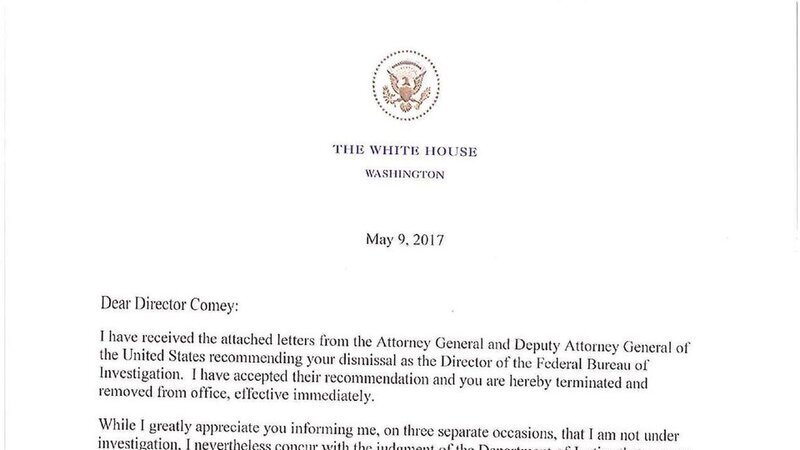
Fired FBI Director Comey to Obstruct Russia Investigation
Trump fired FBI Director James Comey while the FBI was investigating Russian interference and Trump campaign links. He told NBC: "this Russia thing" was on his mind — a textbook admission of obstruction.