#doj
32 entries with this tag
Four Days After Losing Both Chambers of Congress, Trump Publicly Ordered the Justice Department to Investigate Democrats — Recasting Their Plans to Conduct Oversight and Pursue Impeachment as a "Criminal Act" by "EXTORTIONISTS" Who Should Be "Imprisoned" — an Attempt to Criminalize the Constitutionally Protected Powers of the Congress the Voters Had Just Handed to the Other Party
On November 7, 2026 — four days after Democrats flipped both the House and the Senate — Trump posted on Truth Social directing the Justice Department to investigate Democrats, accusing them of threatening administration officials, including the attorney general, with impeachment, and calling it a "criminal act." He labeled the Democrats "EXTORTIONISTS" and said they should be "imprisoned." He offered no evidence, claiming without support that Democratic leaders were sending "threatening" letters and messages to Republicans. What Trump described as extortion is, in fact, the ordinary constitutional machinery of a legislative branch: oversight of the executive, and the impeachment power the Constitution expressly vests in the House. The incoming Democratic majorities had pledged to scrutinize the administration — exactly what an opposition Congress is supposed to do. Trump's response was to demand the criminal prosecution and imprisonment of the people about to exercise that authority. Attorney General Todd Blanche reportedly did not rule out prosecuting Democrats over the oversight threats. Stripped of the capital letters, the order is among the most direct assaults on the separation of powers this archive has recorded: a president, rebuked at the polls, moving to turn the Justice Department against the coequal branch the voters had just empowered to check him.
At Trump's Explicit Direction — "I'm the One That Said, 'Do It'" — the Justice Department Preemptively Sued to Block Certification of Alaska's U.S. Senate Race if the Republican Incumbent Dan Sullivan Lost, on a Theory About a Same-Named Spoiler Candidate; a Federal Judge Tossed the "Highly Unusual" Suit, and Even Republican Senator Lisa Murkowski Said the Department "Should Never Have Filed" It
In late October 2026, the Trump Justice Department filed an extraordinary lawsuit: it asked a federal court to block the certification of Alaska's U.S. Senate election — but only if the Republican incumbent, Sen. Dan Sullivan, lost. The government's theory rested on the presence of a second candidate on the ballot, Daniel J. Sullivan, which it claimed was a deliberate effort to confuse voters who meant to vote for the senator. Trump made no secret of who was behind it: asked about the suit, he told reporters, "Well, I'm the one that said, 'do it.'" The filing was remarkable for what it asked a court to do — pre-authorize the nullification of an election result contingent on the wrong candidate winning. A federal judge dismissed the "highly unusual" suit around November 1, declining to block certification. The bipartisan nature of the rebuke was striking: Alaska's own Republican senator, Lisa Murkowski, said the department "should never have filed this lawsuit," and Attorney General Todd Blanche publicly retreated, insisting the DOJ did not seek to stop any ballot from being counted or any certification from occurring — a claim hard to square with the lawsuit's plain demand. It was the election-denial impulse this archive has tracked all year, translated for the first time into an actual federal filing: a request to let the government refuse to certify an election it did not like the look of.
After Watching Its Earlier Indictments of James Comey Collapse, Trump's Justice Department Charged the Former FBI Director Yet Again — This Time With Two Espionage Act Counts Over an Alleged 2016 Leak of National-Defense Information to a Reporter — but Filed It as a Bare "Criminal Information" on the Very Last Day Before the Ten-Year Clock Ran Out, Without a Grand Jury, a Maneuver Legal Experts Say Likely Cannot Stop the Statute of Limitations and That Comey Can Simply Refuse to Consent To
On October 26, 2026, newly unsealed court documents revealed that the Trump Justice Department had charged former FBI Director James Comey for a third time — now with two counts under the Espionage Act: willfully communicating national-defense information to a person not entitled to receive it, and conspiring to do so. The theory is that Comey, "through one or more co-conspirators," directed someone to disclose national-defense information to a reporter at a national news publication (reported to be the New York Times), with the alleged conduct dated to October 5, 2016. The problem is the calendar and the procedure. The Espionage Act carries a ten-year statute of limitations, which expired on October 5, 2026 — and the DOJ filed not a grand-jury indictment but a bare "criminal information" on that exact last day, apparently because it could not get a grand jury to indict in time. Legal experts, including former prosecutor Elie Honig, say an information filed without a grand jury or the defendant's consent likely cannot toll the ten-year clock, and Comey cannot be tried on an information alone unless he waives indictment — which he has no reason to do. His lawyers moved to dismiss, arguing the statute "explicitly demands" an indictment that the government never secured and that the charge is time-barred. Comey's response was a shrug: "Nothing's changed with me." He is still innocent, he said. This is the third swing at the man Trump fired in 2017, after the earlier cases — including the one built around a photo of seashells — fell apart, and it has the hallmarks of the previous ones: a prosecution driven by the president's grudge rather than a case the government can actually win.
A Federal Judge Ruled That Trump's Justice Department Unlawfully Fired Maurene Comey — the Veteran Prosecutor Who Handled the Jeffrey Epstein and Ghislaine Maxwell Cases, and the Daughter of James Comey — Ordering Her Reinstated With Back Pay After the DOJ Admitted in Court the Firing Was Not for Cause or Performance; the Ruling Came the Same Week the DOJ Charged Her Father for a Third Time
On October 26, 2026, U.S. District Judge Jesse Furman ruled that the Justice Department had unlawfully fired Maurene Comey — a career federal prosecutor in the Southern District of New York known for handling the Jeffrey Epstein and Ghislaine Maxwell prosecutions, and the daughter of former FBI Director James Comey, a longtime target of President Trump. Furman ordered her reinstated, retroactive to the date of her dismissal, with back pay and restored pension benefits, and directed that her personnel file be changed to reflect a resignation rather than a firing. The ruling rested mainly on the Civil Service Reform Act, with the judge also finding separation-of-powers, Administrative Procedure Act, and due-process violations. The most damning fact came from the government's own filings: the DOJ acknowledged in court that the firing was not for cause and not based on performance — it simply asserted the attorney general had sweeping Article II authority to remove her at will. Furman rejected that claim. A May 2026 filing reportedly identified Attorney General Pam Bondi as the official who directed the firing, though the judge said the decision-maker question remained partly disputed, and he did not rule on whether political retaliation was the motive. The timing told its own story: the reinstatement of the daughter, for a firing the government conceded had no legitimate cause, landed the very same week the Justice Department charged her father, James Comey, for the third time.
Three Weeks Before the Midterms, Trump's Justice Department Handed California a Password-Protected Thumb Drive of More Than 20,000 Voters and Demanded Officials Verify Their Citizenship Within 48 Hours — Then Sued the State for Not Doing the Impossible, Even as the DOJ's Own Lawsuit Conceded That Investigating That Many People Before Election Day Was Too Much Even for the Federal Government
In mid-October 2026, with the midterm elections roughly three weeks away, the Trump Justice Department escalated a fight over California's voter rolls into something close to a manufactured crisis. On October 13, Acting Deputy Attorney General R. Trent McCotter sent letters to California Secretary of State Shirley Weber and Los Angeles County Registrar Dean Logan, handing Logan a password-protected thumb drive listing more than 20,000 voters compiled from federal agency data and demanding that officials verify every one of their citizenship within 48 hours — and "segregate" those voters' vote-by-mail ballots until it was done. When California did not perform that impossible audit on command, the DOJ sued the state on October 15. The tell was buried in the DOJ's own filing, which acknowledged that investigating that many people before Election Day would be too much even for the federal government — an admission that the 48-hour demand it was suing over was never achievable. Weber called it "an emergency of the DOJ's creation." The pattern is familiar and alarming: similar federally generated "noncitizen voter" lists have proven inaccurate before in Nevada, Pennsylvania, and New Jersey. Using the Justice Department to cast last-minute doubt on a blue state's rolls — on a timetable the DOJ itself admits is impossible — is not election integrity. It is election interference dressed as it.
The Trump Justice Department Is Relitigating Watergate — Opening a Review of Whether the Prosecutors Who Brought Down Richard Nixon Committed "Misconduct," and Recasting the Most Thoroughly Proven Presidential Crime in American History as a "Deep State" Plot Against an Innocent Man — in a Transparent Bid to Delegitimize Accountability Itself and Lay Groundwork to Excuse Trump; a Member of the Committee That Voted to Impeach Nixon Called It "Beyond Stupid"
In early October 2026, it was reported that the Trump Justice Department has opened a preliminary review of whether the Watergate special prosecutors — the ones who held Richard Nixon accountable in the 1970s — committed misconduct. The review follows a presentation by Geoff Shepard, a former Nixon aide and longtime Watergate revisionist who argues the prosecutors violated defendants' rights and that Nixon was treated unfairly. The purpose is not subtle. It is the latest move to recast Nixon as a victim of the "deep state," and to yoke his case to Trump's: Vice President JD Vance has said that "how the deep state took down Richard Nixon, it's not all that different from what the same groups of people, the same institutions tried to do to Donald Trump." In other words, if Watergate can be reframed as a frame-up, then so, by extension, can every investigation of Trump. Elizabeth Holtzman — who as a member of the House Judiciary Committee voted to impeach Nixon — called the effort "just beyond stupid and beyond absurd," because to believe Nixon was railroaded, "you'd have to say that everybody was duped — that the Republicans were duped, that the Supreme Court was duped, that everybody was duped except this guy and Trump." Watergate is not a contested historical question. It is the best-documented presidential crime in American history, ended by Nixon's own tape-recorded voice. Using the Justice Department to pretend otherwise is not scholarship. It is the weaponization of law enforcement against the historical record, in the service of the current president.
It's Over: On August 17 the Supreme Court Refused Trump's Last Appeal, Making the Jury's Verdict That He Sexually Abused E. Jean Carroll Final and Unchallengeable in Any Court — a Sitting President Now Legally Established, With No Further Appeal Possible, as a Sexual Abuser
On August 17, 2026, the Supreme Court rejected Donald Trump's final bid to escape the E. Jean Carroll case in which a federal jury found him liable for sexually abusing her in 1996 and defaming her about it. The Court had already denied his appeal of that verdict in late June; he petitioned for a rehearing; on August 17 the justices denied the rehearing too. The denial — procedurally routine, since the Court almost never grants rehearings — carries a consequence that is anything but routine: the unanimous jury verdict that Trump sexually abused Carroll, and the roughly $5 million (with interest, about $5.6 million) judgment against him, are now final and cannot be challenged in any court, ever. After years of appeals, a sitting President of the United States stands legally adjudicated, with no further recourse, as a sexual abuser. Importantly, this is the smaller of the two Carroll cases; the separate $83.3 million defamation judgment — over statements Trump made as president in 2019, where his lawyers and the Justice Department are pressing a sweeping presidential-immunity claim — remains pending before the Supreme Court, with a decision on whether to hear it likely in the fall. But the underlying finding at the heart of both cases — that Trump did what Carroll said he did — is now permanent.
Trump's Own Justice Department Issued a Memo Declaring He Can Hide His Conversations With Private, Outside Advisers — Billionaires, Fixers, Private Lawyers, Even State Officials — Under "Executive Privilege," Stretching a Doctrine the Supreme Court Already Ruled Isn't Absolute, to Wall Off His Shadow Advisers From Congress Right Before the Midterms
On August 11, 2026, the Justice Department's Office of Legal Counsel published a 21-page opinion, signed by Assistant Attorney General T. Elliot Gaiser, declaring that executive privilege can shield the president's communications with "private advisers" — a category the memo defines to include essentially anyone Trump consults outside the executive branch, "whether they be members of the public, state officials, or employees of other branches of the federal government." It is the first time the Justice Department has explicitly extended executive privilege beyond the president and his immediate White House staff to private citizens. Historically the privilege reached only official advisers, and the Supreme Court held in United States v. Nixon (1974) that it is not absolute and yields in criminal cases. The immediate beneficiary is Boris Epshteyn — the outside Trump adviser and "fixer" whom the American Bar Association subpoenaed, and who coordinated the campaign of pressure that produced nearly $1 billion in pledged free legal work from law firms, and who helped steer the lawyers in Trump's sham IRS-immunity litigation. The memo would let all of that stay hidden. OLC opinions are not binding on courts, but they govern how the executive branch behaves, and this one is transparently timed: issued months before the midterms, it is pre-emptive armor to defeat the wave of congressional investigations the White House expects if Democrats retake the House. It converts a narrow, court-limited doctrine into a blanket secrecy cloak for government-by-crony — a way to keep the public from ever learning which unelected billionaires and operatives are shaping official decisions, and what they said.
The Check Broke: Todd Blanche — Trump's Personal Criminal-Defense Lawyer, Referred for Bar Discipline Over a Sham IRS Deal, Who Defied a Court Order to Bury the Epstein Files and Says Trump Has a "Right" to Order Prosecutions of His Enemies — Was Confirmed as Attorney General 50-49, With Bill Cassidy Casting the Decisive Vote
In the early hours of Saturday, August 8, 2026, the Senate confirmed Todd Blanche as attorney general of the United States by a vote of 50-49 — the narrowest possible margin. Blanche is Trump's former personal criminal-defense lawyer. He was referred by a federal judge for bar discipline over the collusive IRS "settlement" that laundered Trump tax immunity and tried to create a $1.8 billion fund for the January 6 rioters. His Justice Department defied a court order and the transparency law Trump signed to keep the Epstein files sealed. And in his first press conference as acting AG he asserted that the president has a "right" and "duty" to order the department to investigate his enemies — a doctrine the DOJ is now executing against Comey, Letitia James, and others. Two Republicans, Susan Collins and Lisa Murkowski, voted no, joining every Democrat; Murkowski said the country needs an attorney general "who will check the worst impulses of this administration." It was not enough. Sen. Bill Cassidy of Louisiana — who voted to convict Trump in the 2021 impeachment and had been the last uncertain Republican — announced Friday he would back Blanche, becoming the decisive vote. With Sen. Mitch McConnell absent (recovering after a June fall), Cassidy's support made it 50-49, sparing even a Vance tiebreak. The nomination was in genuine peril for weeks; in the end it held by one vote. The man most of the corruption catalogued in this archive runs through is now, with the full permanent authority of the office and no "acting" qualifier, the chief law-enforcement officer of the United States.
Trump Campaigned on Ending the "Weaponization" of the Justice Department — Then Turned It Into an Instrument for Prosecuting His Enemies: His Acting AG Says Trump Has a "Right" and "Duty" to Order Investigations, a Trump-Loyalist "Grand Conspiracy" Grand Jury in Florida Is Hunting His Foes, and 100+ Career Prosecutors Have Quit
A Democratic member of Congress, appearing on NBC's "Hallie Jackson NOW" on July 31, 2026, said Trump is "hellbent" on controlling the Justice Department and is "personally directing" the cases the department is bringing against his political opponents. The charge is not speculation; it is the documented operating principle of the DOJ under acting Attorney General Todd Blanche. In his first press conference as acting AG, Blanche said Trump has both a "right" and a "duty" to order the department to investigate his enemies — and when asked how he would square that with Trump's own executive order claiming to end the "weaponization" of government, he said he would not. Under Blanche, the DOJ has: re-indicted former FBI Director James Comey (after Trump publicly forced out the prosecutor who found insufficient evidence, installed his own former personal lawyer, and got an indictment within days — later dismissed, then refiled over a social-media post of seashells spelling "86 47"); pursued New York Attorney General Letitia James, Fed Chair Jerome Powell, former CIA Director John Brennan, members of Congress, and a probe into California Gov. Gavin Newsom and his wife; and stood up a "grand conspiracy" grand jury in the Trump-friendly Southern District of Florida — led by 2020-election-denier Joe diGenova — to hunt Obama- and Biden-era officials as an anti-Trump cabal. More than 100 career prosecutors have resigned, many citing political interference. A Marquette poll found 55% of Americans believe the DOJ has filed unjustified cases against Trump's opponents. The thing Trump said he would stop, he built.
Two of Trump's Own Republican Senators Are Blocking His Personal Criminal-Defense Lawyer From Becoming Attorney General Until He Promises Not to Build a $1.8 Billion Fund to Pay January 6 Rioters — So Trump Vowed to Keep Him as Unconfirmed Acting AG Indefinitely and Force the Fund Through Congress Anyway
Todd Blanche — Trump's former personal criminal-defense attorney, acting attorney general since Trump fired Pam Bondi in April, and the lawyer a federal judge referred for bar discipline over the sham IRS settlement — cannot get confirmed as permanent attorney general, and it is Republicans stopping him. Two GOP members of the Senate Judiciary Committee, John Cornyn of Texas and Thom Tillis of North Carolina, are withholding their votes until they get written assurance that the Justice Department will not resurrect the "anti-weaponization fund": a $1.8 billion program to compensate people who claim the government was "weaponized" against them — built, in practice, to pay January 6 rioters Trump pardoned. That is the same fund a federal judge voided in July as an illegal product of a collusive lawsuit, and that DOJ had said it was abandoning. Rather than give the assurance, Trump escalated. On August 1 he posted that if "Senators Cornyn and Tillis … aren't going to approve Todd Blanche … then I will keep Todd as Acting A.G., and push hard to get the Anti-Weaponization Bill … PASSED." In other words: confirm my lawyer and let me pay the rioters, or I keep my lawyer running the Justice Department without confirmation and try to pay the rioters through Congress instead. Tillis said flatly that Blanche will not be confirmed as things stand. The standoff is a rare moment of Republican resistance — and a window into just how far the corruption had to go before even Trump's own party balked.
Trump and the Justice Department Asked the Supreme Court to Erase the $83.3 Million He Owes E. Jean Carroll for Defaming Her — Arguing That Calling His Sexual-Abuse Accuser a Liar Was an "Official Act" of the Presidency He Can't Be Sued For, and Putting Government Lawyers on His Personal Defense
On July 28, 2026, Trump and the U.S. Department of Justice separately asked the Supreme Court to throw out the $83.3 million a jury ordered him to pay writer E. Jean Carroll for defaming her — when, in 2019, as president, he denied her account that he sexually assaulted her in a Bergdorf Goodman dressing room in the mid-1990s and called her a liar. Their argument: presidential immunity. Because the Supreme Court's 2024 ruling held that "most of a President's public communications" are official acts, Trump's lawyers claim his 2019 statements branding Carroll a liar were official presidential acts for which he cannot face personal civil liability. A federal appeals court had already rejected this, affirming the award as "reasonable in light of the extraordinary and egregious facts" and finding Trump had waived any immunity claim by raising it too late. Two things make it a scandal, not just an appeal. First, the Justice Department — taxpayer-funded government lawyers — joined to defend the president's personal liability for defaming the woman a separate jury found he sexually abused. Second, the theory itself: that a president is immune from being sued for defaming his own sexual-assault victim because insulting her from the White House podium was part of the job. Trump is asking the Court to rule that the presidency is a shield not just for governing, but for smearing the people who accuse him of assault.
Trump Signed the Epstein Files Transparency Act Under Pressure, Then His DOJ Defied Both the Law and a Federal Judge's Order to Release the Files — the Same Associate Attorney General Just Referred for Discipline in the IRS Case Asked the Court to Ignore Its Own Deadline
In November 2025, under intense bipartisan and public pressure, Trump signed the Epstein Files Transparency Act, which ordered the Justice Department to release all files connected to the Jeffrey Epstein investigation by December 19. His administration has spent the months since not complying. After journalist Katie Phang sued over withheld materials, U.S. District Judge Emmet Sullivan ruled the administration had likely violated the Transparency Act and ordered the DOJ to release and unredact the disputed files or explain why they must stay hidden. Hours before the deadline, Associate Attorney General Stanley Woodward — the same official a federal judge referred for bar discipline days earlier over the sham IRS settlement — asked Sullivan to delay the deadline by 60 days or disregard it entirely. The DOJ then formally declined to hand over additional unredacted files, claiming the redactions were appropriate and protected victims. Among the disputed materials, according to reporting, are FBI interview notes from a woman who alleged she was forced to perform a sex act on Trump in the 1980s after meeting him through Epstein — an allegation that is uncorroborated and that Trump has strongly denied. Reps. Thomas Massie and Ro Khanna, frustrated that the department was withholding files it was legally required to disclose while survivors' names leaked out, introduced a second bill — the Epstein Files Transparency Act II. The throughline: a president who signed a transparency law to quiet a scandal, then had his Justice Department defy the law, a court, and Congress to keep the files sealed.
A Judge Voided the Sham Lawsuit Trump Filed Against His Own IRS to Launder Himself Tax Immunity and a $1.776 Billion "Anti-Weaponization" Slush Fund for His Allies — Finding "Bad Faith," No Real Case, and Referring Acting AG Todd Blanche for Discipline Two Days Before His Confirmation Hearing for the Permanent Job
On July 13, 2026, U.S. District Judge Kathleen Williams (an Obama appointee in the Southern District of Florida) issued a scathing 56-page order voiding the settlement of Trump's lawsuit against the IRS and referring his lawyers — including Acting Attorney General Todd Blanche — for disciplinary action. The backstory: in January, Trump and his two eldest sons sued the IRS for $10 billion over the leak of his tax returns. In May, "both sides" settled — except both sides were Trump. As president he controlled the IRS he was suing. The settlement created a $1.776 billion "anti-weaponization fund" to pay Trump allies (premised on January 6 and classified-documents claims) and, via a memo Blanche signed and quietly added to the DOJ announcement, granted Trump, his family, and his businesses sweeping immunity from IRS audits and other federal claims for past conduct. Nearly three dozen former federal judges from both parties — including Bush appointee J. Michael Luttig — intervened, calling it "the product of collusion" and "a fraud on the court." Williams agreed: "there was never adverseness between the Parties; there was never a case or controversy; and there was never a question as to who would prevail." She found Trump and his sons "acted in bad faith," said the tax-amnesty order "directly contravenes" the federal law barring presidents from influencing audits, and noted the $1.776 billion figure "speaks of a 'branding' effort rather than a deliberate and thoughtful calculation of damages." She was "extremely troubled" by Blanche's congressional testimony, calling one answer "at best, misleading and, at worst, disingenuous." She referred Blanche and Associate AG Stanley Woodward to the New York and D.C. bars (where disciplinary proceedings are already underway), referred private attorney Alejandro Brito to the Florida Bar, limited attorney Daniel Epstein's practice, voided the agreement so it can never be cited in any proceeding, and ordered sanctions. She closed by quoting John Adams: "Facts are stubborn things." The ruling landed two days before Blanche's Senate Judiciary confirmation hearing to become permanent attorney general.
FEMA Will Withhold 20% of a $1 Billion Anti-Terrorism Grant Program — Money for Cybersecurity and Protecting Crowded Public Spaces — Unless States Rewrite Their Elections to Trump's Demands Before the Midterms, a Power the Constitution Gives Him Zero Authority Over
The Trump administration is holding counterterrorism money hostage to force states to change how they run elections before the November 2026 midterms. FEMA's fiscal-year 2026 Homeland Security Grant Program notice says the agency will withhold 20% of each state's total award — from a $1.064 billion program that funds cybersecurity, emergency planning, training, equipment, and protection of crowded public spaces — until the state proves it has complied with new "Election Security" requirements. Those requirements: submit a plan to abandon electronic voting systems that use bar codes/QR codes and move to hand-marked paper ballots (eliminating ballot-marking devices); conduct 5% manual post-election audits; reconcile voters against ballots cast; run the entire voter roll through the DHS "SAVE" citizenship database within 120 days; and verify the citizenship of every poll worker and vendor. In FY2025 the election-related hold was just 3% for three modest actions; FY2026 escalates it to 20% and a far larger list. The 3% election-security set-aside and the 20% holdback are explicitly separate — meeting one does not release the other. The grants flow largely to populous urban states: New York alone expects about $204 million in FY2026. Switching to hand-marked paper ballots would cost states hundreds of millions — Georgia's Republican secretary of state estimated $66 million for his state alone. The Constitution gives the president no authority over election administration; a federal judge recently wrote exactly that while blocking parts of Trump's anti-voting executive order, and another judge blocked DHS from using SAVE to purge voters, finding the administration "knowingly trampled on the privacy rights of American citizens." The DOJ has separately sued 30 states for refusing to hand over voter lists and warned election officials in all 50 states they could face criminal charges. New York Gov. Kathy Hochul: the administration is "once again putting New Yorkers' lives at risk to forward their political agenda." Maine Secretary of State Shenna Bellows: "Trump is trying to meddle in how states run American elections because he's terrified of losing power after the 2026 midterms."
Trump Handed His Acting AG a Stack of News Articles with "Treason" Written in Sharpie — The DOJ Then Tried to Drag Post and Journal Reporters Before a Grand Jury, and Backed Down
The Washington Post reported on June 23, 2026, that Trump's Justice Department issued grand jury subpoenas this spring to compel reporters from The Washington Post and The Wall Street Journal to testify under oath in a leak investigation — then withdrew them earlier this month after the two newsrooms challenged them in a secret legal fight in the Eastern District of Virginia. The targets were Post national security reporter Ellen Nakashima and three unnamed Wall Street Journal reporters. CNN reported that Trump personally pushed acting Attorney General Todd Blanche to issue the subpoenas, handing him a stack of printed articles with the word "Treason" written across them in Sharpie. The leak hunt was driven by Trump's anger over carefully sourced stories warning of the risks of attacking Iran — stories that turned out to be prescient. Compelling a journalist to reveal sources before a grand jury is extraordinarily rare; the National Press Club called it "one of the most aggressive actions against a free and independent press in recent memory." It followed a deliberate dismantling of press protections: in April, AG Pam Bondi rescinded the Biden-era policy shielding reporters' records, and in January the FBI searched the home of Post reporter Hannah Natanson and seized her devices. No reporter testified — but the DOJ offered no explanation for the withdrawal, leaving open whether the subpoenas will simply be reissued.
Lead Prosecutor in Comey Seashells Case Steps Aside — A Former Republican Committeeman With No Federal Criminal Experience
Matthew Petracca, the lead federal prosecutor in the case against James Comey over an Instagram photo of seashells, has stepped aside. Petracca was a former Republican county committeeman and family lawyer from New Jersey whose prior federal experience was prosecuting Medicaid fraud. He was the last man standing after more experienced prosecutors left the case. Even Pam Bondi — before Trump fired her — thought the seashells case was too weak and pushed for Virginia charges instead. Then Blanche took over and rammed it through.
Trump's DOJ Opens Criminal Investigation Into E. Jean Carroll — The Woman a Jury Found He Sexually Assaulted
The DOJ launched a criminal investigation into E. Jean Carroll — the woman two juries found Trump liable for sexually assaulting and defaming, awarding her $88.3 million total. The perjury theory: Carroll said in a 2022 deposition that no one else was funding her lawsuit, but LinkedIn billionaire Reid Hoffman later helped cover some legal costs through a nonprofit. An appeals court already reviewed this and found Carroll "plausibly represented" she had "forgotten about the limited outside funding counsel obtained." Trump's DOJ is now criminally investigating his own sexual assault victim over a deposition answer an appeals court already dismissed.
Judge Throws Out Charges Against Abrego Garcia: DOJ Prosecution Was "Vindictive" Retaliation for Challenging His Wrongful Deportation
A federal judge dismissed human smuggling charges against Kilmar Abrego Garcia, ruling the prosecution was vindictive retaliation for his legal fight to return from wrongful deportation. The charges stemmed from a 2022 traffic stop that was closed without action — then reopened by Deputy AG Todd Blanche immediately after the Supreme Court ordered his return. The judge quoted Robert Jackson's warning about "picking the person first and the crime second." The DOJ called him "an activist judge."
Trump Calls Reporting "Virtual TREASON" After Intelligence Shows Iran Retained 70% of Its Missiles
U.S. intelligence assessments revealed Iran retained ~75% of its mobile launchers and ~70% of its missile stockpiles despite weeks of bombing — and restored access to 30 of 33 Hormuz missile sites. Trump called the reporting "virtual TREASON" and accused journalists of "aiding the enemy." The DOJ had already subpoenaed Wall Street Journal reporters for their Iran war coverage.
DOJ Whistleblower Reveals Prosecutors Were Ordered to Rush a "Legally Deficient" SPLC Indictment — Zero Convictions Across the Entire Retribution Agenda
A DOJ whistleblower revealed that senior leadership ordered prosecutors to fast-track a "legally deficient" indictment of the Southern Poverty Law Center despite their objections. This is the latest in Trump's retribution campaign — Comey, Letitia James, Bolton, the SPLC, law firms, former intel chiefs, sitting senators — and not a single target has been convicted.
DOJ Indicts Comey Over a Photo of Seashells — After First Indictment Was Thrown Out
Trump's DOJ indicted former FBI Director James Comey for a second time — now over an Instagram photo of seashells spelling "86 47" on a beach. The first indictment (false statements to Congress) was thrown out after a judge ruled the prosecutor was unlawfully appointed. The charges: threatening the president — via a shell arrangement. Comey's lawyer will argue vindictive prosecution.
DOJ Drops the Powell Probe It Never Had Evidence For — Clearing the Way to Replace Him
Jeanine Pirro's DOJ dropped the criminal investigation into Fed Chair Jerome Powell — the one a judge said had "essentially zero evidence" and existed solely to pressure Powell to resign or lower rates. The quiet part: Sen. Tillis was blocking Kevin Warsh's confirmation as Powell's replacement until the probe was dropped. Now it's dropped. Now Warsh can proceed.
DOJ Readopts Firing Squads, Electrocution, and Gas for Federal Executions
Acting AG Todd Blanche instructed the Bureau of Prisons to add firing squads, electrocution, and nitrogen gas asphyxiation to the federal execution protocol. Also reinstated pentobarbital lethal injections that Biden removed over concerns of unnecessary suffering. The federal government has never previously used firing squads.
FBI Investigated NYT Reporter Who Wrote About Kash Patel's Girlfriend Getting an FBI SWAT Escort
FBI Director Kash Patel's bureau opened an investigation into New York Times reporter Elizabeth Williamson — who wrote about Patel giving his country singer girlfriend FBI security and transport — to determine if she broke federal stalking laws. FBI agents interviewed the girlfriend, searched databases for information on the reporter. DOJ officials killed the probe, finding no legal basis and calling it retaliation.

Bondi's Official DOJ Portrait Found in a Trash Can — Hours After Being Fired
Within hours of Bondi's firing, a photo showed her official DOJ portrait in a trash bin. Career officials quietly celebrated. The karma: Bondi had personally ripped Biden and Garland's portraits off DOJ walls on her first day. DOJ called the photo "Fake News."
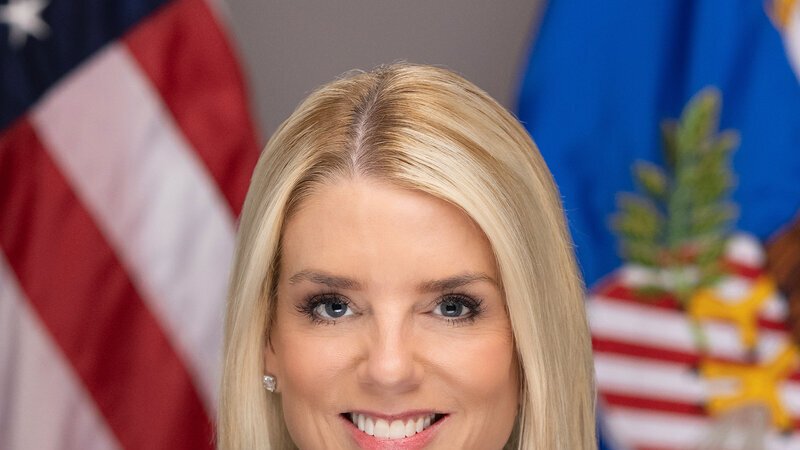
Trump Fires Attorney General Pam Bondi — Second Cabinet Secretary Ousted
Trump fired AG Pam Bondi after the birthright citizenship humiliation at SCOTUS, Epstein files mishandling, failed prosecutions of Letitia James (3 grand jury refusals), and accidentally releasing damning evidence against Trump. Second Cabinet secretary fired after Noem.
DOJ Admits ICE Courthouse Arrests Based on "Erroneous" Legal Authority
The DOJ admitted it wrongly used an ICE memo to justify arresting hundreds of immigrants at immigration courthouses. The memo only applied to criminal courts, not immigration courts. The DOJ blamed ICE. DHS said arrests would continue anyway.

DOJ Pays Flynn $1.2M of Taxpayer Money for "Malicious Prosecution" — He Pleaded Guilty. Twice.
Trump's DOJ settled Michael Flynn's lawsuit for $1.2M, calling his prosecution a "historic injustice." Flynn pleaded guilty twice to lying to the FBI about Russian contacts. The Biden DOJ had asked a judge to dismiss Flynn's complaint. Trump's DOJ reversed course and paid him.

DOJ Admits "We Don't Know" What Crime Powell Committed — Judge Finds "Zero Evidence"
A DOJ prosecutor admitted in a sealed hearing they had no evidence of wrongdoing by Fed Chair Powell. The judge found "essentially zero evidence" of a crime and ruled the investigation's sole purpose was to pressure Powell to lower interest rates or resign.
Judge Throws Federal Prosecutor Out of Courtroom, Orders DOJ to Testify About Habba
A federal judge ejected a DOJ prosecutor from his courtroom after he tried to "blindside the court," then told the office: "Generations of AUSAs built the goodwill of that office for your generation to destroy it within a year."
Bondi's DOJ Withheld Epstein Files Containing Allegations About Trump and a 13-Year-Old
NPR found the DOJ removed and withheld Epstein files specifically containing allegations that Trump sexually abused a 13-year-old. Only the files mentioning Trump were excluded. The DOJ claimed they were "duplicates."